


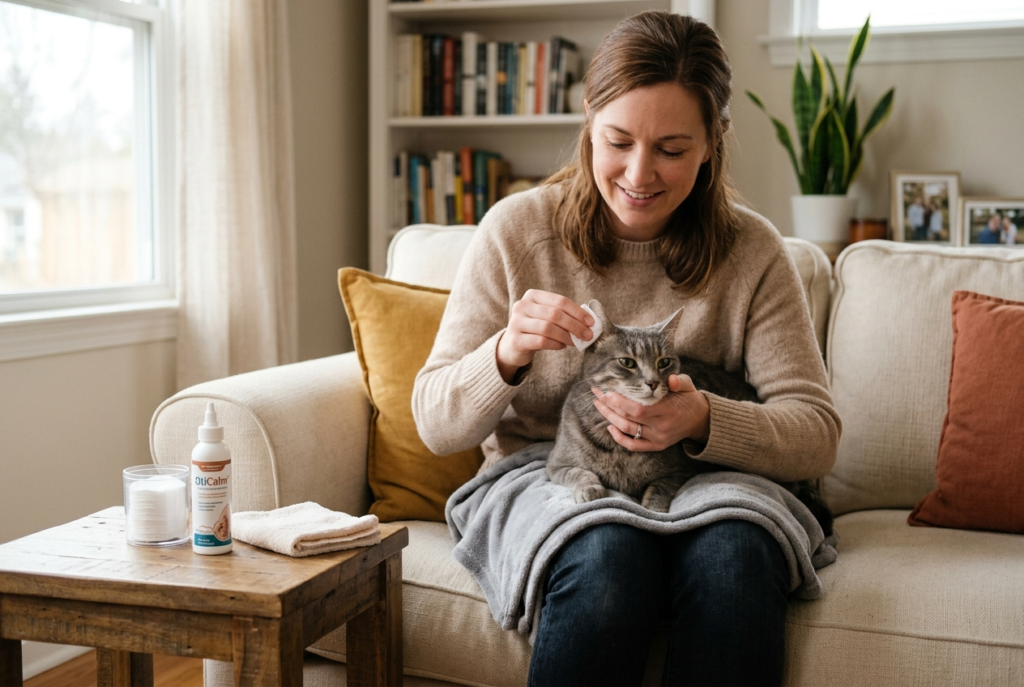
To clean a cat’s ears safely, use a vet-approved cat ear cleaner and cotton pads, apply the cleaner into the ear, massage the base gently, and let your cat shake its head before wiping away the loosened debris from the outer ear only. Never push cotton buds into the ear canal. Most cats need this only occasionally, and healthy ears should be left alone. This guide covers exactly how to do it, and when not to.
Quick answer: Clean your cat’s ears only when they need it, using a proper cat ear cleaner and cotton pads. Put the cleaner in the ear, massage the base for a few seconds, let your cat shake, then wipe the outer ear clean. Never insert cotton buds into the canal, never use water or peroxide, and stop if the ear is painful, red, or infected, as that needs a vet, not cleaning.
Do cats need their ears cleaned?
Most cats keep their own ears clean and do not need regular cleaning. A healthy cat ear is pale pink, nearly odourless, and has only a little wax. Over-cleaning a healthy ear does more harm than good, because it strips the natural wax that protects the canal and can cause the irritation you were trying to avoid.
Cleaning is helpful in specific situations: when your vet recommends it, when there is a visible buildup of wax or debris, or as part of a treatment plan for an ear condition. If the ears look and smell normal, the best thing you can do is leave them alone and simply check them weekly.
Before you start: when not to clean
Cleaning is only safe on a healthy or mildly waxy ear. There are times when you should stop and see a vet instead.
Do not clean the ear yourself if it is red and inflamed, painful when touched, swollen or bleeding, or producing heavy, dark, or foul-smelling discharge. These are signs of an infection or injury, and cleaning can push the problem deeper or cause pain. In those cases the ear needs a vet to diagnose and treat the cause first. Cleaning supports treatment; it does not replace it.
What you will need
Gather everything before you start, so you are not fumbling once your cat is in position.
| Item | Purpose |
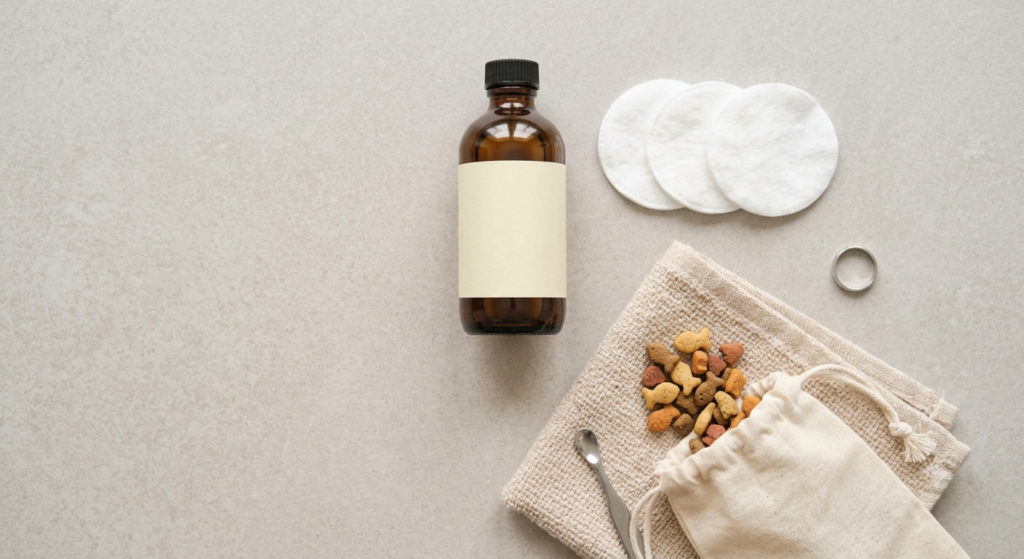
| Vet-approved cat ear cleaner | The only cleaning solution you should use inside the ear |
| Cotton pads or cotton wool | For wiping the outer ear and visible canal opening |
| A towel | To wrap or steady your cat if needed |
| Treats | To reward and keep the experience positive |
Do not use cotton buds inside the canal, water, hydrogen peroxide, vinegar, or alcohol. These either push debris deeper or irritate and dry out the ear.
How to clean your cat’s ears step by step
Work calmly and stop if your cat becomes distressed. A relaxed cat makes this far easier.
- Settle your cat. Choose a quiet moment and gently wrap your cat in a towel if it helps keep it still. Have your supplies within reach.
- Inspect the ear first. Look inside. If it is red, painful, swollen, or has heavy dark discharge, stop and see a vet instead of cleaning.
- Apply the cleaner. Hold the ear flap up gently and squeeze the vet-approved cleaner into the ear canal as directed on the product. Do not insert the nozzle deep into the ear.
- Massage the base. Gently massage the base of the ear for five to ten seconds. You will often hear a soft squelching sound, which means the cleaner is loosening the debris.
- Let your cat shake. Release the ear and let your cat shake its head. This brings the loosened debris and excess cleaner up out of the canal.
- Wipe away the debris. Use a cotton pad to gently wipe the loosened debris and cleaner from the outer ear and the opening of the canal only. Never reach into the canal itself.
- Repeat on the other ear. If both ears need cleaning, repeat the same steps.
- Reward your cat. Finish with a treat and praise so the experience stays positive for next time.
Common mistakes to avoid
A few common mistakes turn a safe routine into a risk.
- Pushing cotton buds into the ear canal, which packs debris deeper and can damage the eardrum. Clean only the part you can easily see.
- Using water, peroxide, vinegar, or alcohol instead of a proper cat ear cleaner. These irritate or dry the canal.
- Cleaning too often. Healthy ears do not need routine cleaning, and over-cleaning causes irritation.
- Cleaning an infected or painful ear at home instead of seeing a vet.
- Forcing a distressed cat, which makes future cleaning harder and risks injury to you both. Stop and try again later, or ask your vet to demonstrate.
How often should you clean a cat’s ears?
There is no fixed schedule. Clean only when the ears genuinely need it, which for many cats is rarely or never. A good routine is to check the ears once a week and clean only if you see a buildup of wax or debris, or if your vet has advised regular cleaning as part of managing a condition. Cats prone to ear problems or with allergies may need it more often, but this should be guided by your vet rather than done as a default habit.
When should you see a vet?
See a vet rather than cleaning at home if the ear is red, swollen, painful, bleeding, or producing heavy, dark, or smelly discharge, as these point to an infection or injury. Also see a vet if the ear does not improve after cleaning, if your cat resists all attempts and becomes distressed, or if a head tilt or loss of balance appears. If you are unsure how to clean the ears safely, ask your vet to show you the technique in person.
Frequently asked questions
Can I use cotton buds to clean my cat’s ears?
No. Cotton buds push debris deeper into the canal and can damage the eardrum. Use cotton pads to wipe only the outer ear, and let a vet-approved cleaner do the work inside.
What can I use to clean my cat’s ears at home?
Use a vet-approved cat ear cleaner and cotton pads only. Avoid water, hydrogen peroxide, vinegar, and alcohol, as these irritate or dry out the ear.
How often should I clean my cat’s ears?
Only when they need it. Many cats rarely need cleaning at all. Check weekly and clean only if there is visible wax or debris, or if your vet advises it.
Is it safe to clean my cat’s ears if they look infected?
No. If the ear is red, painful, swollen, or has heavy or smelly discharge, see a vet first. Cleaning an infected ear at home can push the problem deeper and cause pain.
My cat hates having its ears cleaned. What can I do?
Keep sessions short and calm, wrap your cat gently in a towel, and reward it with treats. If it remains very distressed, stop and ask your vet to demonstrate or handle it during a visit.