Skip to content




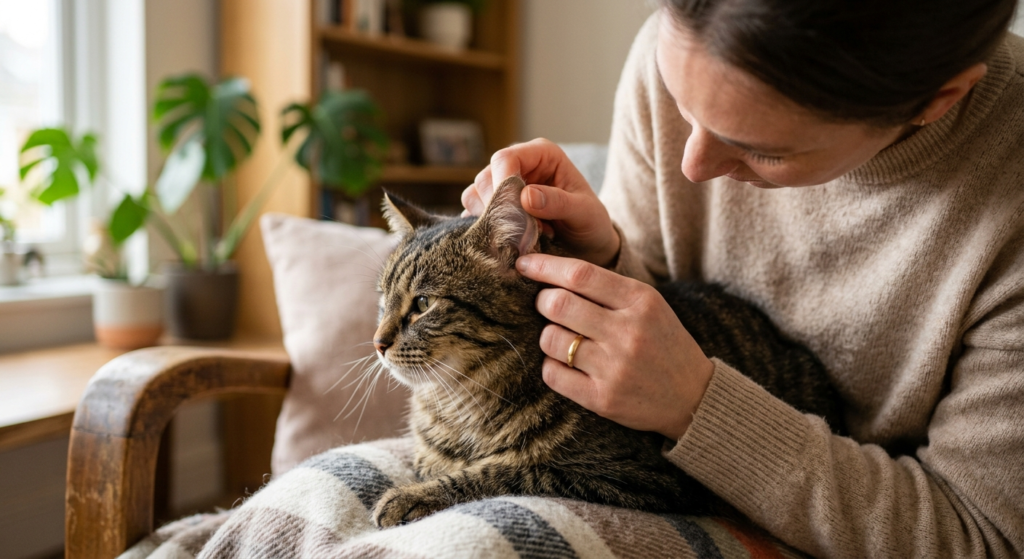
Most cat ear problems trace back to one of five things: ear mites, a yeast or bacterial infection, allergies, or wax and debris trapped in the canal. Catch them in the first few days and treatment is usually simple. Leave them, and the problem moves deeper into the ear where it becomes painful, stubborn, and far harder to clear.
Quick answer: Scratching at one ear, head shaking, dark discharge, or a sour smell are the classic early signs. In kittens and outdoor cats the cause is most often ear mites. In adults it is usually a yeast or bacterial infection, and often an allergy sitting underneath it. A vet confirms which one with a quick swab, and the correct treatment depends entirely on that result.
What are the most common cat ear problems?
Cats get a fairly predictable set of ear issues. Telling them apart is what stops you treating the wrong one.
| Problem | What it actually is | Who gets it most | Tell-tale sign |
| Ear mites (Otodectes) | A contagious parasite living in the canal | Kittens, outdoor and multi-cat homes | Dry, dark, coffee-ground debris |
| Yeast infection (Malassezia) | Overgrowth of yeast on the ear surface | Adults, allergy-prone cats | Brown, greasy, waxy discharge with a musty smell |
| Bacterial infection | Bacteria taking hold deeper in the canal | Any age, usually after another problem | Yellow or bloody discharge, strong bad smell |
| Allergies | Food or environmental triggers inflaming the ears | Any age | Both ears itchy, keeps coming back |
| Wax and debris | Trapped wax holding in moisture | Cats with narrow or hairy canals | Waxy build-up, no infection yet |
One pattern is worth knowing early. A problem in both ears at once usually points to allergies or mites. A problem in one ear that keeps returning is a red flag for something structural, like a polyp, and needs a vet to look properly.
For the full picture on each, see signs of ear mites in cats, cat ear yeast infection, and ear mites vs yeast infection in cats.
What causes ear problems in cats?
Ear problems rarely start on their own. Something shifts the conditions inside the ear, and that opening lets trouble in.
In young and outdoor cats, mites are the usual trigger. They spread fast between animals sharing a home, which is why one kitten with mites often means the whole litter has them. In adult cats the story is usually different. The ear canal is warm and enclosed, and when moisture, wax, or inflammation builds up, yeast and bacteria that normally live there in small numbers start to multiply.
Allergies are the cause people miss most. A cat reacting to a food ingredient or something in its environment carries low-level inflammation in the ears all the time, and that keeps setting off infection after infection. If your cat clears up on medication and relapses within weeks, the ear is not really the problem. The allergy driving it is.
Signs your cat has an ear problem
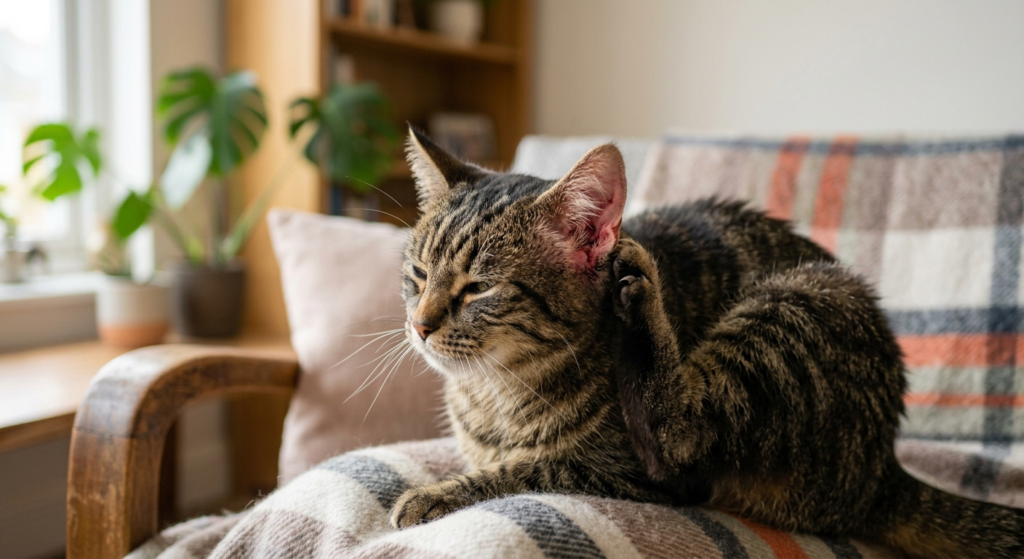
The first signs are behavioural, and they show up before anything looks wrong inside the ear.
Watch for a cat working at one ear more than usual, shaking or tilting its head, or pulling away when you touch near the ear. As it progresses you will start to see the physical signs: dark or waxy discharge, a smell, redness inside the flap, or thinning hair around the ear base from constant scratching.
A few signs mean stop watching and call the vet. A head held permanently tilted to one side, stumbling or circling, or a cat that cries when the ear is touched all suggest the problem has reached the middle or inner ear. That stage is painful and can affect balance and hearing, so it is not one to wait out.
The discharge itself is a useful clue. Dry, dark, crumbly debris that looks like coffee grounds points to mites. Brown, greasy, waxy discharge leans toward yeast. Yellow or bloody discharge with a strong smell suggests bacteria. We break this down in black and brown discharge in a cat’s ears, and if scratching is the main thing you are seeing, why cats scratch their ears covers the possible reasons.
How are cat ear problems diagnosed?
A vet does two things a home inspection cannot. First, they use an otoscope to see how deep the problem goes and to check the eardrum is intact, which matters because some ear medications are unsafe to use if it has ruptured. Second, they take a swab and look at it under a microscope. That single step is what separates mites from yeast from bacteria.
This is also the reason home guessing goes wrong so often. Mite debris and yeast wax can look similar to the eye, but they need completely different medications. Treat a yeast infection with a mite product and you lose a week while the real infection digs in.
How are cat ear problems treated?
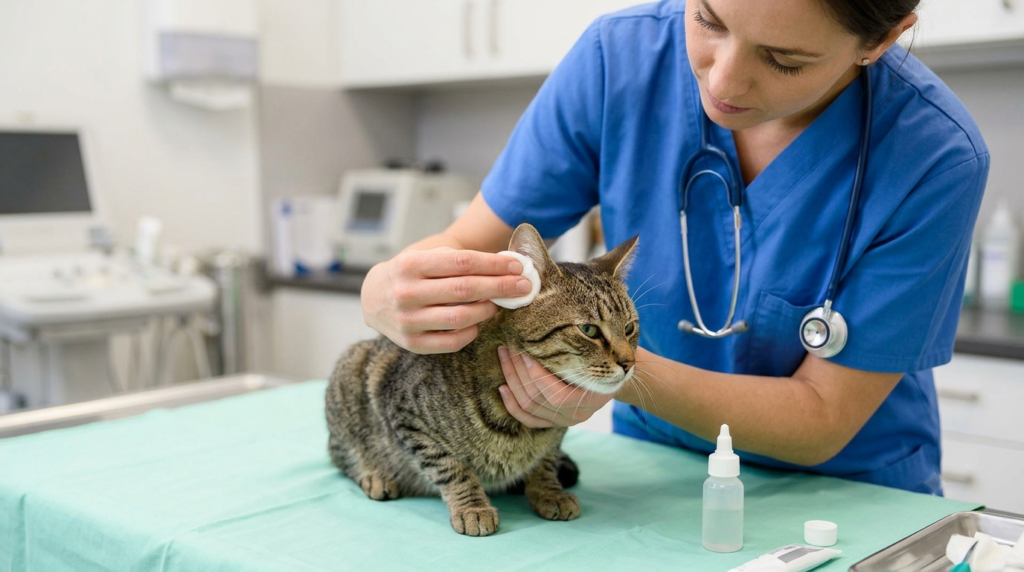
Treatment follows the diagnosis, which is exactly why getting the diagnosis right matters so much.
| Cause | Typical treatment |
| Ear mites | Ear cleaning, a vet-prescribed antiparasitic, and treating every pet in the home |
| Yeast infection | Cleaning, then antifungal ear medication |
| Bacterial infection | Cleaning, antibiotic ear drops, sometimes oral antibiotics |
| Allergies | Treating the flare-up while managing the underlying allergy |
| Wax and debris | Correct, gentle cleaning and ongoing maintenance |
| Polyp or growth | Veterinary assessment, sometimes minor surgery |
Two things hold true across almost every case. The ear usually needs cleaning first, because medication cannot reach the surface through a canal packed with debris. And the medication has to match the specific cause, which means a vet-chosen product rather than whatever worked last time or on another pet.
Routine cleaning at home is safe and useful for upkeep, and how to clean a cat’s ears safely shows the correct method. It is not a treatment on its own once an infection has set in.
Mistakes that make cat ear problems worse
Some of the most common home mistakes actively set the ear back.
- Using cotton buds inside the canal, which pushes debris deeper and can damage the eardrum. Clean only the outer part you can see.
- Reusing leftover medication from a past infection or another pet. The cause is often different, and the wrong drug wastes time.
- Using a dog ear product on a cat. Some contain ingredients that are unsafe for cats.
- Over-cleaning healthy ears. Constant cleaning strips the ear and irritates the canal, which can trigger the exact problem you were trying to prevent.
- Stopping treatment early because the ear looks better. Infections often need the full course to fully clear, and stopping short is how they come back.
How to prevent ear problems in cats
Prevention comes down to noticing early and leaving healthy ears alone.
Check the ears once a week. Healthy ones are pale pink, nearly odourless, and carry only a little wax. Clean them only when they genuinely need it and only with a proper cat ear cleaner. Keep up parasite prevention, especially for cats that go outside, and if infections keep returning, push your vet to look for the allergy or cause underneath rather than treating the same flare-up on repeat. In multi-cat homes, treat every cat when one has mites, since they pass between animals easily.
When should you see a vet?
Book a visit if the discharge is heavy, dark, or smells bad, if your cat is in obvious pain, or if there is swelling or bleeding. Go straight in if a head tilt, stumbling, or loss of balance appears, as those point to the deeper ear. And see a vet if a problem keeps coming back after treatment, because that pattern almost always means an underlying cause has been missed. Ear problems are far easier to treat in the first few days than after they have moved deeper.
Frequently asked questions
Can a cat ear problem clear up on its own?
Mild wax sometimes settles by itself, but true infections and mites do not. They tend to spread deeper the longer they are left, so waiting usually makes them harder to treat.
How do I know if it is mites or an infection?
Dry, dark, crumbly debris usually means mites. Brown greasy wax leans toward yeast. The only reliable way to know is a vet checking a swab under a microscope, because the two look alike but need different treatment.
Are cat ear problems contagious to other pets?
Ear mites are highly contagious between cats and dogs. Yeast and bacterial infections generally are not, though an allergy behind them can affect more than one pet in the home.
Is it safe to clean my cat’s ears at home?
Yes, with a proper cat ear cleaner and a gentle touch. Never push cotton buds into the canal, and stop if your cat is in pain or you see signs of infection, which need a vet instead.
How long do cat ear problems take to heal?
With the right treatment many clear in one to two weeks. Deeper or recurring cases take longer and usually need a vet follow-up to confirm the ear is fully clear.