


Black or brown discharge in a cat’s ears usually points to one of two things: ear mites or a yeast infection. Dry, dark, coffee-ground debris typically means mites, while brown, greasy, waxy discharge usually means yeast. The colour and texture together are one of the most useful clues to what is going on. This guide explains how to read what you are seeing and what to do about it.
Quick answer: Dark, dry, crumbly discharge that looks like coffee grounds usually means ear mites. Brown, greasy, waxy discharge with a musty smell usually means a yeast infection. Yellow or bloody discharge suggests a bacterial infection. A small amount of light brown wax can be normal, but any dark, heavy, or smelly discharge with scratching needs a vet to confirm the cause and treat it.
Is some ear wax in cats normal?
A small amount of pale yellow or light brown wax is normal and healthy. A cat’s ear produces wax to trap dust and protect the canal, and a little of it is nothing to worry about. What is not normal is a sudden increase, a dark colour, a greasy or crumbly texture, a strong smell, or wax that appears alongside scratching and head shaking. Those changes are the signal that something has upset the balance in the ear.
The useful question is not whether there is any wax, but whether it has changed in amount, colour, texture, or smell.
What different ear discharge colours mean
Colour and texture together give the strongest clue to the cause. Here is how they usually break down.
| Discharge | Likely cause | Other signs |
| Dark brown or black, dry, crumbly (coffee-ground) | Ear mites | Intense scratching, often more than one pet affected |
| Brown, greasy, waxy | Yeast infection | Musty smell, ongoing scratching |
| Yellow or green, sometimes with pus | Bacterial infection | Strong bad smell, pain, redness |
| Bloody or blood-tinged | Injury, deep infection, or heavy scratching damage | Pain, swelling, needs prompt vet care |
| Light brown, small amount, no smell | Normal wax | No scratching, cat unbothered |
These are typical patterns, not guarantees. The texture is often more reliable than the colour, since lighting and the amount of debris can make colours hard to judge.
Black or dark, dry discharge: usually ear mites
Dark, dry, crumbly debris that resembles coffee grounds is the classic sign of ear mites. It is made up of dried blood, wax, and mite waste, which is why it looks so dark and gritty. Mites are highly contagious, so if you are seeing this debris and more than one pet is scratching, mites are very likely. The full picture is in signs of ear mites in cats.
Brown, greasy discharge: usually a yeast infection
Brown, greasy, waxy discharge, especially with a musty or sweet smell, usually points to a yeast infection. Unlike the dry debris of mites, yeast discharge feels oily and waxy. It develops when yeast in the ear overgrows, often because of an allergy or trapped moisture. This is covered in detail in cat ear yeast infection.
Because dark mite debris and brown yeast wax can look alike at a glance, the two are easy to confuse. If you are trying to tell them apart, ear mites vs yeast infection in cats sets them side by side.
Yellow, green, or bloody discharge: see a vet promptly
Yellow or green discharge, particularly with pus and a strong smell, suggests a bacterial infection, which often needs antibiotic treatment. Bloody or blood-tinged discharge is a clearer warning sign, pointing to injury, a deep infection, or damage from heavy scratching. Both of these warrant a prompt vet visit rather than watching and waiting, as they tend to involve a deeper or more painful problem.
What to do when you see abnormal discharge
Reading the discharge helps you understand what is likely happening, but the next steps matter just as much.
- Note what you see. The colour, texture, and smell of the discharge, whether one or both ears are affected, and whether other pets are scratching. This helps your vet reach a diagnosis faster.
- Do not dig into the ear. Avoid pushing cotton buds into the canal to clear or inspect the discharge, as this packs it deeper and can cause damage. Clean only the outer part you can easily see.
- Do not guess at treatment. Because several causes look similar, using a leftover or over-the-counter product on a guess often delays the right treatment.
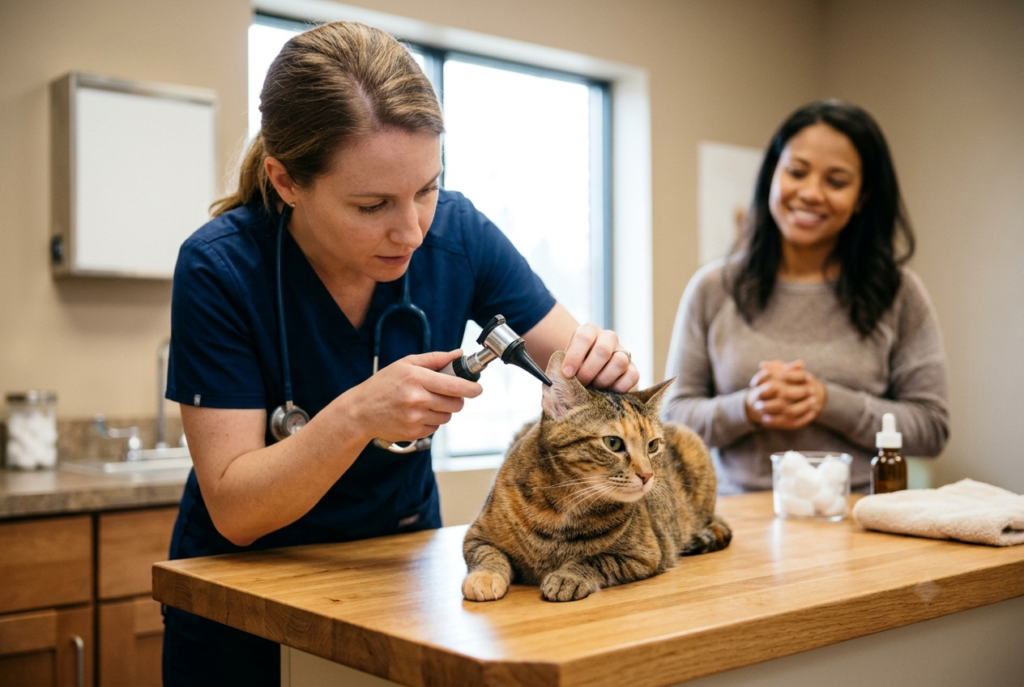
- Book a vet visit. A swab under the microscope confirms whether it is mites, yeast, or bacteria, which is the only reliable way to be sure and to treat it correctly.
When should you see a vet?
See a vet if the discharge is dark, heavy, greasy, or smelly, or if it comes with scratching, head shaking, redness, or pain. Go promptly for yellow, green, or bloody discharge, as these point to a bacterial infection or injury. And go urgently if a head tilt, swelling, or loss of balance appears, since that suggests the problem has reached deeper into the ear. Because the causes overlap in appearance, a vet is the fastest route to the right treatment.
Frequently asked questions
Is black discharge in a cat’s ear always mites?
Not always, but dark, dry, coffee-ground debris is the most common sign of ear mites. It can occasionally accompany other problems, so a vet swab is the reliable way to confirm it.
What does brown wax in a cat’s ear mean?
A small amount of light brown wax can be normal. Brown, greasy, waxy discharge in larger amounts, especially with a musty smell and scratching, usually points to a yeast infection.
Why does my cat’s ear discharge smell bad?
A strong or foul smell usually indicates an infection rather than simple wax. A musty smell leans toward yeast, while a stronger, fouler odour can suggest a bacterial infection.
Should I clean out my cat’s ear discharge myself?
You can gently wipe the outer ear you can see with a proper cat ear cleaner, but never push cotton buds into the canal. If there is heavy or dark discharge with scratching, have a vet examine it before cleaning.
Can ear discharge in cats clear up on its own?
Normal wax manages itself, but discharge caused by mites or an infection will not clear without treatment and tends to worsen. Persistent or dark discharge should be checked by a vet.