

A cat ear yeast infection shows up as brown or reddish-brown waxy discharge, a musty smell, and persistent ear scratching or head shaking. It happens when yeast that normally lives in the ear in small numbers overgrows, usually because something like an allergy or trapped moisture has changed conditions inside the canal. This guide covers how to recognise it, why it keeps coming back in some cats, and how it is treated.
Quick answer: Brown, greasy, waxy discharge with a musty or sweet smell, along with scratching and head shaking, points to a yeast infection rather than mites. It is caused by an overgrowth of yeast, most often triggered by an allergy or moisture in the ear. A vet confirms it with a swab, and treatment combines cleaning with antifungal ear medication. If it keeps returning, the real fix is treating the cause underneath it.
What is a cat ear yeast infection?
Yeast, most commonly a type called Malassezia, lives naturally on a cat’s skin and in the ears in small amounts. A yeast infection happens when that population overgrows and starts to irritate the ear canal. Unlike ear mites, which are a parasite passed between animals, a yeast infection is not contagious. It develops from within, when the ear’s normal balance is disturbed.
That distinction matters for treatment. You cannot catch or spread a yeast infection the way you can mites, so the focus is on the individual cat and, importantly, on why the yeast overgrew in the first place.
Symptoms of a yeast infection in a cat’s ear
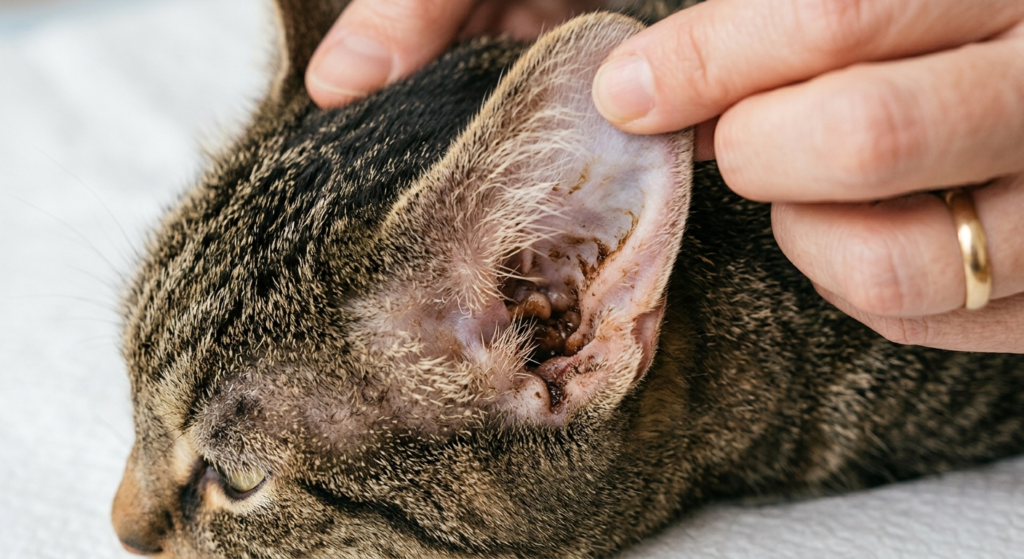
Yeast infections tend to produce a distinctive discharge and smell that set them apart from other ear problems.
| Symptom | What you will notice |
| Waxy discharge | Brown or reddish-brown, greasy, waxy discharge |
| Musty odour | A musty, sweet, or yeasty smell from the ear |
| Scratching | Ongoing scratching at the affected ear |
| Head shaking | Repeated head shaking or tilting |
| Redness | Red, inflamed skin inside the ear flap |
| Greasy coat around ear | Greasy or matted fur near the ear opening |
| Discomfort | Sensitivity or pain when the ear is touched |
The greasy, waxy quality is the key difference from ear mites, which produce dry, crumbly, coffee-ground debris instead. If you are trying to work out which one your cat has, ear mites vs yeast infection in cats sets them side by side. The colour of the discharge is also covered in black and brown discharge in a cat’s ears.
What causes yeast infections in cats’ ears?
Yeast overgrows when conditions in the ear shift in its favour. Several things can trigger that.
Allergies are the most common underlying cause, whether from food or the environment. An allergic cat carries constant low-level inflammation in the ears, and that inflammation feeds yeast overgrowth. This is why yeast infections so often come back until the allergy itself is managed. Moisture is another trigger, since a warm, damp canal is ideal for yeast, which is why some cats develop infections after baths or swimming. Excess wax and poor air flow in narrow or hairy ear canals hold that moisture in. In some cats, a weakened immune system or another existing ear condition tips the balance as well.
If your cat gets yeast infections repeatedly, the ear is the symptom, not the source. Recurring yeast almost always points back to an untreated allergy.
How is a cat ear yeast infection diagnosed?
A vet confirms yeast rather than assuming it. They take a swab of the discharge and examine it under a microscope, where yeast cells are visible and distinct from mites or bacteria. They will also use an otoscope to check how deep the infection goes and whether the eardrum is intact, which affects which medications are safe to use.
This step is what prevents the common mistake of treating the wrong thing. Yeast wax and mite debris can look alike to the eye, but antifungal medication does nothing against mites, and antiparasitic products do nothing against yeast. A swab settles it in minutes.
How is a cat ear yeast infection treated?
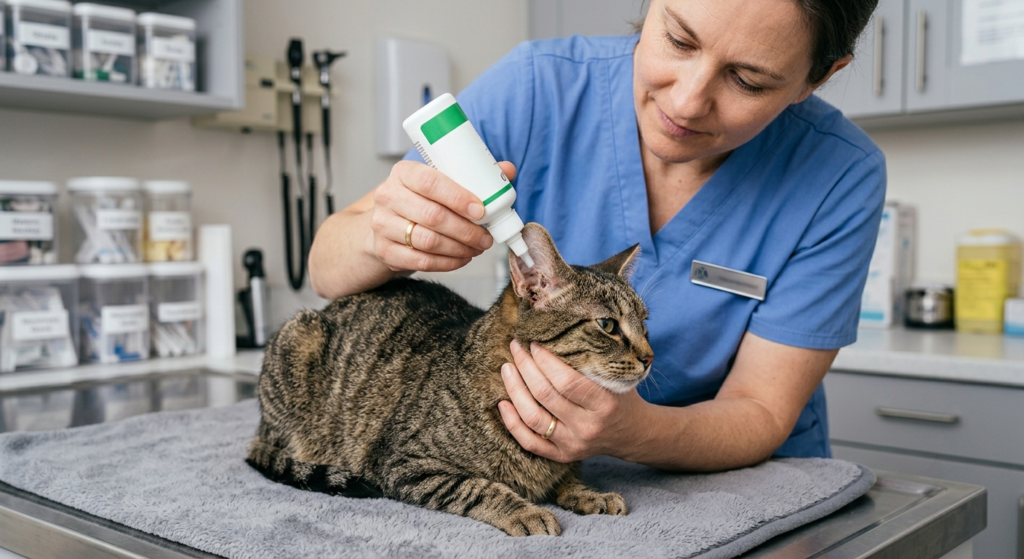
Treatment works on two levels: clearing the current infection, and addressing whatever caused it.
- Cleaning the ear. The greasy discharge has to be cleaned out first so medication can reach the ear surface. Follow your vet’s guidance, or see how to clean a cat’s ears safely for the correct technique.
- Antifungal medication. A vet-prescribed antifungal ear treatment clears the yeast overgrowth. It is important to finish the full course even once the ear looks better, or the infection can rebound.
- Treating the underlying cause. If an allergy or another condition is driving the infection, treating that is what stops it returning. This is the step owners most often skip, and it is the reason yeast infections so often come back.
Avoid using leftover or over-the-counter products without a diagnosis. Applying an antifungal to what is actually a bacterial or mite problem simply delays proper treatment.
How to prevent recurring yeast infections
Prevention centres on keeping the ear dry and dealing with the root cause.
Dry your cat’s ears gently after any bath or exposure to water, since trapped moisture is a common trigger. Check the ears weekly for the return of greasy discharge or a musty smell. Clean them only when needed and only with a proper cat ear cleaner, as over-cleaning irritates the canal and can invite the very overgrowth you are trying to avoid. Most importantly, if infections keep recurring, work with your vet to identify and manage the allergy or condition underneath, rather than treating each flare-up in isolation.
When should you see a vet?
See a vet if you notice greasy brown discharge, a musty smell, or ongoing scratching and head shaking, as these point to a yeast infection that needs proper treatment. Go sooner if the ear is very painful, swollen, or bleeding, or if a head tilt or loss of balance appears, which suggests the infection has reached deeper. And book a visit if the infection keeps returning, because that pattern is the clearest sign an underlying cause has not been addressed.
Frequently asked questions
Is a cat ear yeast infection contagious to other pets?
No. Yeast infections develop from an overgrowth of yeast already present on the cat and do not spread between animals the way ear mites do. The underlying cause, such as an allergy, can still affect more than one pet, though.
Can I treat a cat ear yeast infection at home?
Cleaning at home helps, but clearing the infection needs a vet-prescribed antifungal matched to a confirmed diagnosis. Yeast and mite debris look similar, so guessing risks using the wrong product and delaying recovery.
Why does my cat keep getting yeast infections?
Recurring yeast infections almost always point to an underlying allergy or another condition keeping the ear inflamed. Until that root cause is managed, the infection tends to return after each treatment.
What does a yeast infection smell like in a cat’s ear?
It usually has a musty, sweet, or distinctly yeasty odour, which is one of the more reliable ways to tell it apart from other ear problems.
How long does a cat ear yeast infection take to clear?
With the right antifungal treatment, many clear within one to two weeks. Recurring or deep infections take longer and need the underlying cause treated to fully resolve.