Skip to content





Yes, dogs can eat eggs. The catch is how you cook them.
Most of the confusion comes from people picturing their own breakfast. Sunny-side up, a knob of butter, a pinch of salt, maybe some garlic in there. That plate is not the one your dog should be eating. The version that’s good for them is boring on purpose.
The boring version
Boil an egg hard. Let it cool. Peel it, because shells are not a snack. Chop it up small, and you’re done.
Scrambled is fine too, but only if you cook it in a dry pan or with a tiny bit of water and nothing else. No butter, no cheese, no salt, no “just a little” anything. If it’s plain, it’s fine.
A poached egg works when the white and the yolk are both fully set. A fried egg is okay if there’s barely any oil, though honestly, why bother when boiling is easier?
Three things I’d flat-out skip:
- Soft-boiled or runny eggs. Undercooked is undercooked.
- Anything with onion or garlic. Both are toxic to dogs, and they love to hide in omelets and fried rice.
- Raw eggs. More on this in a second.
Why raw is a bad idea
Plenty of dog owners feed raw eggs and some of them are very confident about it. I get the appeal. Dogs aren’t people, wolves ate eggs, and so on.
But raw eggs can carry Salmonella, and the person who ends up handling the shells and washing the bowl is you. The CDC’s pet-food safety guidance advises against feeding raw food to dogs and cats, and uncooked eggs are one of the ingredients it calls out.
There’s another wrinkle. Raw egg white contains avidin, which grabs onto biotin and makes it harder to use. A one-off won’t hurt. Feeding a lot of raw white, again and again, can.
Cooking solves both problems. That’s the whole argument.
And if your dog grabs one off the counter while you’re not looking? Don’t panic. One raw egg doesn’t mean a trip to the clinic. Keep an eye out for vomiting, diarrhea, a dull mood or no appetite over the next day or so, and call your vet if any of it appears. Don’t try to make your dog throw up unless a vet specifically tells you to.
What you actually get out of it
Not as much as the internet says.
Eggs do have real nutrients in them: protein, vitamin B12, riboflavin, selenium, and choline in the yolk. But if your dog already eats a complete and balanced food, they’re getting all of that anyway. So think of an egg as a treat, not a supplement. It isn’t going to fix anything.
You’ll also hear that eggs make a dog’s coat shiny. That’s overselling it. A dull or flaky coat, heavy scratching or hair loss usually comes from something else, like fleas, allergies or a skin condition, and eggs won’t fix any of those. Feeding them for weeks and hoping for a change can just delay a vet visit your dog really needs.
So how much?
Anyone giving you a chart (“small dogs a quarter egg, large dogs a whole one”) is guessing. A 9 kg couch dog and a 9 kg dog who runs for two hours a day have different calorie needs.
Better approach: give a few bites the first time. Wait and see how their stomach reacts. Then decide.
One number is worth knowing. The World Small Animal Veterinary Association (WSAVA) suggests treats should generally stay under about 10% of a dog’s daily calories. That counts everything: the dental chew, the bit of cheese, the egg. It’s a ceiling, not a goal. Their Global Nutrition Guidelines are a good read if you want more.
If eggs are going to be a regular thing, ask your vet to help you work out a portion. It takes two minutes at an appointment you’re already at.
Dogs who should check with a vet first
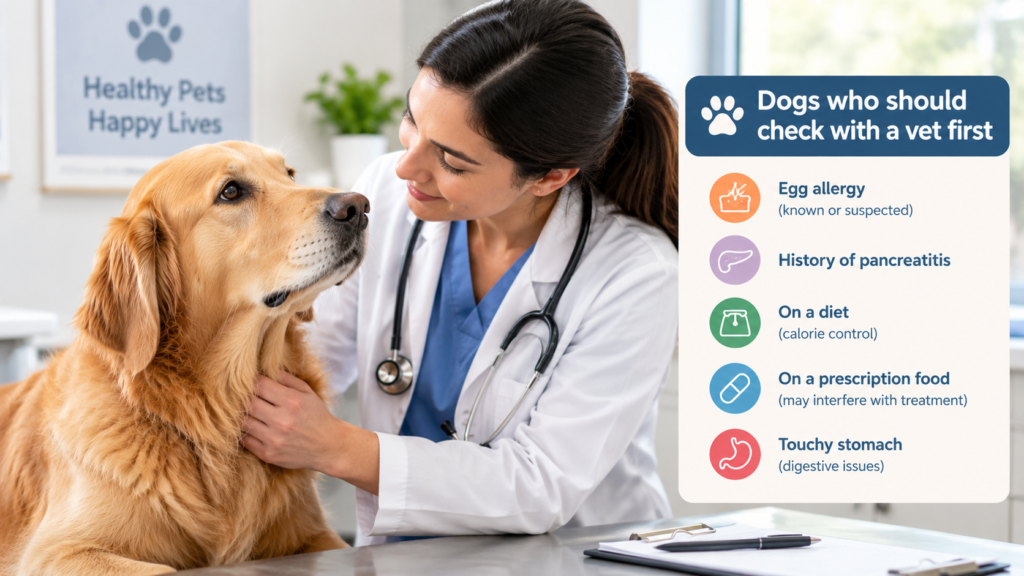
- Dogs with an egg allergy, known or suspected. Itchy skin and upset stomachs have a long list of possible causes, so pinning down a food trigger often means a supervised elimination diet, not guessing at home.
- Dogs who’ve had pancreatitis. Yolks are fatty. Your vet decides whether that’s okay.
- Dogs on a diet. Eggs have calories. They count.
- Dogs on a prescription food. Extras can work against the whole point of the diet.
- Dogs with touchy stomachs. If a new food brings on vomiting or loose stools, stop.
Swollen face, trouble breathing or collapse after eating something? That’s an emergency. Go now.
Puppies and eggshells
A puppy can try a tiny bit of plain cooked egg, as long as it sits well with them. Just don’t let it crowd out the real food. Puppies are growing fast and need a diet made for that, so puppy food stays the main event and eggs are an occasional bonus. Add new foods one at a time, too. If your puppy ends up with an upset stomach, you’ll know exactly what caused it. And if the diarrhea or vomiting drags on, don’t wait it out. Call the vet.
Eggshells are a different story. Lots of people see the shell as free calcium, and I get why. But how much calcium a dog needs depends on their age and what they already eat, and too much can mess with that balance, puppies most of all. The shell itself is a problem too. Sharp pieces can cause choking or stomach trouble, and crushing it into powder doesn’t make that risk disappear. If your dog really does need more calcium, your vet can recommend a proper supplement. For everything else, just peel the egg.
A few things people always ask
Every day? Nothing says they need it. It adds calories and can edge out balanced food, so keep it occasional unless your vet says otherwise.
Just the yolk? Cooked yolk is fine for many dogs in small amounts. It’s also the fatty part, so be careful with dogs who are heavy or on low-fat food.
With milk or butter? No. Butter is extra fat, and milk upsets plenty of dogs who can’t handle lactose. You don’t need either.
For an upset tummy? It’s not a remedy. Some dogs tolerate plain egg, but adding new food during an illness muddies the picture. If vomiting or diarrhea won’t quit, or there’s blood, or your dog seems dehydrated, see a vet.
Can dogs be allergic? Yes, some are. If you’re seeing ongoing itching, skin problems or digestive trouble, get it looked at instead of swapping foods at home.
The takeaway
Plain, fully cooked, small amounts, shell off. That covers it for most healthy dogs. Check with your vet first if yours has a medical condition or an allergy, and don’t treat eggs as anything more than what they are: a decent little snack.
Related reading: Can dogs eat rice? Safe amounts and risks to avoid.