


I get asked this a lot, usually by someone who just watched their hamster tear around an empty cage at 11pm and started feeling guilty about it. The short answer: no, probably not. Most hamsters do better solo, and for one very common species (Syrian), living alone isn’t just fine, it’s the only safe option.
Let me walk through why, because the “does my pet need company” instinct makes total sense for a lot of animals. It just doesn’t map onto hamsters the way people assume.
We’re projecting
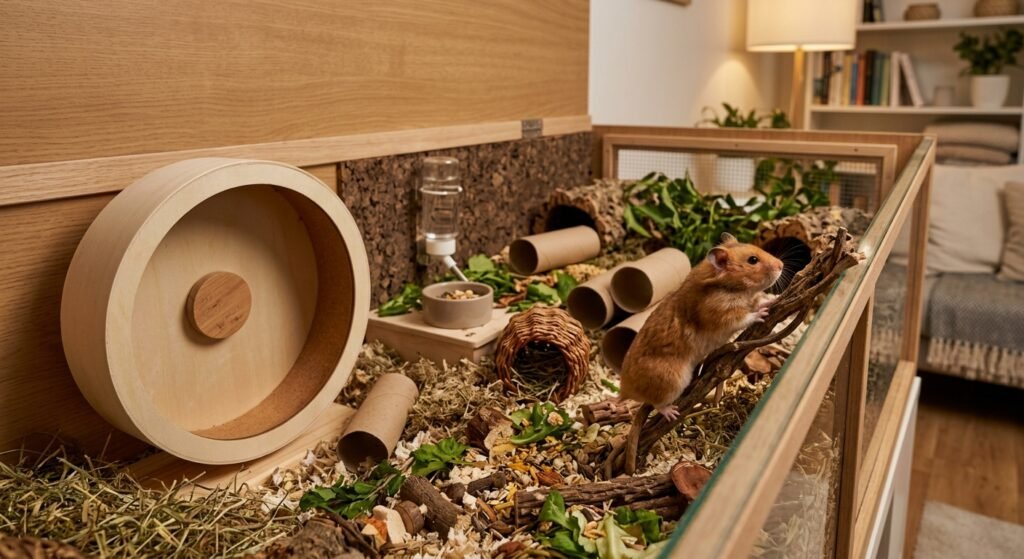
If I had to sit alone in a room all day I’d lose my mind, so it’s easy to assume a hamster stuck alone in a cage feels the same way. But hamsters aren’t guinea pigs. Guinea pigs are herd animals and genuinely struggle without company. Hamsters, especially Syrians, are basically the opposite. In the wild they dig solitary burrows and actively avoid each other outside of mating. A hamster with a decent setup, room to dig, a wheel, stuff to chew on, is not sitting there pining for a roommate. It’s busy.
Syrians: just don’t
If you have a Syrian hamster (sometimes sold as a “Golden” hamster), this part isn’t really up for debate. Keep it alone.
Syrians are intensely territorial once they hit maturity, which happens fast, somewhere around 4-6 weeks old. Two adult Syrians in the same cage will fight, and I mean actually fight, not posture at each other. The Merck Veterinary Manual backs this up directly: sexually mature hamsters, especially females, are territorial and prone to fighting, which is why it recommends housing them singly except during deliberate breeding. They have teeth built for chewing through wood and they will use them on each other. I’ve seen forum posts from people who kept a “bonded” pair for months with zero issues and then came home one day to a genuinely bad injury. That’s not rare bad luck, that’s just how it goes with this species eventually.
The trap here is that baby Syrians often look completely fine sharing a tank at the pet store. They’re not mature yet, so the territorial switch hasn’t flipped on. It flips on later, sometimes with almost no warning.
Dwarf hamsters are the actual gray area
This is where I think a lot of advice online gets lazy. You’ll see blanket statements that dwarf hamsters “need” friends, or that any dwarf species is fine in pairs. Neither is really true.
Roughly, here’s how it breaks down:
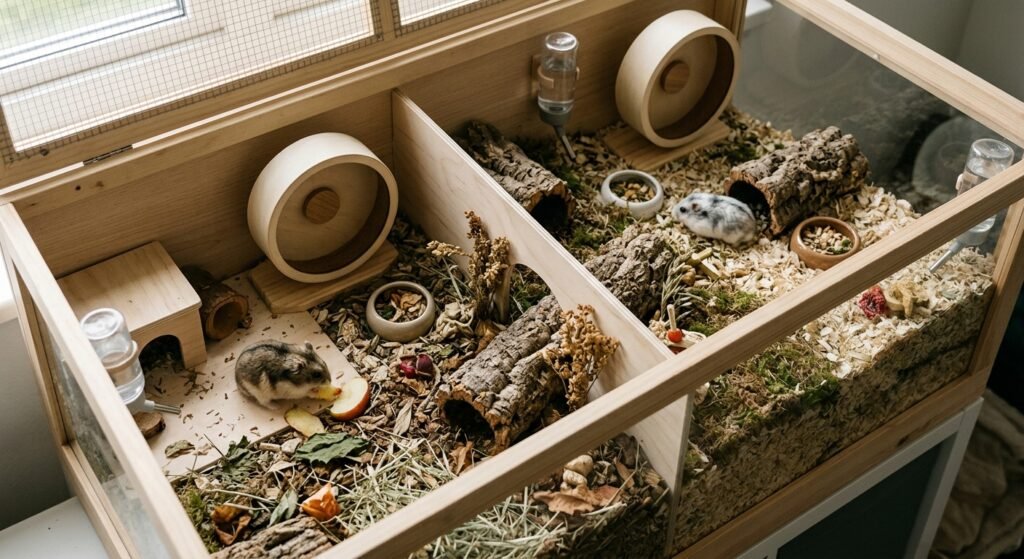
Chinese hamsters tend to behave more like Syrians, best kept alone. Campbell’s and Winter White dwarfs sometimes tolerate a same-sex sibling, but it’s genuinely inconsistent, some pairs are fine for years, others fall apart within weeks, and there’s no reliable way to predict which you’ll get. Robos are usually the most tolerant of company out of the bunch, but “usually tolerant” still isn’t a guarantee, and plenty of Robo owners keep theirs solo without any issue.
If you do want to try housing two dwarfs together, a few things help the odds: get them from the same litter and introduce them young, only pair same-sex animals unless you’re deliberately breeding, and don’t make them share resources, duplicate the food dish, water, wheel, and hides so there’s nothing worth fighting over. Even then, treat it as something you’re monitoring indefinitely, not a decision you make once and forget about.
Being littermates doesn’t mean anything long-term
People assume siblings are automatically safe together because they grew up in the same litter. They’re not. Hamsters don’t really form lasting family bonds the way, say, dogs or elephants do. Once a hamster matures, its behavior is driven by territory and resources, not history. I’ve read about sibling pairs that lived together peacefully for a year and then started fighting after something as small as a rearranged cage layout or one of them hitting full maturity later than the other.
Is your hamster actually bored, or just asleep?
A lot of “my hamster seems lonely” worry is really just people misreading a nocturnal animal. Hamsters sleep during the day. If yours is curled up in its nest every time you check on it after breakfast, that’s completely normal, not a sign of depression.
Check on it in the evening instead. A hamster that’s doing fine will typically be digging, rearranging its bedding, hunting around for scattered food, running its wheel, chewing on something, grooming, or poking at whatever new thing you dropped in the cage.
What actually deserves attention is a change from whatever’s normal for your hamster. Sudden lethargy, hiding even at night, losing weight, a hunched posture, patchy or greasy fur, not eating like it used to. Those point toward illness, and that’s a vet visit, not a second hamster.
If it seems under-stimulated, fix the cage before buying another hamster
This is the part that usually actually solves the problem, and it’s the part most “get a friend” advice skips over entirely.
Bedding depth matters more than most people think. You want somewhere around 6-8 inches of a paper-based, digging-safe substrate so it can actually tunnel, not just scratch at the surface.
Wheel size matters too, and it’s an easy thing to get wrong. A Syrian needs something around 10-12 inches across; smaller than that and it has to arch its spine to run, which isn’t great for it long term. Dwarfs can usually manage with 8 inches, though bigger never hurts.
Scatter part of the daily food through the bedding instead of dumping it all in one bowl. It costs you nothing and gives the hamster something to actually search for, which is closer to how it would eat in the wild anyway.
Swap out enrichment regularly rather than just piling more of it in permanently. Cardboard tubes, plain paper bags, untreated wood chews, small boxes. A hamster gets more out of something new than out of having five toys sitting there unchanged for months.
And build a relationship with it directly. Let it come check out your hand instead of grabbing it. Hand-feed the occasional treat. Approach when it’s actually awake. A few weeks of that consistently does more for a hamster’s day-to-day life than adding a second animal ever would, and there’s zero risk of it ending in a fight.
If you already have two hamsters housed together
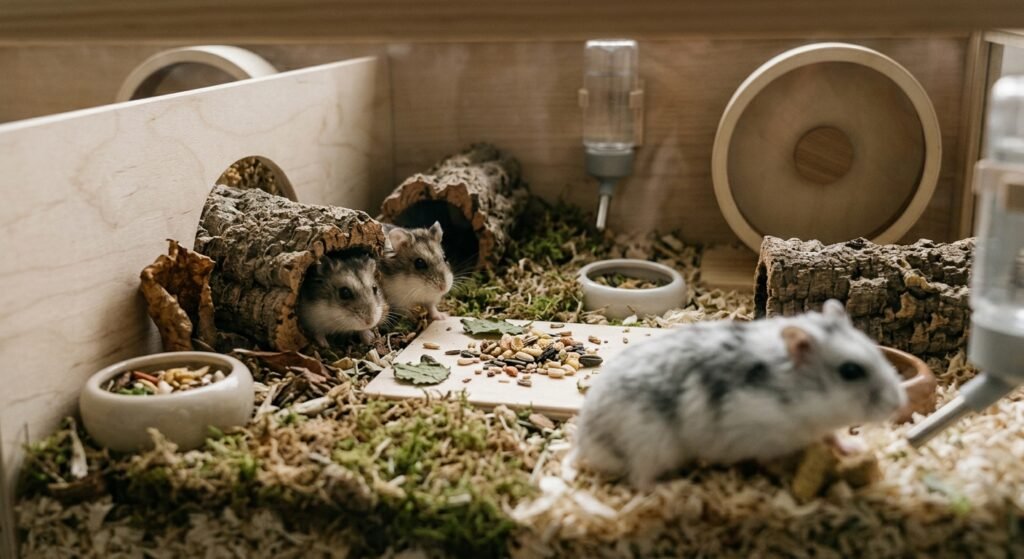
Don’t panic, but don’t ignore warning signs either. Watch for chasing that doesn’t let up, actual biting, wrestling that escalates instead of settling down, screaming or distressed squealing, missing patches of fur, any blood or visible wounds, or one hamster consistently blocking the other from food or water.
If you see any of that, separate them. Permanently. Not “give it a few days and see.” Have a second cage ready before you need it, not after. And if either one has a wound, get it looked at by a vet, small animals can hide how serious an injury actually is.
Bottom line
Living alone isn’t a deprivation for a hamster, most of the time it’s the safer setup. Syrians should always be housed by themselves, no exceptions. Dwarfs are more of a judgment call: some do fine paired up, most don’t need it, and none of them require it to have a good life.
If your hamster seems under-stimulated, look at the cage before you look for a second hamster. More bedding depth, a properly sized wheel, food that takes a bit of effort to find, enrichment that actually rotates, and some time spent earning its trust. That’s usually the whole fix.