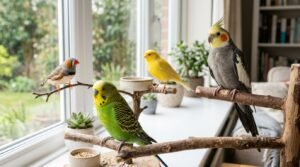
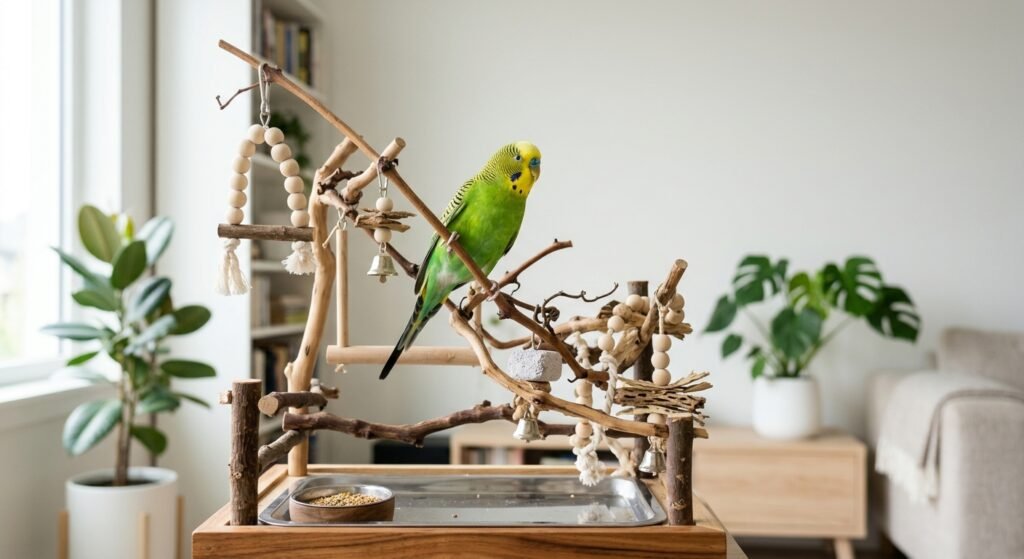
Small, green or blue, endlessly chattering, this is the bird stocked in nearly every pet store in the country. Budgerigar is the full name. Parakeet is the common American shorthand. Both point to the same species, Melopsittacus undulatus, a small parrot native to Australia. “Parakeet” technically covers dozens of small, long-tailed parrot species around the world, which is where the confusion comes from, but in the US, if someone says parakeet, they mean budgie.
Size alone doesn’t explain why they’re kept so widely. Real intelligence does, along with a social temperament and the ability to mimic sounds and speech, three traits usually reserved for parrots too large to house easily. Few birds combine that intelligence with that small a footprint, and that gap is most of the reason budgies outsell flashier, more famous talkers.
What people don’t anticipate is the flip side. Smaller bird, same categories of responsibility. A budgie needs almost everything a macaw needs, just scaled down, and skip any one piece and it shows up in the bird’s health or behavior faster than most new owners expect.
Origins and What They Reveal About Behavior
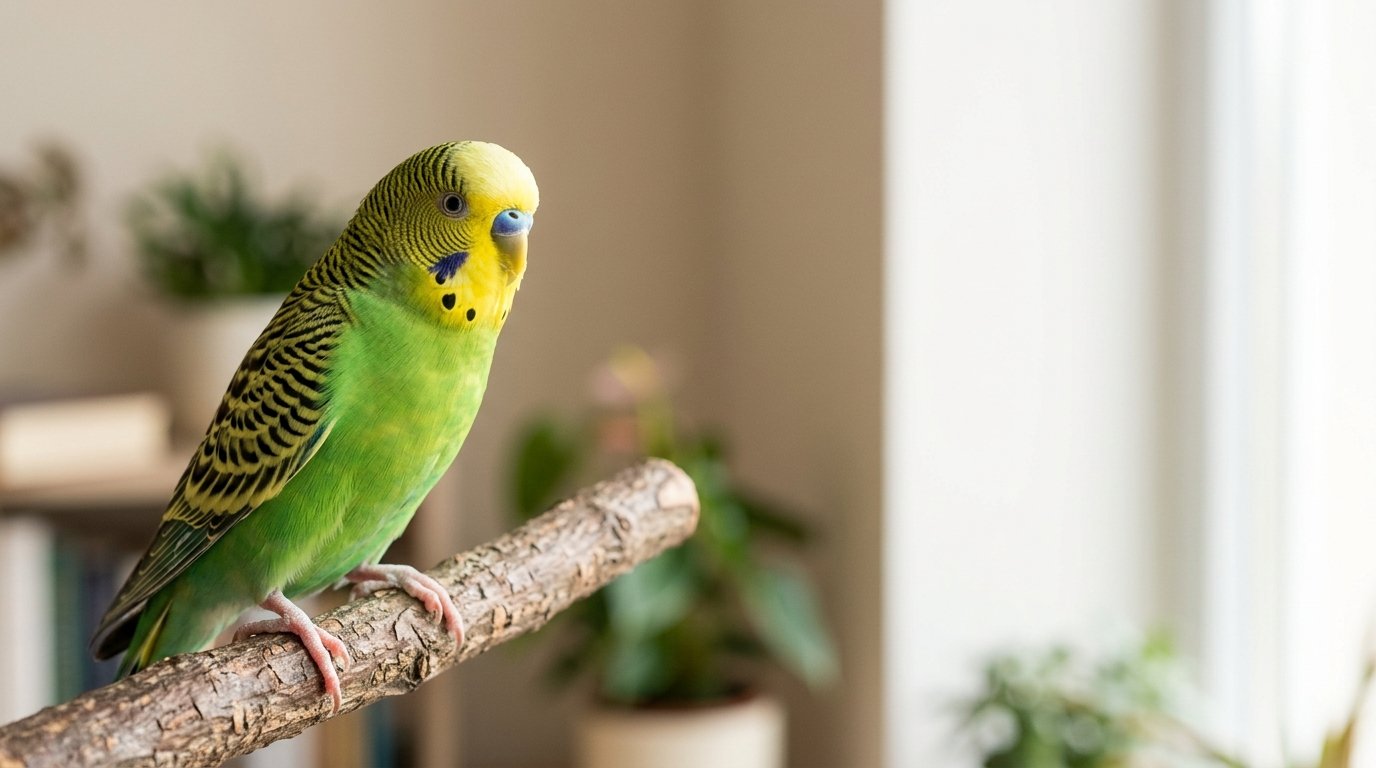
Across the open, dry interior of Australia, wild budgerigars move in large, loosely organized flocks, following food and conditions as they shift. Green and yellow is their natural coloring, the “wild-type” pattern most people picture by default. Blue, white, grey, and the long list of other combinations sold in stores today came from selective breeding over the past century. None of it occurs in the wild.
That flock history isn’t incidental trivia. It’s the reason a pet budgie behaves the way it does: constantly active, constantly reactive to sound and movement around it, wired for a social environment it doesn’t get to choose in captivity. So when a budgie goes still and quiet for a stretch, don’t read it as calm. In a flock animal, stillness usually means something else is going on.
Recognizing a Budgie
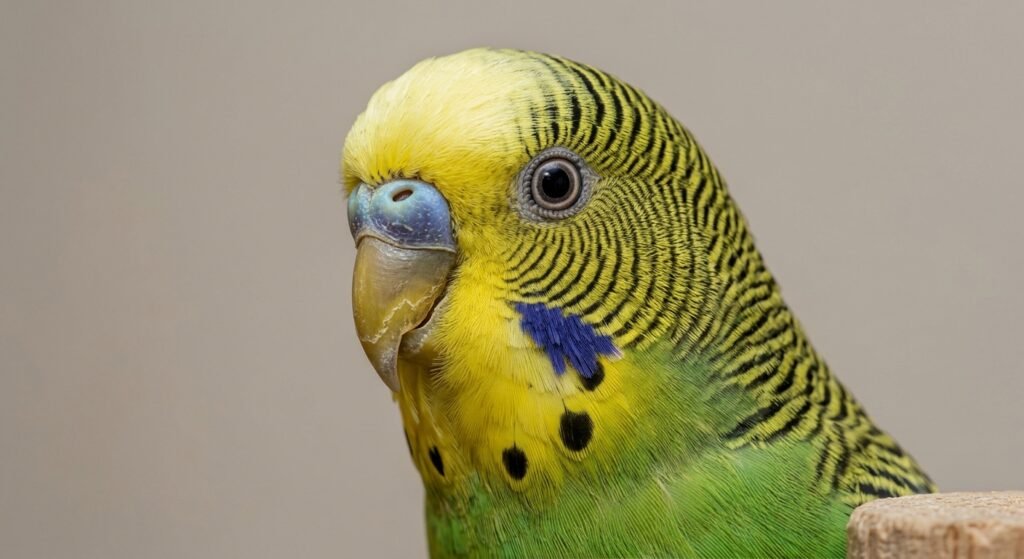
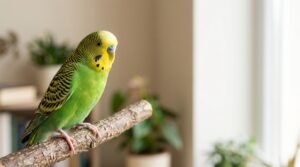
A curved beak, a long tapered tail, a compact body small enough to fit in one hand once the bird is tame, this is the standard build. The tail does a lot of visual work, making the bird read as bigger than it is. One detail is worth flagging for anyone trying to read a budgie’s condition: the cere, the fleshy patch above the beak, shifts color with age, sex, hormones, and reproductive state. Treat it as one clue among several. On its own it tells you very little.
A size variant exists inside the species too. Breeders have produced English or show budgies over generations, larger-bodied, fuller-feathered, but genetically the same bird. That unusually bulky, fluffy budgie you may have seen somewhere wasn’t a different species. It was this one, bred differently.
Telling Males From Females
Cere color is also the main way owners tell males from females, though it takes patience to read correctly. Adult males typically settle into a blue or purple cere, while adult females trend toward brown, tan, or whitish tones, especially when not in breeding condition. Young budgies complicate this: chicks are born with pink ceres that don’t reliably shift toward adult coloring until several weeks of age, so a bird sold young as female sometimes turns out male once it matures. Certain color mutations, like albino and pied budgies, mute these cues further and can make visual sexing unreliable at any age. When it genuinely matters, an avian vet or a DNA test settles it with certainty that cere-watching alone can’t.
Temperament
Exploring, chewing, climbing, chattering at you or at other budgies if you keep more than one, that’s how an unsupervised budgie fills its day. Talking is where things get unpredictable. Some birds pick up words and short phrases after weeks or months of steady, patient interaction. Others never do, no matter the effort put in. Anyone getting a budgie mainly for the talking should treat it as a possibility, not something guaranteed at purchase.
Taming works the same way, individually inconsistent. Weeks of gentle, repeated handling gets some budgies stepping onto a finger without hesitation. Others stay cautious indefinitely, especially if they had little contact with people early on, and that’s not a verdict on the owner. It reads much more like personality than training outcome.
Social contact is the one piece that isn’t negotiable. Food, water, and a clean cage aren’t enough on their own, a budgie can have all three and still not be thriving if it spends most of its day without interaction. This is exactly the requirement most likely to get missed by someone who picked a budgie expecting a low-maintenance pet.
Is a Budgie Actually a Good First Bird?
Generally, yes, though the word “beginner-friendly” carries more baggage than it should. People hear it and assume it’s easy. What it actually means, in this case, is that a budgie’s size makes the logistics, cage cleaning, food costs, general handling, more manageable than a cockatoo or macaw would be. That’s a real advantage. It isn’t a discount on the underlying care. A properly sized cage, safe perches, toys, real exercise, daily social time, regular cleaning, a balanced diet: all of it still applies, every day, for years. Best starter birds for first-time owners has a fuller side-by-side for anyone still deciding between species.
Then there’s noise, which tends to get glossed over. Quieter than a larger parrot’s calls, yes, but not occasional and not something a bird can be trained out of. Thin walls and close neighbors are worth thinking about before the bird arrives, not after the complaints start.
Setting Up the Right Environment
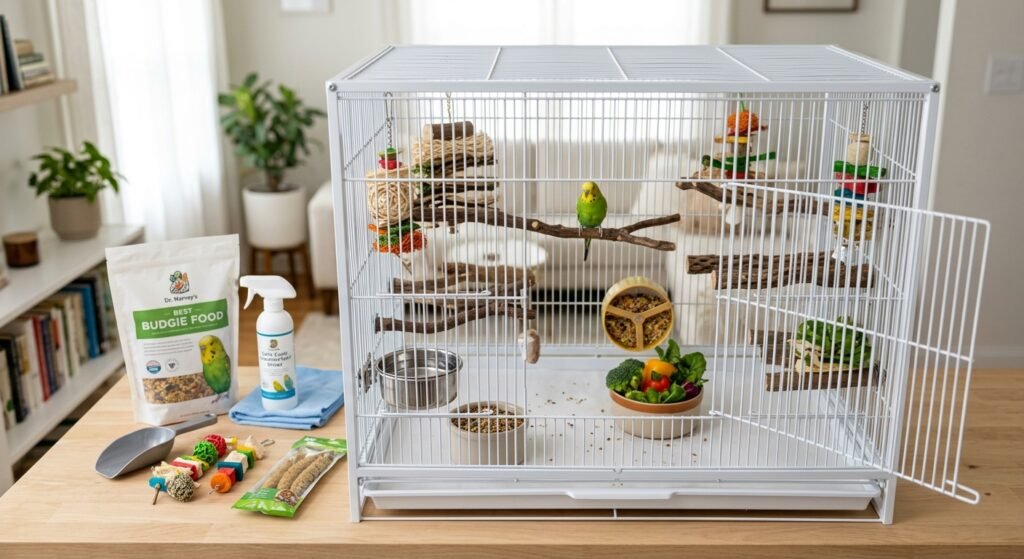
Minimum requirements and an actual good setup aren’t the same thing. A cage, food, and water clear the bar for survival. Whether the bird is doing well depends on something else: room to move, explore, and interact.
Perching space isn’t the goal, wing movement is, so the cage needs real room beyond what looks adequate at a glance. Multiple perches at varying heights and thicknesses keep a budgie moving and help keep its feet healthy, and safe toys paired with basic foraging setups give an intelligent animal something to actually do with its day. On the specific need for non-toxic toys and general activity level, VCA’s budgie care guidance lines up with this.
Where the cage sits in the house matters more than it gets credit for. Calm location, no direct heat, no cold drafts, no smoke, no airborne chemicals. Kitchens are the classic mistake here, and a dangerous one, since cooking fumes and nonstick cookware off-gassing reach concentrations that are lethal to birds and barely noticeable to people. Water needs to stay fresh around the clock, and both dishes need actual cleaning on a schedule, not a rinse whenever they start to look bad.
Feeding
Seed mixes as the whole diet is the single most common feeding mistake, and an easy one to fall into. The bag looks complete. The bird will happily eat nothing but the seeds even with better food sitting right next to it. The actual problem is nutritional: too much fat, not enough of the broader nutrient range a budgie needs over the long run.
Build the diet around a formulated budgie food instead, then round it out with fresh vegetables in small pieces, leafy greens, broccoli, carrots, peppers, peas, plus occasional bits of fruit. Wash anything fresh before it goes in the cage, and pull it before it spoils rather than letting it sit. Chocolate, caffeine, alcohol, avocado, none of these are moderation foods for a budgie. They’re simply off the list. VCA’s feeding guidance for budgies goes deeper on the specifics and backs up the point about water needing daily attention.
A budgie already hooked on seeds needs a gradual transition, not a cold switch. Cut seeds too fast and a bird that hasn’t started reliably eating its replacement food can decline quickly. Watch intake closely through the change, and bring in a vet if the bird still isn’t adjusting after a reasonable stretch of time.
Lifespan
Seven to fifteen years is the typical range for a pet budgie, wide enough that the “why” behind it matters more than the number itself. Diet, genetics, exercise, housing, veterinary care, and how much household hazard exposure the bird has had over its life, all of it factors in. Strong care tends to push toward the higher end, though nothing guarantees a specific outcome. Treat this as a decade-plus commitment from the start, not something to try out short-term. How long do budgies live? breaks down what actually drives the difference in more detail.
Signs Something Is Wrong
Hiding illness is something birds are genuinely good at. It’s a survival trait, since looking sick in the wild makes an animal a target, and it turns into a real blind spot for owners who read a quiet bird as simply a calm one. Alert, active, engaged with its surroundings, that’s the baseline for a healthy budgie, so any real shift away from that in appetite, droppings, sound, or posture deserves attention right away. Not a few days of watching first.
Sitting low in the cage. Staying fluffed up for long stretches. Sleeping far more than usual. Labored breathing, or visible tail bobbing with each breath. Sudden weakness. Changes in droppings. Skipped meals. Vomiting or repeated regurgitation. Weight loss with no clear cause. None of these confirms a specific illness by itself, but together they point to the same urgency: budgies can go from slightly off to seriously sick fast, which is exactly why waiting it out is the wrong call. Get an avian vet involved as soon as something looks wrong, and keep up with routine checkups even when nothing does. Early problems are almost always easier to treat than late ones.
One thing worth distinguishing from actual illness: molting. Budgies shed and regrow feathers periodically, and during a heavy molt a bird can look scruffier, act a little more irritable, and rest more than usual. That alone isn’t cause for alarm. What separates ordinary molting from a genuine problem is the rest of the picture, appetite, energy, droppings, breathing, still being normal alongside the feather loss. If any of those shifts too, it stops being “just a molt.”
Before You Bring One Home
The bird itself is the easy part. Everything before that, a properly sized cage already assembled, safe perches, food and water dishes, the right food on hand, toys, cleaning supplies, a genuinely suitable spot in the house, needs to be sorted first. Line up an avian or bird-experienced vet in week one. Don’t wait for the emergency that makes the search urgent.
Time is the part people talk themselves past. A budgie’s need for interaction doesn’t pause once the cage is clean and the dish is full, and if daily time for that genuinely isn’t realistic given your schedule, better to know that now than after the bird is already home.
Other household pets are a real risk, not a theoretical one. A dog or cat that’s shown zero interest in the cage for months can still turn a single curious moment into a disaster. It doesn’t take a pattern of aggression, just one lapse.
Finally: everyone in the house needs to be on the same page that this runs for years, not months. Smaller bird, easier housing, sure. The daily care load doesn’t get smaller to match.
Common Questions
Is a budgie the same thing as a parakeet? Yes. A budgie is a type of parakeet, and in the US, “parakeet” at a pet store almost always means budgerigar specifically.
Do budgies actually learn to talk? Some do, with patient and consistent interaction over time. Ability varies significantly between individual birds, so it shouldn’t be treated as guaranteed.
Can a single budgie live alone without another bird for company? Yes, as long as it gets consistent interaction and enrichment from its owner. A budgie left without regular social contact, even a healthy one physically, is a different and worse situation.
What’s the actual difference between a budgie and an English budgie? None at the species level. English or show budgies have been selectively bred for a larger, fuller-feathered appearance. The common pet-store budgie is closer to the smaller, original form.
How can you tell if a budgie is male or female? Mainly by cere color, blue or purple typically means male, brown, tan, or whitish typically means female, though young birds and certain color mutations make this unreliable without a DNA test.
Is it normal for a budgie to lose feathers? Yes, through regular molting. It becomes a concern only when it’s paired with other changes, like reduced appetite, low energy, or labored breathing.
Do budgies need a companion budgie, or is one enough? Either works. A single budgie can do well if its owner provides consistent daily interaction; two budgies will socialize with each other but still benefit from human attention.
The Real Ask
Daily interaction. A real diet beyond seeds. Enough room to actually move. Years of sustained attention. That’s what a small bird ends up asking for, and it’s more than the size suggests. Owners who go in expecting that tend to end up with one of the more rewarding companion birds out there. Owners expecting something closer to low-maintenance usually end up with a bird that’s struggling quietly, in ways that are easy to miss until they’re not.