Skip to content





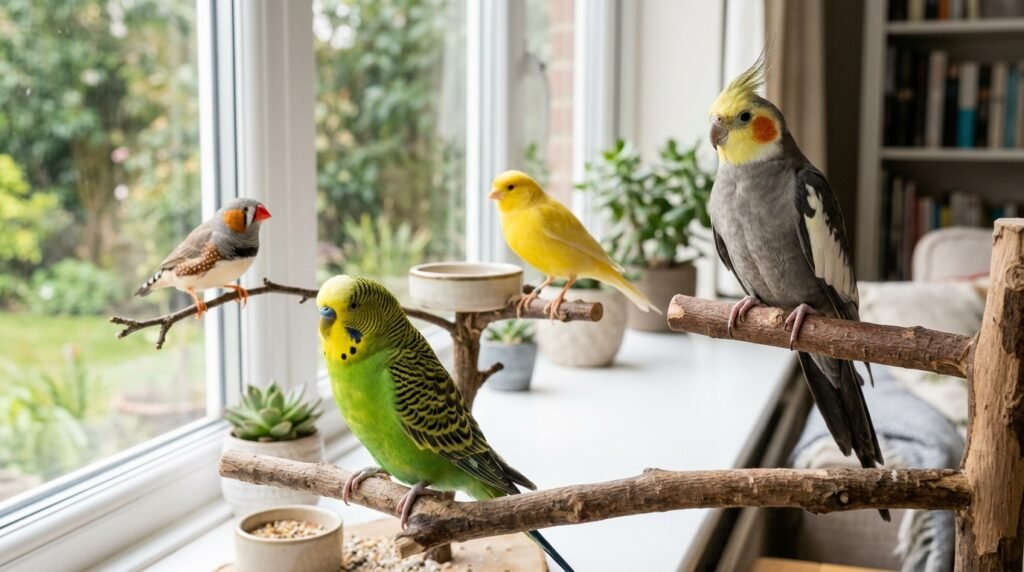
For most first-time owners, the best starter bird is a budgie or a cockatiel. Both are small, social and affordable to house, and both enjoy interaction. If you would rather watch and listen than handle a bird, canaries and finches are better matches. Lovebirds are rewarding but need more experience than their size suggests. Whichever you choose, “beginner-friendly” describes the size, not the workload: every pet bird needs a proper cage, a varied diet, daily attention and a vet who treats birds.
Best Starter Birds at a Glance
| Bird | Handling | Noise | Social needs | Lifespan (published estimates) |
|---|---|---|---|---|
| Budgie | Hands-on; individual birds vary | Chirps and chatters all day | Needs daily interaction; one or two | About 6-15 years |
| Cockatiel | Hands-on, gentle; flighty at times | Whistles rather than screeches | Social; thrives on daily interaction | Up to 20 years or more |
| Canary | Hands-off; listen, don’t hold | Males sing | Usually one per cage; territorial | About 10 to 14+ years |
| Finch | Hands-off; no talking | Quiet chirps and “peeps”; cannot screech | Keep in pairs or groups | Up to about 10 years |
| Lovebird | Hands-on, but strong-willed | Chatty, louder at dawn and dusk | Bonds strongly; singles need lots of attention | About 12-15 years or more |
Lifespans are published estimates and vary by source and by bird. Cage and care details are below.
Budgies: the classic starting point
A budgie is the usual first answer for a reason. It is small enough that cage cleaning, food costs and handling stay manageable, and it is social enough to bond with a patient owner. Some budgies learn to step onto a finger within weeks, and some learn a few words, though neither is guaranteed. Smaller does not mean easier, though: a budgie still needs a cage of at least 20 x 20 x 30 inches, daily time out of it, toys, and a diet that is not just seed mix. For the full picture, see what a budgie is and what it needs, and plan for a commitment of a decade or more.
Start here if you picture a bird that eventually perches on your finger and learns a few tricks.
Cockatiels: a little bigger, a little more presence
Cockatiels sit one step up from budgies. Lafeber describes them as cuddly and outgoing, and says they chirp and whistle rather than screech, which suits many homes better than a louder parrot. Males tend to whistle more and are more likely to pick up a few words; both sexes enjoy being in the same room as their person.
They come with their own quirks. Cockatiels can thrash in the cage at night (called night frights; a night light can help), hens may lay eggs even without a male, and they are flighty, so a cage with a large front door makes handling easier. Lafeber says a well-cared-for cockatiel can live to 20 years or more, so this is a long-term decision. Lafeber’s cockatiel care guide covers these in more detail.
Canaries: for people who want to listen, not hold
Canaries are not shy budgies. Lafeber describes them as hands-off birds, and most simply do not want to be handled. Males are the singers, and their song starts to develop once they mature. If you want a canary for the singing, hear the individual bird sing before you buy.
Canaries are also territorial. Lafeber advises giving each canary its own cage, because housing them together can be dangerous. Keep them indoors: its canary guide notes that canary pox is spread by mosquitoes and is a serious risk for outdoor birds.
Finches: watch a small flock
Finches are active and social with each other, not with you. According to Lafeber, they do not talk, they cannot screech like parrots, and they are suggested for people with close neighbors, although males can chirp persistently through the day. Because they are flock animals, plan for a pair or group from the start, in a wide flight cage that lets them fly, rather than adding birds one at a time. Never house them with a parrot, which can injure them. See the finch care guide for species differences.
Lovebirds: wonderful, but not for every beginner
Lovebirds are small, usually 5 to 6.5 inches, but Lafeber describes them as bold, inquisitive and always on the go. They bond strongly. A single lovebird needs plenty of human interaction, while a bonded pair may ignore people. They are chatty, especially at dawn and dusk, and strong chewers that need durable, safe toys. Lafeber warns that small cages and little freedom can lead to neurotic behavior and self-mutilation, so give them the largest cage you can. If you want a small, colorful bird that is easy, a budgie is usually the safer first choice; see the lovebird care guide before deciding.
How to Choose: Questions That Matter More Than Size
- Do you want to handle the bird, or watch it? Budgies, cockatiels and lovebirds want interaction. Canaries and finches mostly do not.
- How much noise can your household live with? Every bird makes noise. Think about early mornings and thin walls before you choose.
- What cage space do you actually have? The Merck Veterinary Manual lists 20 x 20 x 30 inches with 0.5-inch bar spacing as the minimum for budgerigars, cockatiels and lovebirds. Bigger is better, and finches need a wide flight cage.
- Are you ready for a long commitment? Many small birds live a decade or more, and some live much longer. Small does not mean short-lived.
- Can you give daily time? MSPCA-Angell suggests at least 30 to 60 minutes of daily interaction for companion birds. Canaries and finches need less hands-on time but still need daily care.
Even the Easy Birds Need Real Care
There is no maintenance-free pet bird. Seed-only diets are a leading cause of malnutrition in pet birds, according to the Merck Veterinary Manual, so build the diet around formulated bird food with fresh vegetables, and ask an avian vet what suits your species.
Keep the cage away from drafts, smoke and kitchens. Merck notes that fumes from overheated nonstick (PTFE) cookware commonly poison birds kept in or near kitchens, and that small birds can die suddenly with minimal exposure. Provide safe perches, things to chew, and clean food and water daily.
Find a vet who treats birds before you need one. Birds hide illness by instinct, so problems are often serious by the time they show. The Association of Avian Veterinarians is a good place to start your search.
Meet the Bird Before You Buy
Visit a rescue, a responsible breeder or an avian vet clinic if you can. Listen to the noise level and watch how the birds react to people. Two birds of the same species can have very different temperaments, so meeting the individual tells you more than any care guide will.
Starter Bird FAQ
Which starter bird is the quietest?
Finches are the usual suggestion for close neighbors, since they cannot screech like parrots, but males still chirp through the day. Canaries are not loud in the way a parrot is, but males sing.
Which is easiest to tame?
Budgies and cockatiels are the most common hands-on choices. Tameness varies by individual bird and how it was raised, so patient daily interaction matters more than species.
Can I keep different species together?
Generally not as a beginner. Canaries are territorial, and finches can be injured by parrots. Keep species separate unless an avian vet or experienced breeder advises otherwise.
Should I get one bird or two?
It depends on the species. Finches should be kept in pairs or groups, canaries usually need their own cage, and budgies, cockatiels and lovebirds can live singly if they get plenty of attention.
Pick the Bird That Fits Your Life
Be honest about what you want from the bird: a budgie that steps onto your finger, a cockatiel that whistles from across the room, or a canary you hardly touch but love listening to. Choose on that, not on which bird looks cutest in a photo, and you will end up with a pet that still makes sense years from now.
Last reviewed: October 2026.