


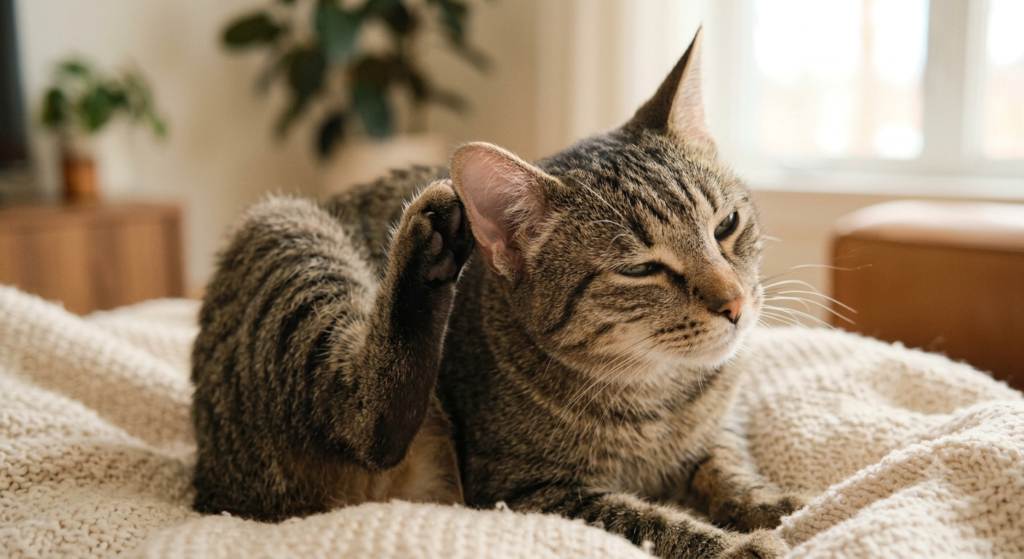
Cats scratch their ears for a handful of common reasons: ear mites, a yeast or bacterial infection, allergies, trapped wax or debris, or a foreign object in the ear. An occasional scratch is normal grooming, but frequent or intense scratching almost always means something is irritating the ear. This guide walks through the likely causes so you can work out what is going on and what to do next.
Quick answer: Occasional ear scratching is normal. But if your cat is scratching one or both ears frequently, shaking its head, or you can see discharge, the usual causes are ear mites, an infection, or allergies. The next step is to look at what the ear shows, dark debris, greasy wax, redness, or smell, and match that to the likely cause, then see a vet to confirm and treat it.
Is it normal for cats to scratch their ears?
A little ear scratching is completely normal. Cats scratch as part of routine grooming, and the occasional itch means nothing. What matters is the pattern. Normal scratching is brief and infrequent. Problem scratching is repeated, intense, focused on one or both ears, and often paired with head shaking or visible changes inside the ear.
If your cat has started scratching much more than usual, or seems bothered by it, that shift is the signal worth paying attention to.
Common reasons cats scratch their ears
Most ear scratching traces back to one of the causes below. Each has its own tell-tale signs.
| Cause | What else you will notice |
| Ear mites | Dry, dark, coffee-ground debris; often more than one pet affected |
| Yeast infection | Brown, greasy, waxy discharge with a musty smell |
| Bacterial infection | Yellow or bloody discharge, strong bad smell, pain |
| Allergies | Both ears itchy, recurring, sometimes itchy skin elsewhere |
| Wax or debris buildup | Waxy build-up without infection, mild irritation |
| Foreign object | Sudden, intense scratching, usually one ear, often after time outdoors |
Ear mites
Mites are one of the most common causes of ear scratching, especially in kittens and outdoor cats. They are highly contagious, so if more than one pet is suddenly scratching, mites move to the top of the list. The signs of ear mites in cats are covered in full in signs of ear mites in cats.
Yeast or bacterial infection
Infections irritate the ear canal and drive persistent scratching. Yeast tends to produce greasy brown wax and a musty smell, while a bacterial infection often brings yellow or bloody discharge and a stronger odour. More on the yeast side is in cat ear yeast infection.
Allergies
Allergies, from food or the environment, keep the ears inflamed and itchy, and they are the cause most often missed. A cat that scratches both ears and keeps relapsing after treatment often has an allergy sitting underneath.
Wax buildup or a foreign object
Sometimes the cause is mechanical rather than an infection. Excess wax or trapped debris irritates the ear, and outdoor cats can get a grass seed or similar object lodged in the canal, which causes sudden, intense scratching at one ear.
The colour and texture of any discharge is one of the best clues to which cause you are dealing with, and it is broken down in black and brown discharge in a cat’s ears.
How to tell which cause it is
You cannot confirm the cause from scratching alone, but a few observations narrow it down considerably.
- Look at the discharge. Dry, dark, crumbly debris points to mites. Greasy brown wax points to yeast. Yellow or bloody discharge points to bacteria.
- Check the smell. A strong musty or foul smell suggests an infection rather than simple wax.
- Count the affected pets. More than one pet scratching strongly suggests contagious mites.
- Notice one ear or both. Both ears often means allergies or mites. One ear that started suddenly can mean a foreign object.
- Watch for a pattern. Scratching that keeps returning after treatment usually points to an underlying allergy.
These clues help you and your vet, but they are a starting point, not a diagnosis. A vet swab is what confirms the exact cause.
What you should not do
A few common reactions make things worse rather than better.
Do not push cotton buds down into the ear canal to investigate, as this packs debris deeper and can damage the ear. Do not reach for a leftover ear product or one bought for another pet on a guess, since the wrong treatment delays the right one. And do not simply wait out heavy scratching in the hope it settles, because most real causes get worse, not better, when left alone.
When should you see a vet?
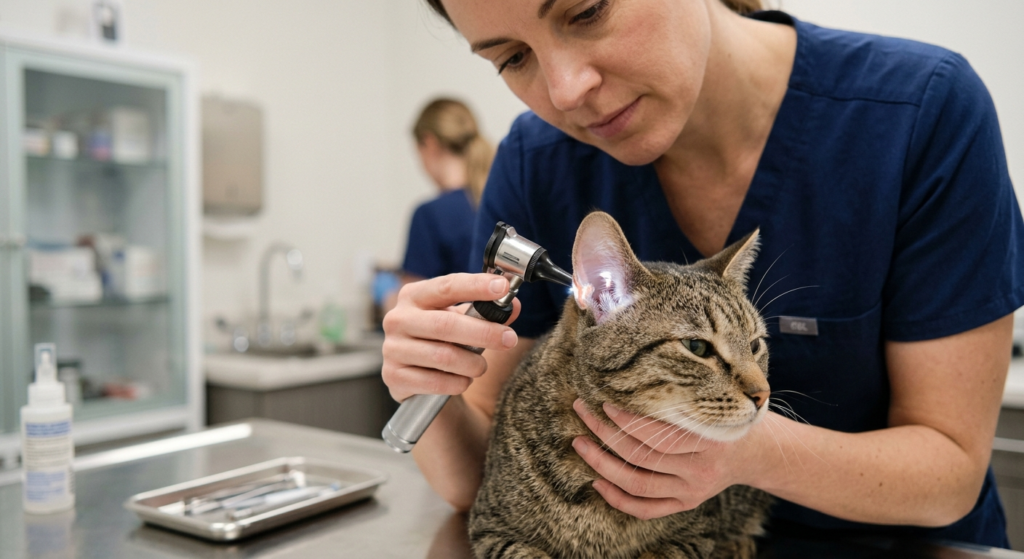
See a vet if your cat is scratching its ears frequently or intensely, shaking its head, or showing any discharge, smell, redness, or swelling. Go sooner if the ear is bleeding or clearly painful, if scratching came on suddenly and focuses on one ear, or if a head tilt or loss of balance appears, as that suggests a deeper problem. Because so many causes look alike from the outside, a vet visit is the fastest route to the right treatment.
Frequently asked questions
Why is my cat scratching its ears but they look clean?
Early ear problems, allergies, or a foreign object can cause itching before there is any visible discharge. If the scratching is frequent, it is worth a vet check even if the ear looks normal.
Why does my cat keep scratching the same ear?
Persistent scratching at one ear can point to a localised infection or a foreign object lodged in that ear. One-sided problems that keep returning are worth having a vet examine properly.
Should I worry if my cat scratches its ears occasionally?
No. Occasional scratching is normal grooming. It is frequent, intense, or worsening scratching, especially with other signs, that suggests a problem.
Can allergies make a cat scratch its ears?
Yes. Allergies are a very common cause of ongoing ear itching, and they often affect both ears and recur until the allergy itself is managed.
How do I stop my cat scratching its ears?
The scratching stops when the underlying cause is treated, whether that is mites, an infection, or an allergy. There is no safe way to simply stop the scratching without addressing what is causing it, so a vet diagnosis is the first step.