Skip to content




Most goldfish tanks need a partial water change about once a week, with the gravel vacuumed at the same time. The RSPCA suggests weekly changes of around 30%, but that is a starting point, not a fixed rule. The real answer depends on bioload: how many goldfish you keep, how big they are and whether your filter can keep up. Overstocked or under-filtered tanks need attention more often.
Goldfish get a reputation as dirty fish, which is not really fair. They eat often and grow large, and their waste output follows.
Why Goldfish Tanks Get Dirty So Fast
Goldfish eat a lot, and what goes in comes back out. The RSPCA suggests feeding goldfish what they can eat in two to five minutes, two or three times a day. All that food and waste breaks down into ammonia, which Merck describes as highly toxic with prolonged exposure.
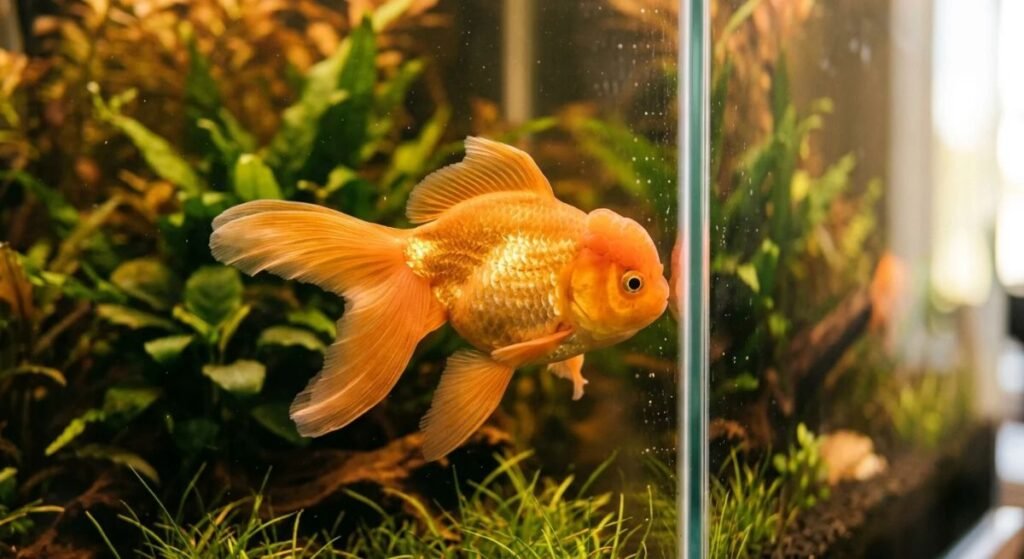
Goldfish also grow far larger than most people expect. The RSPCA says many people think goldfish live about five years and reach about 12 cm, when in fact they can live up to 25 years and some grow over 30 cm. A fish that was tiny at the pet store keeps producing more waste as it grows. This is where many keepers get caught out: they stock the tank for the fish they brought home, not the fish it becomes, and maintenance quietly falls behind.
Filtration has to keep pace. The RSPCA says no fish should be kept in a tank without a well-set-up and maintained filter, and it advises against goldfish bowls because they are too small and unstable, have no room for an efficient filter, offer too little oxygen and are prone to temperature swings. If you are setting up a new tank, finish cycling it before the fish go in.
How Big a Tank Does a Goldfish Need?
Tank size changes your cleaning schedule more than almost anything else, because less water means less room to dilute waste. The old “one inch of fish per gallon” rule does not work well for goldfish.
- The RSPCA says goldfish need at least 60 litres (about 16 US gallons) of water each, and gives a guideline of 2 litres of water per 0.5 cm of fish length.
- Merck suggests reducing the stocking ratio for cold-water setups such as goldfish tanks and ponds, because beneficial bacteria work less well at low temperatures.
- Wider tanks are better than tall ones, and surface agitation (such as an air stone) helps oxygen.
Use these as guidelines, and remember that bigger is better. More fish, more food and less water all push the cleaning schedule tighter, while a larger, lightly stocked tank buys more time between sessions.
How to Tell a Goldfish Tank Needs Cleaning Sooner
A few signs tend to show up before things get visibly bad:
- Water clouds or takes on a tint soon after a water change instead of staying clear
- A faint ammonia smell near the tank
- Goldfish gasping at the surface or hanging around the filter outlet
- Algae growing faster than it used to
- Food or waste piling up on the substrate between vacuuming sessions
Surface gasping is the one to take seriously. The RSPCA says it signals oxygen starvation or poor water quality. Test the water, because the RSPCA also notes that clear water does not always mean healthy water. It gives safe levels of both ammonia and nitrite as 0 mg/L, and says that if either tests above zero you should change half the water daily and keep testing. For more warning signs, see signs your fish tank water quality is declining.
A Basic Goldfish Tank Cleaning Routine
Most goldfish keepers land on something close to this, adjusted for their own setup:
- Weekly: change about 30% of the water (the RSPCA suggestion) and vacuum the substrate to remove settled waste and leftover food. Treat new water with a dechlorinator and match its temperature to the tank.
- Every two weeks: test the water, and check filter flow. Merck lists a fortnightly check of the filter.
- As needed: wipe algae off the glass, clear out decaying plant matter and check the filter intake for buildup.

Rinse mechanical filter media in the water you removed from the tank, not under the tap. The RSPCA warns that tap water can kill the beneficial bacteria. See how to clean a fish tank filter for the full process, and how often to clean any fish tank for a general schedule.
Feeding Less Makes the Tank Cleaner
Overfeeding is one of the easiest ways to foul a goldfish tank. The RSPCA says it is better to underfeed than overfeed, because fish are more susceptible to poor water quality than to a lack of food. Remove uneaten food, and avoid tropical flakes, which the RSPCA says are not suitable for goldfish.
Does the Tank Setup Matter?
- Plants. Merck notes that plants absorb nutrients that would otherwise feed algae, and nitrate is a nutrient plants can use. A well-planted tank may help, but it does not replace water changes.
- Substrate. Gravel traps waste and food, so gravel tanks generally need more frequent vacuuming. Some keepers choose a bare bottom because waste is easier to see and remove.
- Heater. The RSPCA says goldfish need 10 to 21 °C, so a heater is not normally necessary. Check the temperature daily with a separate thermometer.
The Practical Approach to Cleaning a Goldfish Tank
Start with a weekly water change as a baseline, then adjust to what the tank shows. Water that clouds quickly or algae that grows between changes means it is time to tighten the schedule. A tank that stays clear and holds steady test results can handle a little more flexibility. What your tank is doing matters more than any number written down in advance.
Goldfish Tank Cleaning FAQ
How often should you clean a goldfish tank?
Plan on a partial water change about once a week, with gravel vacuuming. Overstocked tanks, small tanks and tanks with large, fully grown goldfish need more frequent changes.
Why do goldfish tanks get dirty faster than other fish tanks?
Goldfish eat often and can grow large, so they produce a lot of waste relative to a typical lightly stocked tropical tank. That means more frequent water changes and filter checks.
Can a goldfish tank be cleaned too often?
Water changes and vacuuming are safe to do often. Aggressive filter cleaning, especially scrubbing media spotless or washing it under the tap, can remove the beneficial bacteria the tank depends on.
Do bare-bottom tanks need less cleaning than gravel tanks?
Not necessarily. Bare bottoms make waste easier to see and remove, while gravel traps debris that needs regular vacuuming.
Can I keep a goldfish in a bowl?
The RSPCA advises against it. Bowls are too small and unstable, have no room for a proper filter and offer too little oxygen. Merck mentions that bowls need frequent, large water changes, perhaps as much as 50% per week, which shows why a properly filtered tank is easier to maintain.
Last reviewed: October 2026.