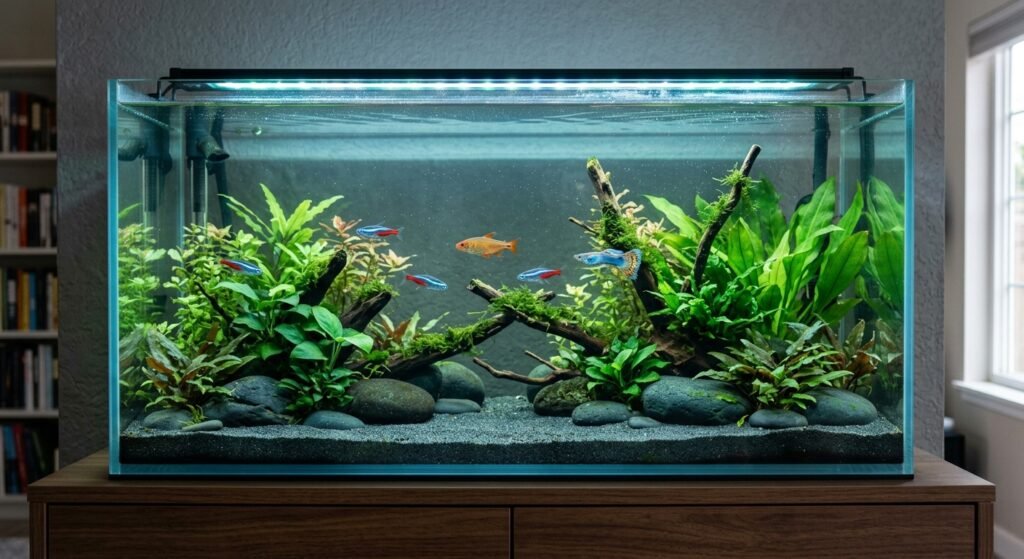
Fish gasping at the surface, sudden lethargy, refusing food, cloudy or discolored water, and an odor coming from the tank are the clearest signs. Most trace back to rising ammonia or nitrite, dropping oxygen, or a filter that’s fallen behind. A water test tells you which one, faster than watching and waiting will.
The Part You Can’t See
Ammonia builds up constantly. Fish waste and leftover food break down into it.
Bacteria living in the filter media convert that ammonia into nitrite, then nitrate. Nitrate is far less dangerous.
That conversion depends on a stable bacterial colony. Overfeeding, a jump in fish numbers, or scrubbing the filter too hard can knock it off balance.
None of that shows up as a color change in the water. The signs below are what your fish do in response to it, not the chemistry itself.
Fish Gasping or Clustering at the Surface
Check this one first. It’s the most urgent sign on this list.
The surface holds the most dissolved oxygen in the tank. Fish gathered there, mouths breaking the surface, are trying to get more air than the rest of the water is giving them.
Start with temperature. Warm water holds less oxygen, so a heater running hot can cause this on its own.
If temperature checks out, test ammonia and nitrite next. Both damage gill tissue, which limits how well a fish can absorb oxygen even when the water technically has enough of it.
Weak filter flow reduces surface agitation too. Worth checking at the same time.
Lethargy or Sudden Hiding
A fish that stops swimming, sits at the bottom, or disappears behind decor is stressed. Water quality is one common cause. It isn’t the only one.
The pattern matters more than the behavior itself. Several fish going quiet together points toward the tank. One fish acting differently while the rest look normal points more toward illness or a conflict with tankmates.
Refusing Food
Healthy fish show up for food. When several stop eating over a few days, it’s worth testing the water before assuming it’s a phase.
This sign carries more weight paired with gasping or unusual hiding. On its own, in a single fish while the rest of the tank eats normally, it’s more often about that one fish.
Cloudy or Discolored Water
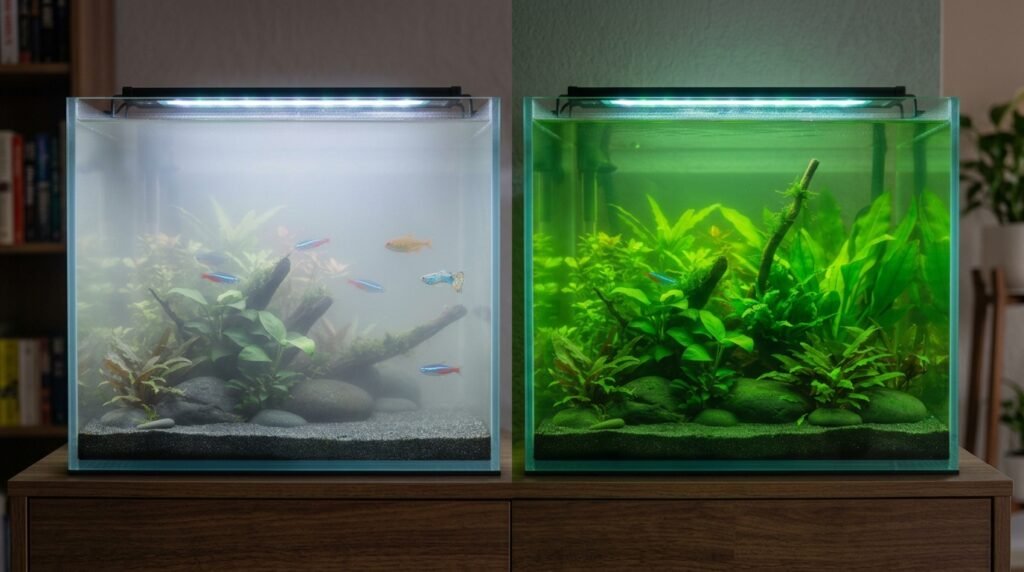
New tanks cloud up while the biological filter establishes itself. That’s expected. It usually clears within a week or two as long as ammonia and nitrite stay at zero the whole time.
New cloudiness in a tank that’s been running fine means something changed.
A white or gray haze usually means a bacterial bloom, often from overfeeding. Green water is algae, almost always tied to light or nutrient buildup. Brown or yellow tint is more often tannins from driftwood than a water quality problem, though skipped water changes can add to it.
Color alone doesn’t confirm the cause.
| Water Appearance | Likely Cause | What To Check |
| White or gray haze | Bacterial bloom, often from overfeeding | Ammonia, nitrite |
| Green tint | Algae bloom | Nitrate, phosphate, light duration |
| Brown or yellow tint | Tannins or organic buildup | Water change schedule, decor |
| Cloudy with no obvious trigger | Filter behind on the tank’s waste load | Filter flow and condition |
An Odor From the Tank
A healthy tank barely smells. A sulfur note, an ammonia edge, or general rot usually means waste is decaying faster than the filter can process it.
Food trapped in the substrate. A snail or fish that died out of sight. A filter overdue for cleaning. Any of these can be the source.
By the time you smell it, the problem has usually been building for a while. It tends to show up alongside elevated ammonia rather than on its own.
A Sudden Jump in Algae
Some algae is normal. A sudden increase usually means nitrate or phosphate has climbed, often because waste is outpacing your cleaning routine.
Extended light exposure speeds it along.
If growth increased and lighting didn’t change, check nitrate and phosphate before blaming the light.
What To Do Once You Notice One of These
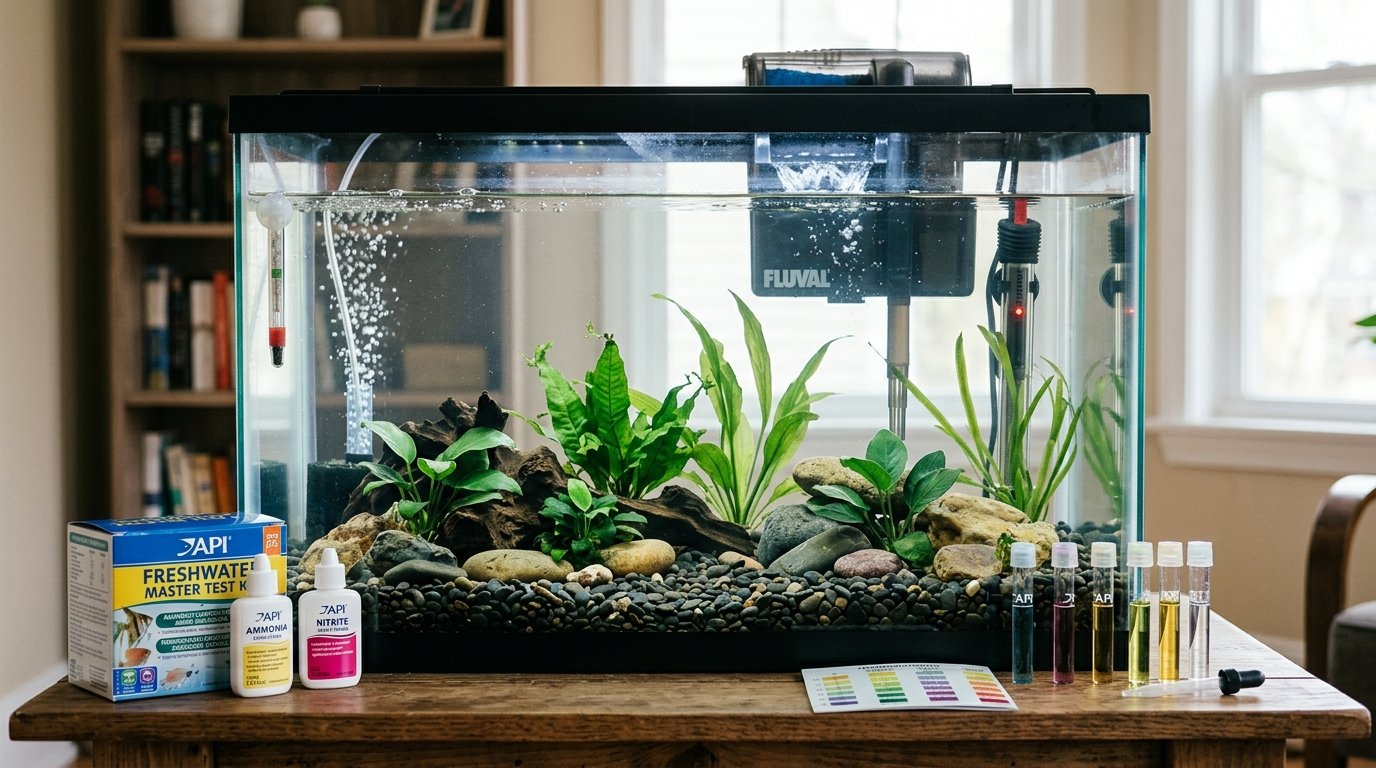
Test the water before touching anything else. Ammonia, nitrite, pH, and nitrate cover almost everything on this page.
A partial water change is usually the fastest way to bring elevated levels down.
Skip the full water change. Skip the aggressive filter scrub too. Both can wipe out the bacteria colony the tank depends on, and that tends to make things worse over the following days, not better.
If the filter is part of the problem, how to clean a fish tank filter walks through that process. Goldfish produce more waste relative to their size than most community fish, which how to clean a goldfish tank covers on its own. If this is a newer tank still building its bacterial colony, [PLANNED LINK: How to Cycle a New Fish Tank Before Adding Fish] explains how to tell normal cycling cloudiness from an actual problem.
When It’s Not the Water
Ammonia, nitrite, and pH can all test normal and a fish can still be gasping, lethargic, or off its food.
Pale or swollen gills. Visible spots. Sores or unusual growths. These point toward an infection or parasite rather than water chemistry.
A water test kit can’t diagnose that. A veterinarian familiar with fish, or a fish health professional, can examine the fish directly and figure out what a test strip won’t tell you.
FAQ
Can a tank look completely normal and still have bad water quality?
Yes. Ammonia and nitrite can reach harmful levels in water that still looks clear. Visual signs tend to show up after the chemistry has already shifted.
How fast can water quality decline?
A filter failure or heavy feeding can push ammonia up within a day or two, especially in smaller tanks with less water to dilute waste. A slower decline from skipped water changes can take weeks to become noticeable.
Do all fish show the same signs?
No. Larger fish tend to show distress sooner since they take in more water relative to their size. Tolerance for specific water parameters also varies by species.