Head shaking. Constant scratching. That weird smell you can’t quite place until you get close to your dog’s ear and go “oh, that’s it.” If any of this sounds familiar, you’re probably dealing with an ear infection, and honestly, you’re not alone. It’s one of the top reasons dogs get dragged to the vet, right up there with upset stomachs.
The good part is that most cases clear up fine once you actually treat them properly. This guide covers what’s causing it, how to catch it early, what treatment really looks like, and how to keep it from becoming a repeat problem.
What’s Actually Going On In There
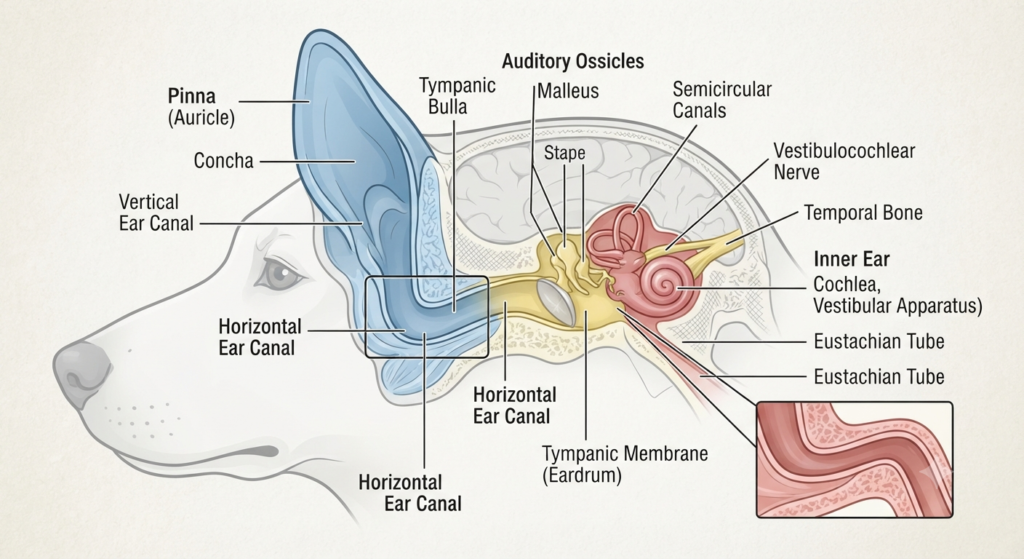
The medical term is otitis externa, which just means the outer ear canal is inflamed, usually because bacteria or yeast have gotten out of hand. Here’s the thing most people don’t realize: a dog’s ear canal isn’t straight like ours. It’s shaped more like an L, bending sharply before it reaches the eardrum. That bend traps moisture, wax, and debris way more than a human ear ever would, which is a big reason why this is such a common problem in dogs specifically.
There are really three levels this can reach. Otitis externa is the outer canal and by far the one you’ll deal with most. Otitis media creeps into the middle ear, usually after an outer infection sits untreated for too long. And otitis interna hits the inner ear, which is the serious one. It can throw off your dog’s balance and needs a vet right away, not a wait-and-see approach.
Why This Keeps Happening
Ear infections don’t usually just show up out of nowhere. Something tips the balance first and lets bacteria or yeast take over. A few of the usual suspects:
- Allergies are probably the biggest one. Food allergies, pollen, dust, mold, you name it. If your dog seems to get infection after infection no matter what you do, allergies are very likely the actual root cause rather than bad luck.
- Moisture is another big one. Dogs who swim a lot, or get bathed often without being dried properly afterward, end up with damp ears that are basically an open invitation for yeast.
- Then there’s ear shape. Floppy-eared breeds like Cocker Spaniels, Labradors, and Basset Hounds don’t get much airflow down in there. Poodles and Schnauzers have the opposite problem, thick hair growing right in the canal that traps debris and moisture.
Wax buildup gives bacteria something to feed on. Ear mites, especially in puppies, irritate the lining and often lead to a secondary infection on top of the mites themselves. Grass seeds or bits of dirt can get lodged in there too, particularly with dogs who spend a lot of time outside. And sometimes it’s hormonal, thyroid issues in particular tend to show up as skin and ear problems before anything else.
Signs You’ll Actually Notice
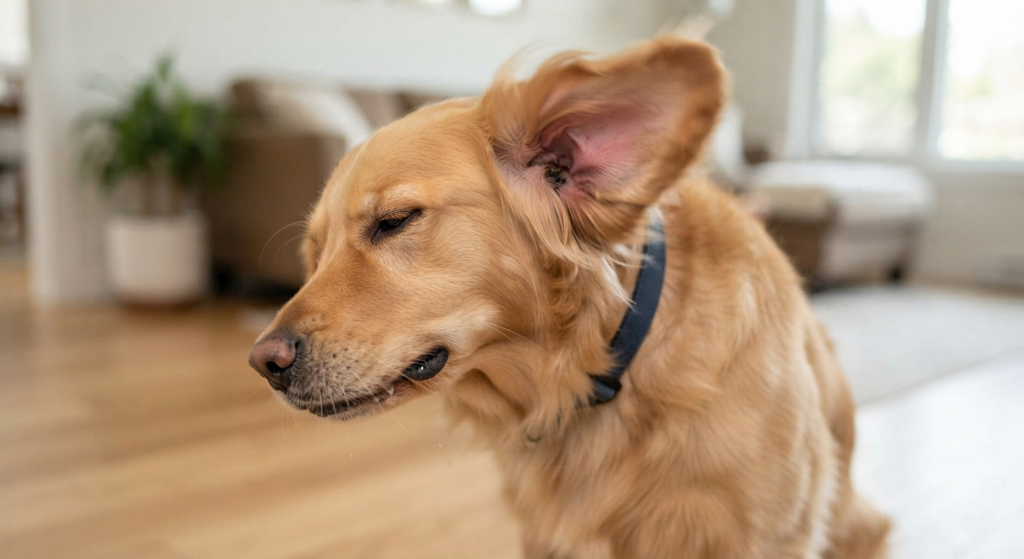
You don’t need a vet degree to catch this early. Watch for your dog shaking their head more than usual, or tilting it to one side. Scratching at the ear or rubbing their whole face against the couch. Redness or puffiness when you peek inside. A smell that’s musty or almost yeasty. Discharge that’s dark, yellowish, or in worse cases, bloody. Whining or pulling back when you touch near the ear. In more advanced cases, you might even notice them losing balance or their eyes moving oddly.
If you want a closer look at exactly what to check for, including a quick at-home test you can do in under a minute, we’ve got a full breakdown of dog ear infection signs and symptoms that goes into more detail than we can here.
How Vets Figure Out What’s Wrong
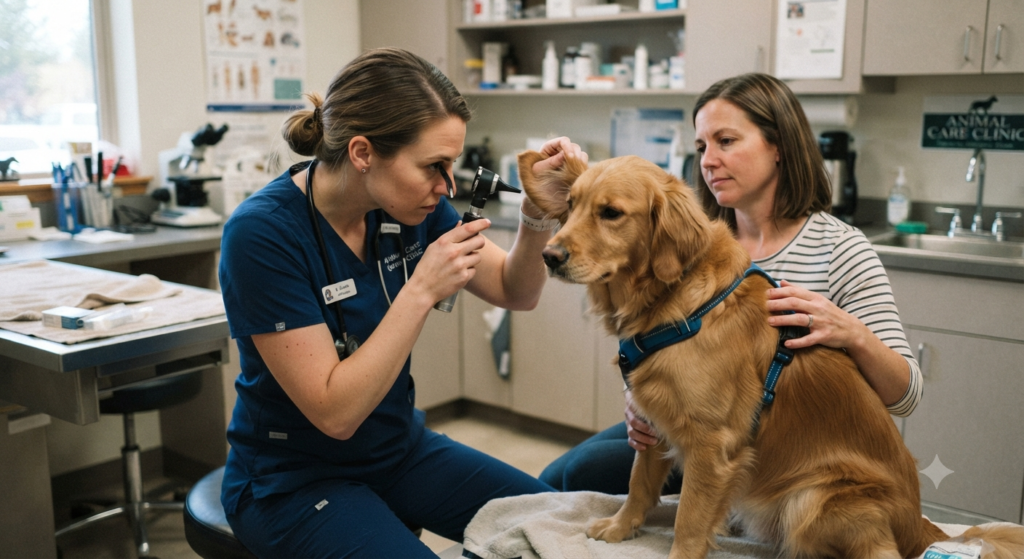
A vet will usually start by looking into the ear with an otoscope, checking for redness, swelling, or anything that looks off with the eardrum. Most of the time they’ll also swab it and look at the sample under a microscope, because knowing whether you’re dealing with bacteria, yeast, or both actually changes the treatment plan. Guess wrong on this and you could be treating the wrong problem for two weeks straight.
For dogs who keep getting infections over and over, a vet might push for allergy testing or bloodwork instead of just treating each flare-up as it comes. Otherwise you’re stuck in a loop of treating symptoms without ever touching the actual cause.
What Treatment Looks Like
First step is always a proper cleaning, getting rid of wax and gunk before any medication goes in, because meds don’t work well on a dirty ear. From there it’s usually medicated drops, antibacterial, antifungal, or sometimes both depending on what the swab showed. Severe cases might need oral medication on top of that, and there’s often something to bring the swelling and pain down too, especially in those first few rough days.
Most straightforward infections clear up in one to two weeks if you stay consistent with treatment. Chronic cases take longer, and sometimes the first medication doesn’t fully do the job, so don’t panic if your vet wants to switch things up partway through.
Want the full day-by-day version, including how to actually get ear drops into a squirming dog without it turning into a wrestling match? Check out our guide on treating dog ear infections. And if you’re looking for gentler options to try alongside vet care, our piece on home remedies for dog ear infections covers what’s actually safe to use at home.
A Quick Word on Yeast Infections
These get their own mention because they’re incredibly common and look and smell a bit different from bacterial infections, often more sweet or musty rather than sharp. Certain breeds and allergy-prone dogs seem to get hit with these more than others. We’ve written a full guide on yeast infections in dog ears if you think this might be what you’re dealing with, since the treatment approach isn’t quite the same as a bacterial infection.
Keeping It From Coming Back
A few habits go a long way here. Dry your dog’s ears properly after baths or swims, don’t just let them air dry and hope for the best. Check their ears once a week or so for anything that looks or smells off. Use a vet-approved cleaning solution regularly, especially if your dog’s breed is prone to this. If your vet says trimming or plucking ear hair would help, it’s worth doing. And try to get on top of allergies early since, as mentioned, they’re behind most of the repeat cases.
One thing worth knowing: don’t overdo the cleaning either. Scrubbing the ears too often can actually irritate the lining and cause the exact problem you’re trying to avoid.
When It’s Time to Stop DIY-ing It
Mild cases are fine to manage at home, but if you’re noticing a strong smell, thick or bloody discharge, obvious swelling, pain when you touch the ear, or a head tilt that isn’t going away, it’s time to call the vet. If an infection reaches the middle or inner ear it can start affecting balance and even hearing, so it’s really not something to wait out if it’s clearly getting worse instead of better.
Bottom Line
Ear infections are annoying and honestly a bit stressful to watch your dog deal with, but they’re manageable once you know what’s going on. Catch it early, figure out what’s actually causing it, and stick with the treatment your vet gives you, and most dogs are back to normal within a couple of weeks.
If you want to go deeper on any specific part of this, we’ve broken it all down separately: spotting the early signs, what treatment really involves day to day, natural remedies worth trying, and everything specific to yeast infections.