


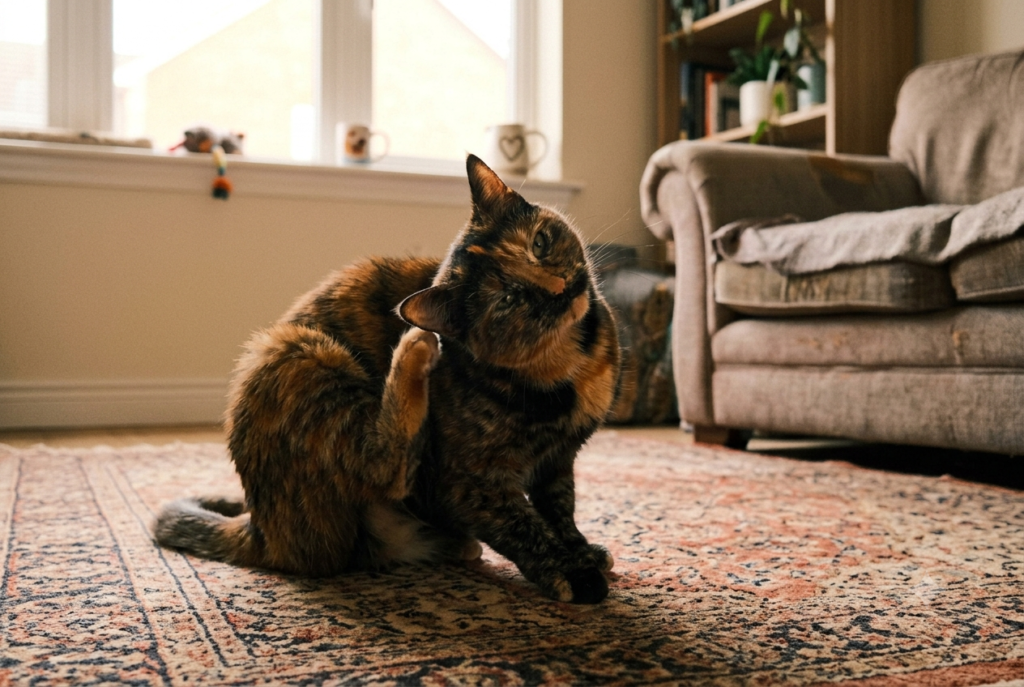
The clearest signs of ear mites in cats are intense ear scratching, head shaking, and dark, dry, crumbly debris in the ear that looks like coffee grounds. Ear mites are one of the most common and most contagious ear problems in cats, especially in kittens and cats that go outdoors. This guide covers exactly what to look for, how vets confirm it, and what to do next.
Quick answer: If your cat is scratching its ears hard, shaking its head, and you see dark, dry, gritty debris inside, ear mites are the most likely cause. They are tiny parasites, they spread easily between pets, and they will not clear on their own. A vet confirms them in minutes with a swab, and treatment is straightforward once diagnosed.
What are ear mites?
Ear mites are tiny parasites, called Otodectes cynotis, that live inside the ear canal and feed on skin debris and ear wax. They are too small to see clearly without magnification, but the irritation they cause is very visible. A single cat can carry hundreds of them, and because they move easily from one animal to another, one infected pet in a home usually means the others are at risk too.
They are far more common in kittens, outdoor cats, and cats from shelters or multi-cat environments. In fact, ear mites are the most common cause of ear problems in young cats.
The main signs of ear mites in cats
Ear mite symptoms tend to come on faster and itch harder than most other ear problems. The itching is often the first thing owners notice.
| Sign | What you will notice |
| Intense scratching | Frequent, aggressive scratching at one or both ears |
| Head shaking | Repeated head shaking or head tilting |
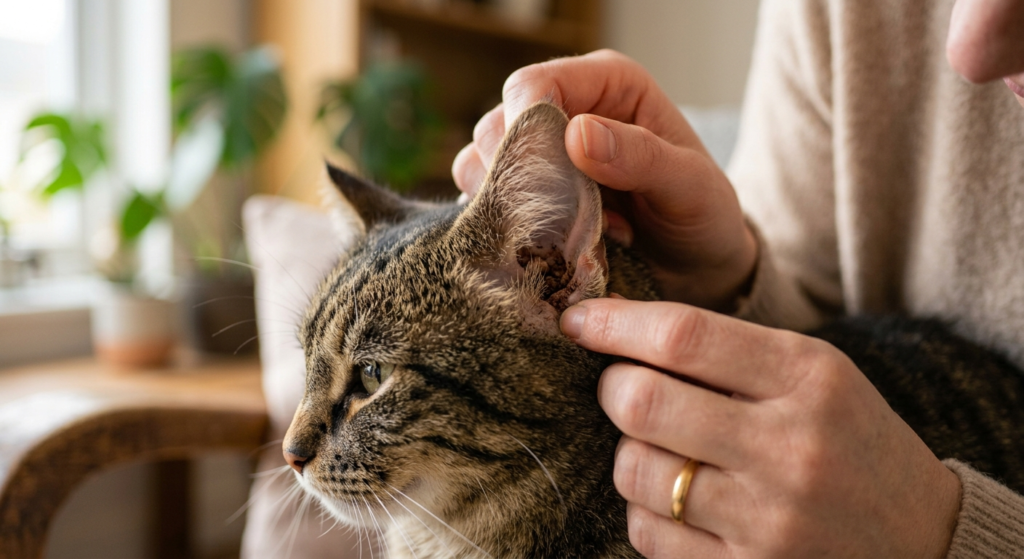
| Dark debris | Dry, dark brown or black debris resembling coffee grounds |
| Ear odour | A faint smell from the ear as irritation builds |
| Redness and inflammation | Red, irritated skin inside the ear flap |
| Scabs and hair loss | Scabbing or thinning fur around the ears and neck from scratching |
| Restlessness | A generally irritated, unsettled cat |
The coffee-ground debris is the most telling sign. Where a yeast infection tends to produce brown, greasy, waxy discharge, mites produce debris that is dry and crumbly. If you are unsure which one you are looking at, ear mites vs yeast infection in cats walks through the differences side by side.
How do cats get ear mites?
Ear mites spread through direct contact. A cat picks them up from another animal that already has them, whether that is a sibling in a litter, a cat it grooms or sleeps against, or an outdoor cat it comes into contact with. They can also pass between cats and dogs in the same household.
This is why mites are so common in kittens and rescues. Young animals are often housed closely together, and one carrier passes them to the whole group quickly. Mites do not usually survive long away from an animal, so most infestations trace back to contact with another pet rather than the environment.
Are ear mites dangerous if left untreated?
They are not usually life-threatening, but they should never be left alone. The constant scratching breaks the skin and can lead to a secondary bacterial or yeast infection on top of the mites, which is harder to treat than the mites themselves. In severe, long-standing cases the scratching can cause an aural haematoma, a painful blood blister on the ear flap, or damage deeper in the ear. Early treatment avoids all of this.
How are ear mites diagnosed?
A vet confirms ear mites rather than guessing at them. They take a swab of the debris and look at it under a microscope, where the mites are visible moving. In some cases they can see the mites directly through an otoscope. This step matters because mite debris and infection debris can look similar to the eye, and the treatments are different. Treating an infection as though it were mites, or the reverse, wastes time while your cat stays uncomfortable.
How are ear mites treated?
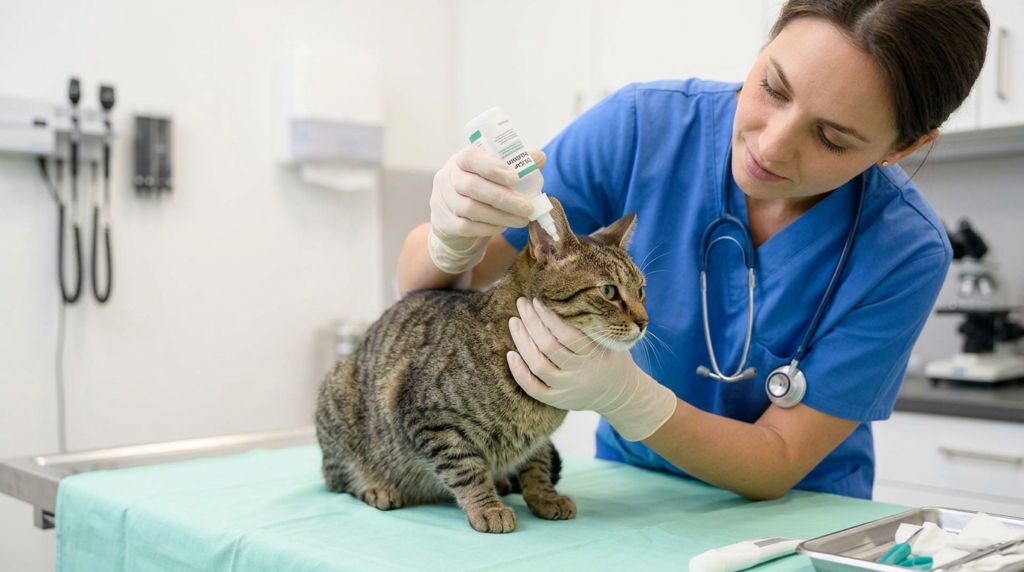
Treatment has two parts, and skipping either one is where most home attempts fail.
- Cleaning the ear. The vet or you, on the vet’s guidance, clean out the debris so the medication can reach the ear surface. Our guide on how to clean a cat’s ears safely shows the correct method.
- A vet-prescribed antiparasitic. This is the medication that actually kills the mites. Many modern treatments are single-dose or short-course products applied to the skin, which are far more reliable than older drops alone.
- Treating every pet in the home. Because mites spread so easily, all cats and dogs in the household usually need treating at the same time, even the ones showing no signs yet. Miss one, and the others get reinfected.
Do not rely on leftover medication or a product bought for another pet. The dose and type need to match, and some dog products are unsafe for cats.
How to prevent ear mites coming back
Once mites are cleared, prevention is mostly about contact and monitoring.
Check your cat’s ears weekly for the return of dark debris, especially if it goes outdoors or lives with other pets. Keep up with a parasite prevention product if your vet recommends one, as several flea treatments also cover ear mites. In multi-cat homes, stay alert after any new cat arrives, since new arrivals are a common way mites re-enter a household. Treat the whole home at once if mites do come back, rather than one cat at a time.
When should you see a vet?
See a vet if you notice heavy dark debris, intense scratching, or head shaking, as these point strongly to mites that need treatment. Go sooner if the ear is bleeding, swollen, or clearly painful, or if a head tilt or loss of balance appears, since that suggests the problem has gone deeper. Mites are simple to treat early and much harder once a secondary infection has set in on top of them.
Frequently asked questions
Can I treat cat ear mites at home without a vet?
It is risky. The debris from mites and from infections looks similar, and using the wrong product wastes time while your cat suffers. A vet confirms the cause quickly, and many prescribed treatments work faster and more reliably than over-the-counter drops.
Can humans catch ear mites from cats?
It is very rare. Ear mites strongly prefer animal hosts and do not typically live on people, though close contact can occasionally cause temporary skin irritation.
How long do ear mites take to clear up?
With the correct treatment, mites usually clear within a few weeks. The exact time depends on the product used and whether every pet in the home was treated together.
Do ear mites go away on their own?
No. They feed and reproduce inside the ear and will keep the cat irritated until treated. Left alone, they often lead to a secondary infection that is worse than the mites.
Can indoor cats get ear mites?
Yes, though less often than outdoor cats. An indoor cat can pick them up from a new pet, a visiting animal, or another cat in the home that carries them.