



Can dogs eat pumpkin? Yes. Plain, cooked pumpkin and plain canned pumpkin (the ingredient list should say pumpkin and nothing else) are safe for most dogs in small amounts. Skip pie filling, which can contain sugar, spices, and xylitol. Start with a small spoonful and keep all extras under 10% of your dog’s daily calories.
Most trouble with pumpkin comes from what gets added to it, not from the pumpkin. People often ask whether dogs can have pumpkin puree, canned pumpkin, or the flesh from a jack-o’-lantern, and the answer is different for each. Below we cover which kinds are safe, how much to give, and what pumpkin can and can’t do for a dog’s stomach.
Which pumpkin is safe for dogs
Can dogs eat canned pumpkin and puree?
Plain canned pumpkin is the easiest option. The American Kennel Club (AKC) calls it the healthiest choice and says to avoid cans with added salt, spices, sugar, or other additives. Read the ingredients line on the back, not the front of the can. It should say pumpkin, with nothing after it.
Plain puree is fine too. The word on the front matters less than the list on the back.
The gap between plain pumpkin and the other products on the shelf is bigger than most people expect:
| Product | Calories per cup | Sodium per cup |
| Plain canned pumpkin | 83 | 12 mg (unsalted) |
| Some salted canned pumpkin | Not listed | Nearly 600 mg |
| Canned pumpkin pie mix | Up to 281 | Not listed |
Those numbers come from a 2017 Tufts University article by Lisa Freeman, head of the veterinary nutrition service at Tufts’ Cummings School, so brands may have changed. The pattern still holds. Added sugar and salt turn a light food into a heavy one, and Tufts notes that the saltier brands carry too much sodium for a dog with heart or kidney disease.
Pie filling and spiced pumpkin
Pumpkin pie mix is a different product. It contains sugar and spices, and AKC warns that pie mix may contain xylitol, which is toxic to dogs. Pumpkin pie, spiced pumpkin drinks, and pumpkin bread go in the same pile: not for dogs. We cover pie and spiced treats in a separate guide on pumpkin pie and spice.
Can dogs eat fresh pumpkin?
Fresh pumpkin works if you cook it. Remove the stem, seeds, and skin, then bake, steam, or boil the flesh until soft and mash it. Leave out butter, oil, salt, and seasoning.
AKC notes that fresh pumpkin holds more water than canned, so a spoonful of mashed fresh pumpkin carries less actual pumpkin than a spoonful from the can.
Can dogs eat raw pumpkin?
Sources disagree on this one. Some pet-health sites call raw pumpkin fine. Others say to avoid it, and at least one large site says both in different parts of the same page. We found no source that calls raw pumpkin flesh poisonous. The concern is practical: raw chunks are hard and fibrous, and the sites that advise against it cite choking and stomach upset.
Cooked is the safer call, so that is what we recommend. Raw flesh isn’t known to be toxic, so a stolen bite is no reason to panic. Watch for vomiting or loose stool, and call your vet if it doesn’t settle.
Pumpkin skin, stem, guts, and carved pumpkins
Plan on feeding only the flesh. Most sources say to remove the stem, the skin, and the tough outer rind, and one pet-food brand points out that stems and leaves carry prickly hairs. Seeds are a bigger topic with their own rules, so they get a separate guide on pumpkin seeds.
A dog that gets into a lot of pumpkin at once may end up with vomiting or diarrhea. Call your vet if that happens, or sooner if the dog is small, young, or has a health condition.
Jack-o’-lanterns need their own warning. The Animal Humane Society tells owners not to share jack-o’-lantern pulp. Mold is the larger worry. Pet Poison Helpline says moldy food can cause vomiting, agitation, tremors, and seizures, and that signs can show up quickly. Its pages don’t mention pumpkins by name, but a carved pumpkin that has sat outside for days is the kind of food that molds. Throw it out where your dog can’t dig it up.
How much pumpkin can a dog have?
How much pumpkin to give a dog comes down to calories. We use the same rule as in our rice guide. Extras of every kind, treats and people food together, should stay under 10% of your dog’s daily calories. AKC is specific that the 10% refers to calories, not volume or the number of treats.
Plain canned pumpkin has about 83 calories per cup, according to Tufts. That works out to roughly 5 calories a tablespoon. A dog eating about 400 calories a day gets a 40-calorie extras budget, which pumpkin alone would use up at between 7 and 8 tablespoons. A dog eating about 1,000 calories a day gets 100 calories, or a little over a cup.
Treat those as ceilings, and only if pumpkin is the single extra that day. They are not targets. Tufts says owners typically give anywhere from 1/4 teaspoon to 2 tablespoons at a meal, and it adds that such small amounts may not accomplish much. Calories are not what limits pumpkin. Fiber is. Too much can loosen the stool, and Tufts points out that a lot of fiber can reduce how well a dog absorbs protein and other nutrients.
We don’t print a weight chart. Charts exist online, but the ones we checked disagree with each other by a wide margin, and none of them cites a source. AKC suggests 1 to 4 tablespoons per meal for digestive use, gives no figure by weight, and tells owners to check exact amounts with a vet. Ask your vet what suits your dog. Start with a small spoonful, less for a small dog, and watch the stool for a few days before giving more.
Can dogs eat pumpkin every day?
Several vet-reviewed sources describe a small daily amount as fine for healthy dogs. Keep it a small topper that fits inside the 10% budget, and don’t swap it in for part of a meal unless your vet says to.
Is pumpkin good for dogs?
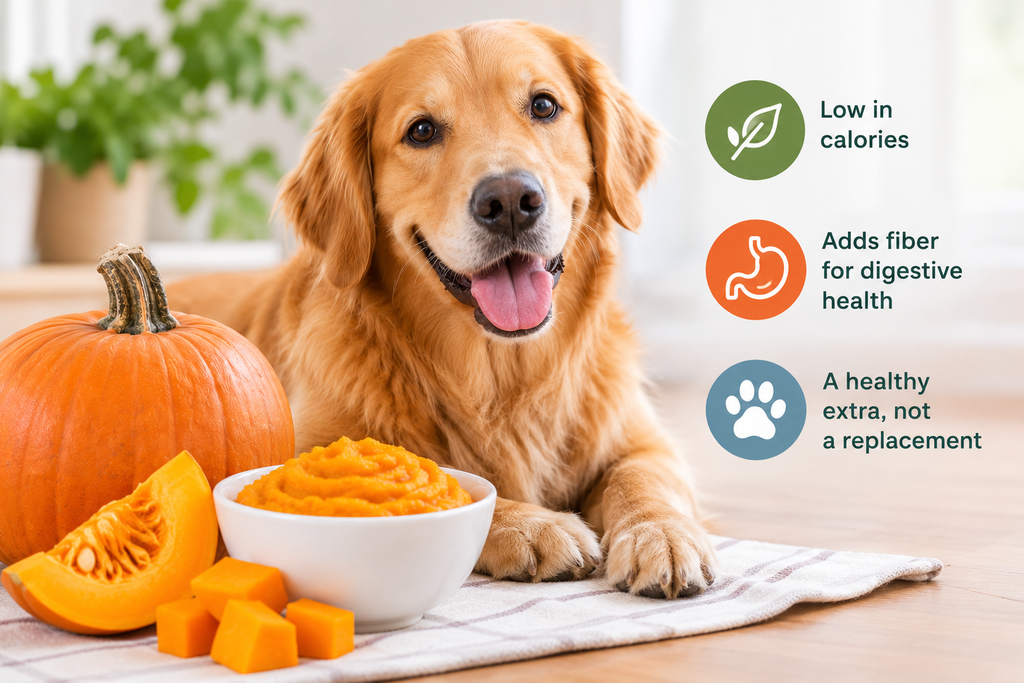
Pumpkin is a decent low-calorie extra. It is not a supplement, and it is not a treatment. A dog eating a complete and balanced food already gets its nutrients from that food, and Tufts notes that dogs don’t require fiber in their diets at all.
Many pet sites list vitamins and antioxidants as pumpkin’s benefits. None of the pages we read backed those claims with a source, so we won’t repeat them. What pumpkin does offer is bulk and a little fiber for very few calories, which is why it ends up as a topper on a dog’s regular food. We have covered other people foods in our guides on eggs and rice.
Does pumpkin help with diarrhea or constipation?
Pumpkin’s reputation here is bigger than the evidence. Plenty of websites and forum threads call it a remedy for both. AKC says it is best for mild, non-serious diarrhea. Tufts’ Lisa Freeman takes a cooler view: the fiber in pumpkin is small, she writes, and it usually limits how well pumpkin works. Her example is that a medium-sized dog would need nearly 12 cups a day to match the fiber in one high-fiber prescription diet. The usual spoonful, she adds, may not help and may cause problems.
Both views fit the same facts. Treat pumpkin as a gentle extra for a mild upset, never as treatment. AKC says a vet should diagnose the cause of diarrhea or constipation before pumpkin is added.
Call your vet right away if your dog is lethargic, weak, feverish, or vomiting, or if the diarrhea has blood in it. AKC calls puppy diarrhea a potential emergency. If your vet suggests a bland diet, our rice guide covers how to prepare it. We will cover each problem in more detail in separate guides on pumpkin for dog diarrhea and pumpkin for dog constipation.
Dogs who should check with a vet first
Pumpkin is a small change to a diet, but small changes still matter for some dogs.
Can puppies eat pumpkin?
Ask your vet before adding pumpkin to a puppy’s diet, and don’t reach for it first when a puppy has diarrhea. AKC calls puppy diarrhea a potential emergency.
These dogs also need a vet’s okay first:
- Dogs with diabetes. Many pet sites call pumpkin good for diabetic dogs, but none we read cited a source. Only feed it if your vet says it’s okay.
- Overweight dogs and dogs on a diet. Pumpkin counts toward the 10% budget, so ask before using it to replace part of a meal.
- Dogs on prescription food or with ongoing stomach trouble. Added fiber can interfere with a plan your vet built.
- Dogs with heart or kidney disease. Salted canned pumpkin is a sodium problem, per Tufts.
- Dogs with a history of pancreatitis. Keep butter, oil, and other fats out of the bowl, and ask your vet first.
When pumpkin turns into a poison-control call
Plain pumpkin isn’t poisonous to dogs. The extras are.
Xylitol is a sweetener. The ASPCA says it makes a dog’s body release a sudden surge of insulin, which drops blood sugar. Dogs often vomit and become weak or lethargic, some have seizures, and very large doses can lead to liver failure. AKC warns that some pumpkin pie mix may contain it, so read the label on anything sweet.
Nutmeg is a separate risk. The ASPCA says large amounts can cause vomiting, agitation, odd pupil size, a fast heart rate, trouble walking, and hallucinations. Cinnamon in small amounts may only upset the stomach, but larger amounts can irritate the throat and stomach and speed the heart. Powder that gets inhaled can cause coughing and breathing trouble.
If your dog gets into pie, spiced food, or anything with xylitol, call your vet or ASPCA Animal Poison Control at (888) 426-4435. Pet Poison Helpline is at (855) 764-7661. Ask about any consultation fee when you call, and bring the packaging if you head to the clinic.
If your dog collapses, has seizures, struggles to breathe, or has a swollen face, go to an emergency vet now.
The one rule to remember
Turn the can around and read the ingredients. If the list says anything besides pumpkin, put it back.

![Slug /can-dogs-eat-pumpkin/ H1 Can Dogs Eat Pumpkin? Yes, but Check the Label First Can Dogs Eat Pumpkin? Yes, but Check the Label First Can dogs eat pumpkin? Yes. Plain, cooked pumpkin and plain canned pumpkin (the ingredient list should say pumpkin and nothing else) are safe for most dogs in small amounts. Skip pie filling, which can contain sugar, spices, and xylitol. Start with a small spoonful and keep all extras under 10% of your dog's daily calories. Most trouble with pumpkin comes from what gets added to it, not from the pumpkin. People often ask whether dogs can have pumpkin puree, canned pumpkin, or the flesh from a jack-o'-lantern, and the answer is different for each. Below we cover which kinds are safe, how much to give, and what pumpkin can and can't do for a dog's stomach. Which pumpkin is safe for dogs Can dogs eat canned pumpkin and puree? Plain canned pumpkin is the easiest option. The American Kennel Club (AKC) calls it the healthiest choice and says to avoid cans with added salt, spices, sugar, or other additives. Read the ingredients line on the back, not the front of the can. It should say pumpkin, with nothing after it. Plain puree is fine too. The word on the front matters less than the list on the back. The gap between plain pumpkin and the other products on the shelf is bigger than most people expect: Product Calories per cup Sodium per cup Plain canned pumpkin 83 12 mg (unsalted) Some salted canned pumpkin Not listed Nearly 600 mg Canned pumpkin pie mix Up to 281 Not listed Those numbers come from a 2017 Tufts University article by Lisa Freeman, head of the veterinary nutrition service at Tufts' Cummings School, so brands may have changed. The pattern still holds. Added sugar and salt turn a light food into a heavy one, and Tufts notes that the saltier brands carry too much sodium for a dog with heart or kidney disease. Pie filling and spiced pumpkin Pumpkin pie mix is a different product. It contains sugar and spices, and AKC warns that pie mix may contain xylitol, which is toxic to dogs. Pumpkin pie, spiced pumpkin drinks, and pumpkin bread go in the same pile: not for dogs. We cover pie and spiced treats in a separate guide on pumpkin pie and spice. Can dogs eat fresh pumpkin? Fresh pumpkin works if you cook it. Remove the stem, seeds, and skin, then bake, steam, or boil the flesh until soft and mash it. Leave out butter, oil, salt, and seasoning. AKC notes that fresh pumpkin holds more water than canned, so a spoonful of mashed fresh pumpkin carries less actual pumpkin than a spoonful from the can. Can dogs eat raw pumpkin? Sources disagree on this one. Some pet-health sites call raw pumpkin fine. Others say to avoid it, and at least one large site says both in different parts of the same page. We found no source that calls raw pumpkin flesh poisonous. The concern is practical: raw chunks are hard and fibrous, and the sites that advise against it cite choking and stomach upset. Cooked is the safer call, so that is what we recommend. Raw flesh isn't known to be toxic, so a stolen bite is no reason to panic. Watch for vomiting or loose stool, and call your vet if it doesn't settle. Pumpkin skin, stem, guts, and carved pumpkins Plan on feeding only the flesh. Most sources say to remove the stem, the skin, and the tough outer rind, and one pet-food brand points out that stems and leaves carry prickly hairs. Seeds are a bigger topic with their own rules, so they get a separate guide on pumpkin seeds. A dog that gets into a lot of pumpkin at once may end up with vomiting or diarrhea. Call your vet if that happens, or sooner if the dog is small, young, or has a health condition. Jack-o'-lanterns need their own warning. The Animal Humane Society tells owners not to share jack-o'-lantern pulp. Mold is the larger worry. Pet Poison Helpline says moldy food can cause vomiting, agitation, tremors, and seizures, and that signs can show up quickly. Its pages don't mention pumpkins by name, but a carved pumpkin that has sat outside for days is the kind of food that molds. Throw it out where your dog can't dig it up. How much pumpkin can a dog have? How much pumpkin to give a dog comes down to calories. We use the same rule as in our rice guide. Extras of every kind, treats and people food together, should stay under 10% of your dog's daily calories. AKC is specific that the 10% refers to calories, not volume or the number of treats. Plain canned pumpkin has about 83 calories per cup, according to Tufts. That works out to roughly 5 calories a tablespoon. A dog eating about 400 calories a day gets a 40-calorie extras budget, which pumpkin alone would use up at between 7 and 8 tablespoons. A dog eating about 1,000 calories a day gets 100 calories, or a little over a cup. Treat those as ceilings, and only if pumpkin is the single extra that day. They are not targets. Tufts says owners typically give anywhere from 1/4 teaspoon to 2 tablespoons at a meal, and it adds that such small amounts may not accomplish much. Calories are not what limits pumpkin. Fiber is. Too much can loosen the stool, and Tufts points out that a lot of fiber can reduce how well a dog absorbs protein and other nutrients. We don't print a weight chart. Charts exist online, but the ones we checked disagree with each other by a wide margin, and none of them cites a source. AKC suggests 1 to 4 tablespoons per meal for digestive use, gives no figure by weight, and tells owners to check exact amounts with a vet. Ask your vet what suits your dog. Start with a small spoonful, less for a small dog, and watch the stool for a few days before giving more. Can dogs eat pumpkin every day? Several vet-reviewed sources describe a small daily amount as fine for healthy dogs. Keep it a small topper that fits inside the 10% budget, and don't swap it in for part of a meal unless your vet says to. Is pumpkin good for dogs? Pumpkin is a decent low-calorie extra. It is not a supplement, and it is not a treatment. A dog eating a complete and balanced food already gets its nutrients from that food, and Tufts notes that dogs don't require fiber in their diets at all. Many pet sites list vitamins and antioxidants as pumpkin's benefits. None of the pages we read backed those claims with a source, so we won't repeat them. What pumpkin does offer is bulk and a little fiber for very few calories, which is why it ends up as a topper on a dog's regular food. We have covered other people foods in our guides on eggs and rice. Does pumpkin help with diarrhea or constipation? Pumpkin's reputation here is bigger than the evidence. Plenty of websites and forum threads call it a remedy for both. AKC says it is best for mild, non-serious diarrhea. Tufts' Lisa Freeman takes a cooler view: the fiber in pumpkin is small, she writes, and it usually limits how well pumpkin works. Her example is that a medium-sized dog would need nearly 12 cups a day to match the fiber in one high-fiber prescription diet. The usual spoonful, she adds, may not help and may cause problems. Both views fit the same facts. Treat pumpkin as a gentle extra for a mild upset, never as treatment. AKC says a vet should diagnose the cause of diarrhea or constipation before pumpkin is added. Call your vet right away if your dog is lethargic, weak, feverish, or vomiting, or if the diarrhea has blood in it. AKC calls puppy diarrhea a potential emergency. If your vet suggests a bland diet, our rice guide covers how to prepare it. We will cover each problem in more detail in separate guides on pumpkin for dog diarrhea and pumpkin for dog constipation. Dogs who should check with a vet first Pumpkin is a small change to a diet, but small changes still matter for some dogs. Can puppies eat pumpkin? Ask your vet before adding pumpkin to a puppy's diet, and don't reach for it first when a puppy has diarrhea. AKC calls puppy diarrhea a potential emergency. These dogs also need a vet's okay first: • Dogs with diabetes. Many pet sites call pumpkin good for diabetic dogs, but none we read cited a source. Only feed it if your vet says it's okay. • Overweight dogs and dogs on a diet. Pumpkin counts toward the 10% budget, so ask before using it to replace part of a meal. • Dogs on prescription food or with ongoing stomach trouble. Added fiber can interfere with a plan your vet built. • Dogs with heart or kidney disease. Salted canned pumpkin is a sodium problem, per Tufts. • Dogs with a history of pancreatitis. Keep butter, oil, and other fats out of the bowl, and ask your vet first. When pumpkin turns into a poison-control call Plain pumpkin isn't poisonous to dogs. The extras are. Xylitol is a sweetener. The ASPCA says it makes a dog's body release a sudden surge of insulin, which drops blood sugar. Dogs often vomit and become weak or lethargic, some have seizures, and very large doses can lead to liver failure. AKC warns that some pumpkin pie mix may contain it, so read the label on anything sweet. Nutmeg is a separate risk. The ASPCA says large amounts can cause vomiting, agitation, odd pupil size, a fast heart rate, trouble walking, and hallucinations. Cinnamon in small amounts may only upset the stomach, but larger amounts can irritate the throat and stomach and speed the heart. Powder that gets inhaled can cause coughing and breathing trouble. If your dog gets into pie, spiced food, or anything with xylitol, call your vet or ASPCA Animal Poison Control at (888) 426-4435. Pet Poison Helpline is at (855) 764-7661. Ask about any consultation fee when you call, and bring the packaging if you head to the clinic. If your dog collapses, has seizures, struggles to breathe, or has a swollen face, go to an emergency vet now. The one rule to remember Turn the can around and read the ingredients. If the list says anything besides pumpkin, put it back. Internal links Verified, used in the article: • Can Dogs Eat Rice? (portion rule and bland-diet mentions) • Can Dogs Eat Eggs? (not linked in the text yet; add a "more dog foods" link near the end if you want the cluster tied together) [PLANNED], mentioned by anchor text only. Link them when they exist: • "pumpkin pie and spice" to /can-dogs-eat-pumpkin-pie/ • "pumpkin seeds" to /can-dogs-eat-pumpkin-seeds/ • "pumpkin for dog diarrhea" to /pumpkin-for-dog-diarrhea/ • "pumpkin for dog constipation" to /pumpkin-for-dog-constipation/ After publishing, add one contextual link to this article from the eggs and rice pages. External references All opened and read this session. • AKC: How Many Treats Can Your Dog Have? (10% refers to calories; updated Aug 11, 2026) • AKC: Can Pumpkin Help With Dog Diarrhea? (plain canned is best, xylitol warning, 1 to 4 tablespoons, red flags; updated Nov 11, 2025) • Tufts Now: People like giving pets pumpkin, but is it good for them? (calories, sodium, fiber argument; Oct 3, 2017) • ASPCA: Updated Safety Warning on Xylitol (May 23, 2019) • ASPCA: When Pumpkin Spice is Not So Nice (nutmeg, cinnamon, poison-control number; Nov 13, 2020) • Pet Poison Helpline: Mold and Dogs (signs, hotline number; modified May 27, 2026) • Animal Humane Society: Is pumpkin safe for dogs and cats? (jack-o'-lantern pulp warning) Featured image • Prompt: Editorial photograph of a brindle whippet sitting at the edge of a wooden kitchen counter, head tilted, watching a small white ceramic dish of smooth orange pumpkin puree with a wooden spoon beside it. A halved small pumpkin with its seeds scooped out sits behind the dish. Three-quarter overhead angle, shallow depth of field, soft overcast window light from the left, warm autumn palette of orange, cream, and slate gray, uncluttered background. No text, no labels, no packaging, no people. 1200x675, landscape. • Filename: can-dogs-eat-pumpkin-whippet-puree.jpg • Alt text: Can dogs eat pumpkin: whippet beside a dish of plain pumpkin puree and a halved pumpkin](https://furandcoat.com/wp-content/uploads/2026/10/Golden-Retriever-and-Pumpkin-Feast-1-300x200.png)