Skip to content






Can dogs eat rice? Yes. Plain, fully cooked rice is safe for most dogs as a small extra. White rice is the usual choice. Skip the butter, oil, salt, onion and garlic, and don’t let rice stand in for real dog food.
The catch is the same as with most people food. Rice itself isn’t the problem. What gets added to it, how much ends up in the bowl, and which dog is eating it are.
What rice does for a dog (and what it doesn’t)
Rice is mostly starch. It gives your dog energy and not much else. Dogs have no set carbohydrate requirement, so a dog eating a complete and balanced food is already getting what they need without it.
Rice does show up as an ingredient in plenty of commercial dog foods. That’s a different thing from adding extra rice yourself, and whether a food is a good fit depends on the whole recipe and your dog, so your vet is the one to ask. A spoonful on top of dinner is no big deal. A bowl of rice is not dinner, though. Rice on its own is missing protein, fat and other nutrients dogs need, and a diet built around it would leave gaps.
Think of rice as a small extra, not a supplement.
White rice or brown rice?
Can dogs eat rice of any color? Mostly yes, but vets and pet health sources don’t fully agree on this one, so here is how it breaks down.
If your dog is healthy. Plain brown rice has more fiber and nutrients than white. Some veterinary-reviewed sources say it’s fine for healthy dogs. Others point out that the bran makes it harder to digest. If your dog tolerates it and it’s plain, it isn’t dangerous. It just isn’t the better pick for every dog.
If your dog’s stomach is upset. White rice is the one vets reach for. It’s low in fiber and easy to digest, which is why it has its reputation. Brown rice is generally not used when a dog has diarrhea or vomiting.
Jasmine and basmati. Jasmine is a type of white rice, so the same rules apply. Basmati and other plain rice follow the same rules too: cooked, unseasoned, small portions.
If you’re unsure, go with plain white rice.
Can dogs eat rice? How much is okay
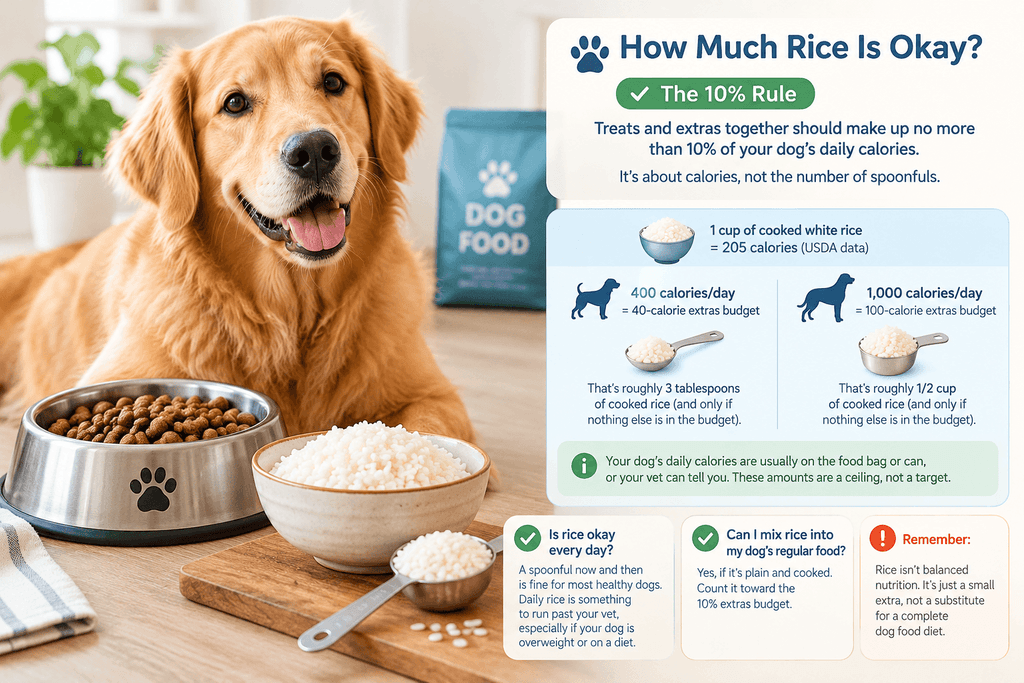
Vets commonly use the 10% rule. Treats and extras together should make up no more than 10% of your dog’s daily calories. It’s about calories, not the number of spoonfuls, and it covers everything: the dental chew, the bit of cheese, the rice.
Here is how to turn that into a real amount. According to USDA data, a cup of cooked white rice has about 205 calories.
- A dog eating about 400 calories a day gets a 40-calorie extras budget. That’s roughly 3 tablespoons of cooked rice, and only if nothing else is in the budget.
- A dog eating about 1,000 calories a day gets 100 calories. That’s roughly half a cup of cooked rice, again with nothing else in the budget.
Your dog’s daily calories are usually on the food bag or can, or your vet can tell you. These amounts are a ceiling, not a target.
You’ll see size charts online that give a spoonful count by weight. Two dogs of the same weight can need very different amounts of food, so the calorie method is more reliable.
Can dogs eat rice every day? A spoonful now and then is fine for most healthy dogs. Daily rice is something to run past your vet, especially if your dog is overweight or on a diet. Extras add up, and rice isn’t balanced nutrition.
Can I mix rice into my dog’s regular food? Yes, if it’s plain and cooked. Count it toward the 10% extras budget.
How to cook rice for a dog
Keep it boring:
- Boil white rice in plain water until it’s soft.
- Don’t add butter, oil, salt or stock. Stock often has onion or garlic in it.
- Let it cool fully before you serve it.
Leftover rice needs care, for your dog’s sake and your own. The USDA’s food safety service says leftovers should be refrigerated within 2 hours of cooking (1 hour if it’s over 90°F), kept 3 to 4 days at most, and thrown out if they’ve sat out too long.
Skip flavored rice packets and rice cooker mixes. They usually come with seasoning.
Rice your dog should not eat
Fried rice and other seasoned rice
Fried rice, pilaf, risotto and rice cooked in broth often contain onion or garlic. Both are toxic to dogs. Butter, oil and salt also add fat, salt and calories your dog doesn’t need.
If your dog steals a few grains, watch them. If they eat a plateful, call your vet.
Raw rice
Uncooked rice is hard to digest and can upset a dog’s stomach. If your dog eats a large amount, call your vet.
Dogs who should check with a vet first
- Dogs with diabetes. Rice is starch, and white rice in particular can raise blood sugar. Only feed it if your vet says it’s okay.
- Dogs who are overweight or on a diet. Rice has calories, and they count.
- Dogs on prescription food. Extras can work against the whole point of the diet.
- Dogs with a suspected food allergy. If your dog gets itchy skin or an upset stomach after eating rice, stop and ask your vet. Pinning down a food trigger usually takes a supervised elimination diet, not guessing at home.
Swollen face, trouble breathing or collapse after eating something? That’s an emergency. Go now.
Can dogs eat rice with an upset stomach?
You’ve probably heard that chicken and rice is what you feed a dog with diarrhea. There’s some truth in that, but advice has moved on.
White rice earned its reputation because it’s bland and easy to digest. But veterinary nutrition guidance from VCA Animal Hospitals says the traditional boiled chicken and white rice diet is no longer the best recommendation. Its reasons: the diet isn’t complete or balanced (the guidance says it’s missing more than 10 essential nutrients), its calories vary, and it’s hard to measure. Feeding it for a couple of days while a pet starts to feel better may be acceptable, but it’s not a long-term plan.
If your vet does recommend a bland diet, ask exactly what they mean and how much to feed. Don’t treat rice as medicine. Vomiting or diarrhea that doesn’t clear up needs a vet visit.
Puppies
Puppies are growing fast and need a diet made for that, so puppy food stays the main event. Ask your vet before adding rice to a puppy’s diet.
If a puppy has diarrhea or vomiting, don’t try rice first. Call the vet. Puppies are small and can go downhill quickly.
What about arsenic in rice?
Rice plants take up arsenic from the soil and water they grow in. That’s a real concern for people who eat a lot of rice, so researchers have started asking the same question about dogs: can dogs eat rice safely over the long term?
A pilot study from the University of Helsinki’s DogRisk research group found that dogs eating rice-based dry dog food had higher arsenic levels in their hair than dogs whose food didn’t contain rice.
Keep that in context. It was a pilot study. It measured arsenic in hair, not illness. It looked at dogs eating rice-based kibble as their regular food, not dogs getting an occasional spoonful of cooked rice. It’s no reason to panic. It is one more reason to keep rice as an extra and not the base of your dog’s diet.
The takeaway
So, can dogs eat rice? Yes. Plain, fully cooked rice is a fine small extra for most dogs. Keep it plain, keep it small, and keep it inside the 10% rule. Check with your vet first if your dog has diabetes, is overweight, is on a prescription diet or has ongoing vomiting or diarrhea.
Looking for another plain, cooked option? See Can Dogs Eat Eggs?