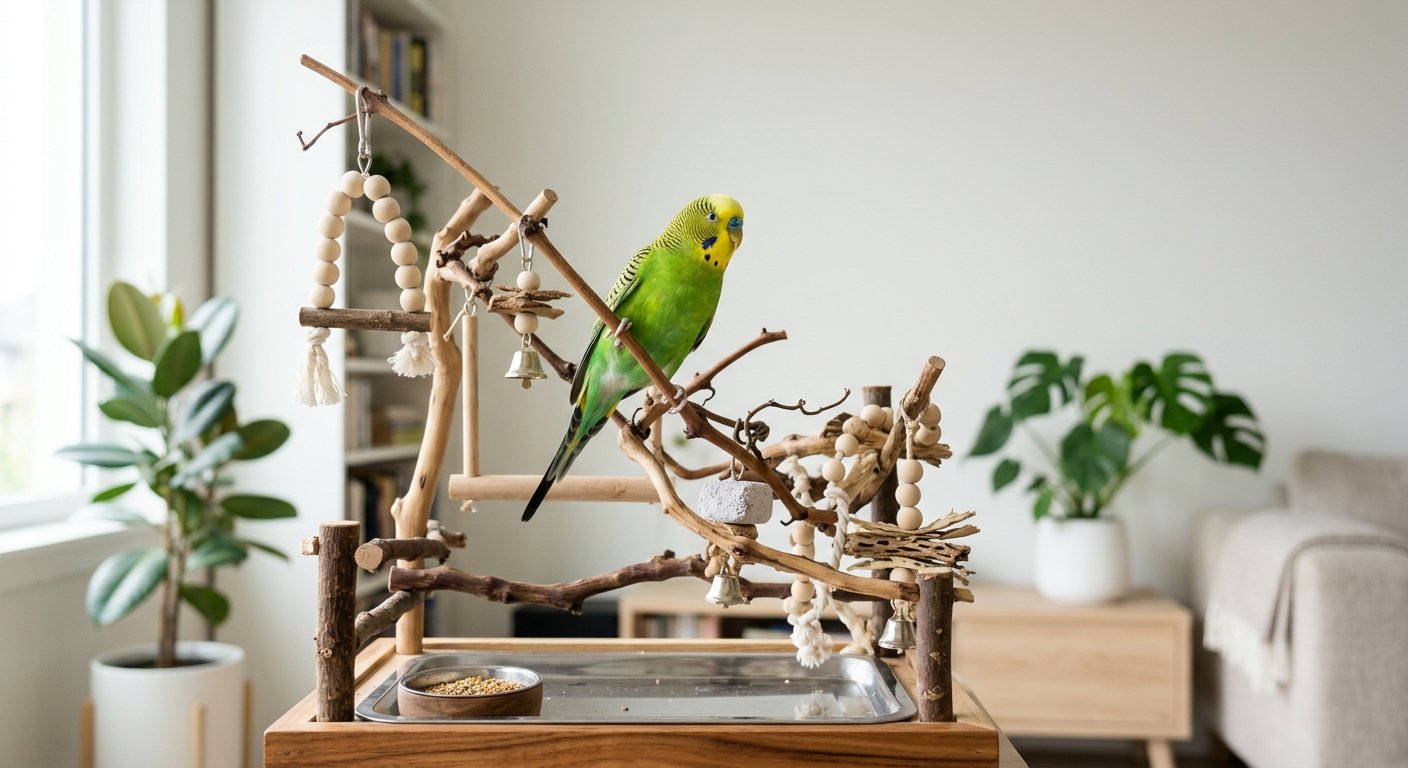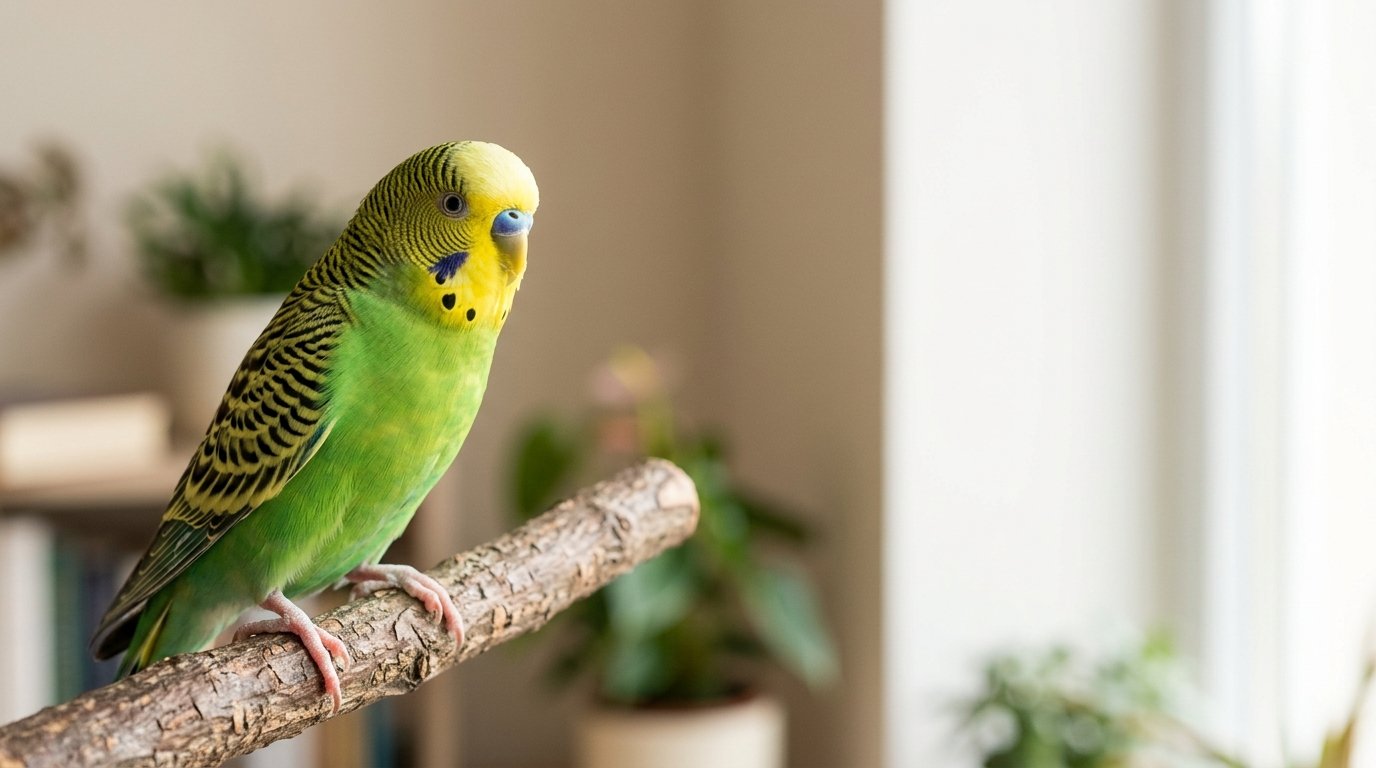

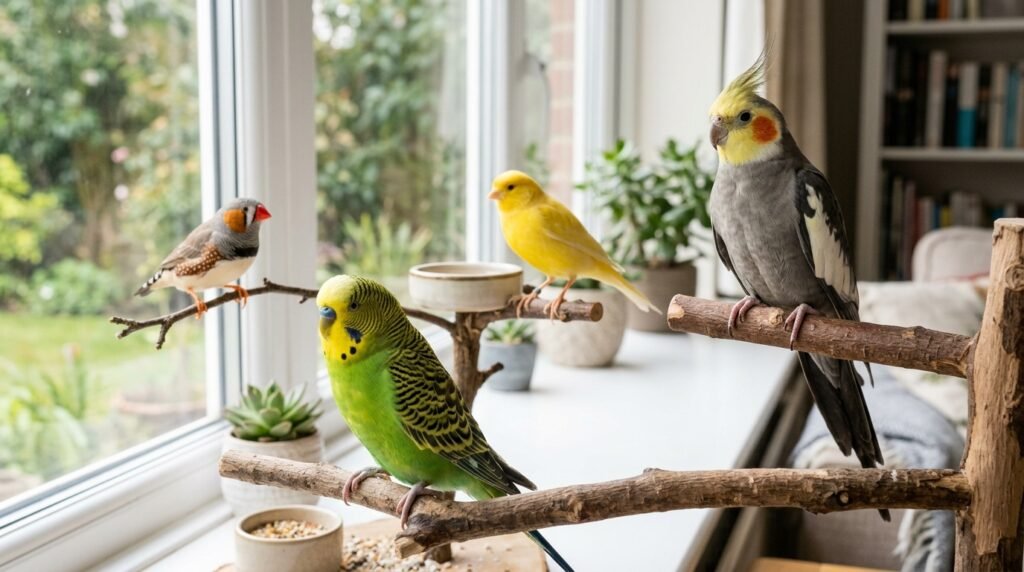
People ask me this constantly, usually after they’ve already decided they want “a bird” without thinking much past that. Fair enough, birds are the kind of pet that seems simple from the outside. Then they bring one home and realize a cage isn’t a decoration, it’s basically a small ecosystem the bird lives in full-time.
So here’s my honest answer. If you want something you can actually interact with, get a budgie or a cockatiel. If you’d rather sit back and enjoy the sound and movement without much handling, look at canaries or finches instead. Lovebirds are great too, but I wouldn’t hand one to a total beginner without a warning label.
Budgies are the classic starting point, and for good reason
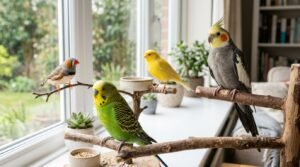
I’ve watched a lot of first-time owners start with a budgie and end up genuinely surprised by how much personality shows up in something the size of your thumb. They learn a handful of behaviors fast, they get curious about you within the first week or two if you’re patient, and some pick up little vocalizations that make people do a double take.
They’re also small enough that the physical footprint of ownership stays manageable. That doesn’t mean cheap or easy though. A budgie still needs a cage big enough to actually stretch its wings in, daily time out for exercise, toys it can destroy and rebuild interest in, and a diet that isn’t just a bowl of seed mix (more on that below). Small bird, real responsibilities.
If your mental image is a bird that eventually perches on your finger and learns a trick or two, start here.
Cockatiels: a little bigger, a little more presence
Cockatiels sit one step up from budgies in almost every sense. More cage space, more personality, more commitment, basically everything about a budgie but turned up a notch. They’ve got a reputation for being gentle, which is why they show up on every “good bird for families with kids” list, and once they settle in they whistle nonstop. I had a client whose cockatiel picked up her phone’s ringtone note for note and used it to torment the whole household for about a month straight.
They live a long time too. Ten to fourteen years is typical, and some go well past that. That’s not a detail to skip over. You’re not deciding what bird to get this year, you’re deciding what bird you’re responsible for well into the next decade.
For someone who wants a genuinely hands-on companion bird and has the space for a proper cage, a cockatiel is one of the strongest first choices out there.
Canaries: for people who want to listen, not hold
Canaries are a completely different kind of pet, and it trips people up constantly. They’re not shy versions of budgies. Most canaries simply don’t want to be handled, full stop, and that’s normal, not a training failure on your part.
What they do offer is presence and sound. Male canaries in particular sing, and it’s a genuinely nice thing to have in a house, background birdsong instead of background TV noise. If your idea of bird ownership is watching and listening rather than a bird riding around on your shoulder, a canary fits that picture far better than a parrot species ever will.
One thing worth knowing: canaries can be territorial, especially males, so don’t assume more canaries automatically means a happier canary.
Finches: similar deal, different flavor
Finches occupy roughly the same space as canaries. Active, social with each other, generally uninterested in bonding with a human. Watching a small finch flock move around a well-set-up aviary is honestly one of the more relaxing things you can have in a living room.
They’re usually kept in small groups rather than alone, since a lot of that natural behavior involves interacting with other finches, not with you. That changes the housing math. A single finch cage is not the same project as a finch flock cage, so plan for the group from the start rather than adding birds one at a time and hoping it works out.
Lovebirds are wonderful, and also a bit of a trap for beginners
Lovebirds get recommended a lot, mostly because they’re small and colorful and people assume small means easy. It doesn’t. Don’t let the size fool you, a lovebird is a full parrot crammed into a tiny body. Smart, stubborn, and if it’s bored or doesn’t know where the boundaries are, it will absolutely let you know about it.
I’m not saying skip them. I’m saying go in with eyes open. If you’re specifically excited about lovebird behavior and willing to do consistent handling and training from day one, they’re rewarding. If you just wanted “a small colorful bird that’s easy,” a budgie will serve you better.
The questions that actually matter before you pick a species
Skip the size of the bird as your main filter. Size tells you almost nothing useful. Ask yourself these instead.
Do you want to handle the bird regularly, or would you rather watch it? This alone splits the list into two completely different directions. Budgies and cockatiels want interaction. Canaries and finches mostly don’t.
How much noise can your household actually live with, not in theory but at 7am on a Saturday? Every bird makes noise, some constantly, some just at dawn and dusk, and it’s worth researching the specific species rather than guessing.
What’s your actual cage space, not your ideal cage space? A cockatiel needs a lot more room than a finch, and cramming a bigger bird into a small cage causes real behavior problems down the line.
And the big one: are you ready for a ten-to-twenty-year relationship, potentially longer? People underestimate bird lifespans constantly because the animal is small. Small does not mean short-lived.
Even the “easy” birds need real care
There’s no such thing as a maintenance-free pet bird. Seed-only diets are one of the most common mistakes new owners make, since a lot of commercial seed mixes are nutritionally incomplete on their own. Your bird needs more than what comes out of a standard bag, and the right mix varies by species, so it’s worth a conversation with a vet who actually treats birds.
Housing matters just as much. Safe perches, things to chew and shred, clean water, and a cage placed somewhere free of drafts, fumes, and other household hazards (nonstick cookware fumes are genuinely dangerous to birds, which surprises a lot of people the first time they hear it).
And find an avian vet before you need one, not after. Birds are prey animals by instinct, which means they’re very good at hiding illness until it’s already serious. The Association of Avian Veterinarians keeps a directory for exactly this reason, and it’s worth using before your bird is already sick, not after.
Go see the bird in person first
Photos and species write-ups only get you so far. Visit a rescue, a responsible breeder, or an avian vet clinic if you can, and actually watch the birds. Listen to the noise level. Watch how they move, how they react to people nearby, whether they seem curious or completely indifferent to human presence.
Two birds of the same species can be nothing alike temperament-wise, so meeting an individual bird tells you more than any care guide will.
The whole decision gets a lot easier once you’re honest with yourself about what you actually want out of it. A budgie that learns to step onto your finger. A cockatiel that whistles at you from across the room. A canary you barely touch but love listening to every morning. Pick based on that, not on which bird looks cutest in a photo, and you’ll end up with a pet that still makes sense to you five years in.