So your dog has an ear infection, or you’re pretty sure they do, and now you’re trying to figure out what actually needs to happen next. Do you need a vet visit or can this be handled at home? What do the drops actually do? How long is this going to take? Let’s get into all of it.
This is the treatment side specifically, meaning we’re focused on what a vet does, what medication looks like, and how the whole process plays out from diagnosis to your dog’s ear being back to normal.
First Things First: Get a Proper Diagnosis
Here’s something a lot of dog owners skip, and it’s usually the reason the first round of treatment doesn’t work: figuring out exactly what kind of infection you’re dealing with. Sounds obvious, but so many people just grab whatever ear drops worked last time or whatever’s cheapest at the pet store, and that’s basically a coin flip.
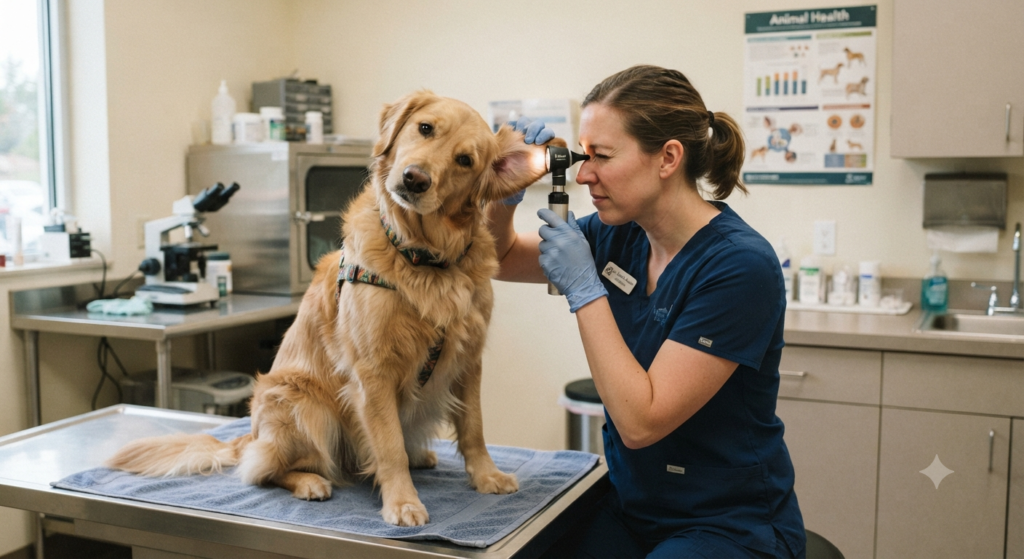
Bacteria and yeast are the usual suspects here, and honestly they show up together often enough that it’s not even rare. Your vet handles this part fast, just a quick swab, maybe ten minutes under a microscope, and they’ll know exactly what’s going on in there. Skip this step and you’re basically guessing, and guessing wrong means using an antibacterial drop on a yeast infection, which does nothing except waste a week and let the infection get worse.
Bacterial vs Yeast: Quick Comparison
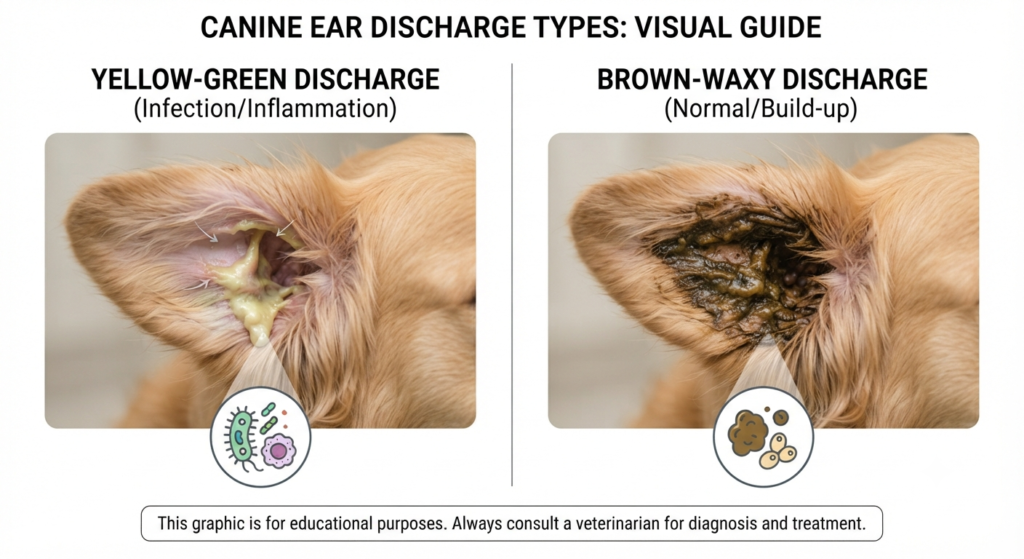
Bacterial Infection
- Smell: Sharp, foul odor
- Discharge: Yellow, green, sometimes bloody
- Common cause: Moisture, injury, allergies
- Treatment: Antibiotic drops or oral antibiotics
- Typical recovery time: 1 to 2 weeks
Yeast Infection
- Smell: Sweet or musty smell
- Discharge: Brown or dark, waxy
- Common cause: Moisture, allergies, hormonal issues
- Treatment: Antifungal drops or oral antifungals
- Typical recovery time: 2 to 3 weeks
(For a deeper look at why yeast behaves differently and how it’s treated, our guide on yeast infections in dog ears covers that in full.)
Step One: Cleaning the Ear
No medication works well on a dirty ear. Before any drops go in, the ear needs to be cleaned of wax, discharge, and debris, because that gunk can actually block the medicine from reaching the infected tissue.
Your vet will usually do the first deep clean in the clinic, sometimes while your dog is lightly sedated if the ear is too painful or swollen to tolerate handling. After that, you’ll likely be sent home with a cleaning solution and instructions to do this yourself once or twice a week during treatment, not daily, since over cleaning irritates the ear lining and slows healing.
To clean at home, fill the ear canal with the solution your vet gave you, massage the base of the ear gently for about twenty seconds (you’ll hear a squishing sound, that’s normal), then let your dog shake their head to bring the loosened debris up. Wipe out what you can reach with a cotton ball, never a cotton swab, since those push debris further in rather than removing it.
Step Two: Medication
This is where bacterial and yeast infections split into different paths.
For bacterial infections, vets typically prescribe medicated drops containing an antibiotic, often combined with a steroid to bring down swelling and pain. These usually go in once or twice daily for one to two weeks. In more severe or spreading cases, oral antibiotics get added on top of the drops.
For yeast infections, the drops contain an antifungal instead and treatment tends to run a bit longer, since yeast can be more stubborn to clear.
For mixed infections, you’ll get a combination drop that handles both, or two separate medications used at different times of day.
Steroid drops or oral steroids might be added regardless of infection type if your dog’s ear is significantly swollen or clearly painful, since reducing inflammation helps the other medications actually reach where they need to go.
How to Actually Apply Ear Drops Without a Fight
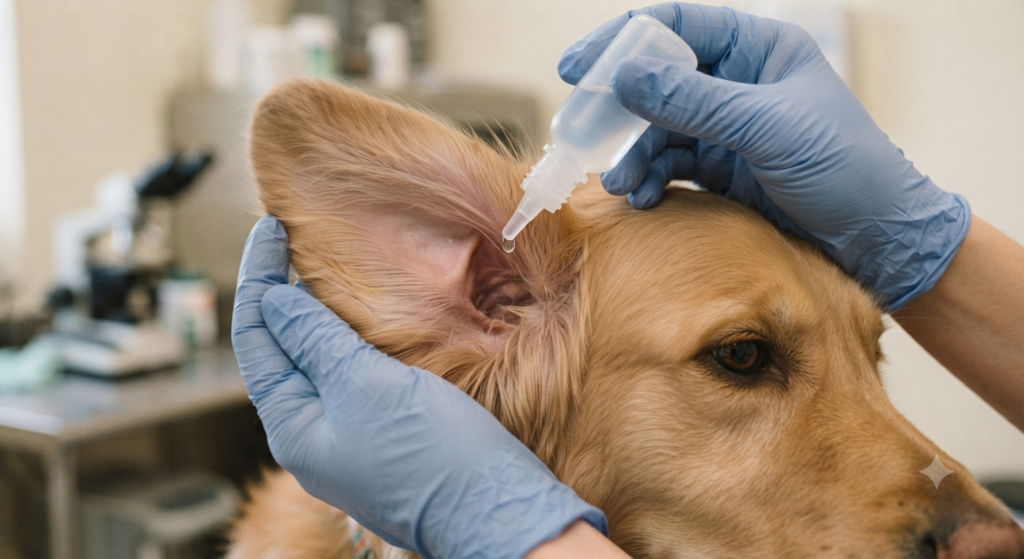
This is the part most dog owners dread, and for good reason, since most dogs are not fans of having liquid squirted into their ear.
Have your dog sit or lie on their side with the affected ear facing up. Hold the ear flap up and back to straighten the canal. Squeeze in the prescribed number of drops without letting the applicator tip touch the ear (this prevents contaminating the bottle). Massage the base of the ear for fifteen to twenty seconds so the medication works its way down. Let go and let your dog shake, then wipe away any excess with a cotton ball.
Treats immediately after help a lot. Most dogs learn the routine within a few days and stop fighting it once they realize it doesn’t actually hurt.
How Long Until It Clears Up
If you catch a bacterial infection early, you’re usually looking at noticeable improvement in three to five days, fully gone within one to two weeks as long as you’re actually consistent with the treatment (this is where a lot of people slip up, by the way).
Chronic cases are their own thing entirely. If your dog’s dealing with recurring infections tied to allergies, you could be looking at four to six weeks, sometimes longer, and don’t be surprised if the vet wants to see your dog again partway through if the first round of medication isn’t pulling its weight.
Here’s the part people mess up the most though: stopping treatment the moment things look better. It’s tempting, your dog stops scratching, the smell’s gone, seems fine, right? But if the infection isn’t fully cleared out, it tends to come roaring back within a week or two, and often worse than round one.
What It Costs
Prices bounce around a lot depending on your location and how bad the infection has gotten, but to give you a ballpark: a standard vet visit with an ear check and swab usually lands somewhere between $50 and $150. Ear drops on top of that typically run $20 to $60. Need oral antibiotics or antifungals too? Tack on another $20 to $50.
Where it gets pricier is the chronic or severe cases, think allergy testing, a sedated cleaning because the ear’s too painful to handle otherwise, or multiple follow-up visits because the first round didn’t fully clear it. Those can easily climb past $300 total.
If cost is a real concern, it’s worth digging out your pet insurance policy before you book the appointment. Some plans cover a chunk of this, but coverage varies enough that it’s better to know going in rather than get surprised at checkout.
When Home Treatment Isn’t Enough
Mild, early stage infections sometimes respond to gentle at home care, which we cover in detail in our home remedies for dog ear infections guide. But you should go straight to a vet rather than trying home treatment first if you notice a strong odor, thick or bloody discharge, obvious swelling, your dog seems to be in real pain, there’s a head tilt that isn’t going away, or this is a repeat infection that’s happened more than twice in the last year.
Repeat infections especially are a sign that something deeper is going on, usually allergies, and treating the infection over and over without addressing the root cause just means you’ll be back here again in a few months.
Frequently Asked Questions
Can I treat my dog’s ear infection without going to the vet?
Mild, early cases sometimes respond to gentle home care, but you can’t tell from the outside whether you’re dealing with bacteria, yeast, mites, or something more serious like a foreign object stuck in the canal. Getting it wrong means wasted time while the infection gets worse. A vet visit for the first occurrence is always the safer call.
How long does it take for ear drops to start working?
Most dogs show some improvement, less scratching, less head shaking, within three to five days. Full clearing takes one to three weeks depending on the type and severity.
Why does my dog’s ear infection keep coming back?
Recurring infections are almost always a sign of an underlying issue, most commonly allergies, rather than bad luck. If this is happening more than once or twice a year, it’s worth asking your vet about allergy testing.
Is it safe to use human ear drops on a dog?
No. Human ear products aren’t formulated for a dog’s ear pH or the specific bacteria and yeast strains common in dogs, and some ingredients can actually be harmful to them. Always use what’s prescribed for your dog specifically.
Can ear infections cause permanent damage if untreated?
Yes, in severe or repeated cases. Chronic untreated infections can lead to a narrowing of the ear canal, hearing loss, or in rare cases, a ruptured eardrum. Infections that spread to the middle or inner ear can also affect balance.
Bottom Line
Getting a dog ear infection properly treated comes down to three things: knowing what type you’re dealing with, sticking with the full course of medication even after symptoms improve, and catching repeat infections as a signal to look deeper rather than just treating each one as it comes. Most dogs bounce back within a couple of weeks when treatment is followed through properly.