Skip to content




Head shaking. Constant scratching. That weird smell you can’t quite place until you get close to your dog’s ear and go “oh, that’s it.” If any of this sounds familiar, you’re probably dealing with an ear infection, and honestly, you’re not alone. It’s one of the top reasons dogs get dragged to the vet, right up there with upset stomachs.
The good part is that most cases clear up fine once you actually treat them properly. This guide covers what’s causing it, how to catch it early, what treatment really looks like, and how to keep it from becoming a repeat problem.
What’s Actually Going On In There
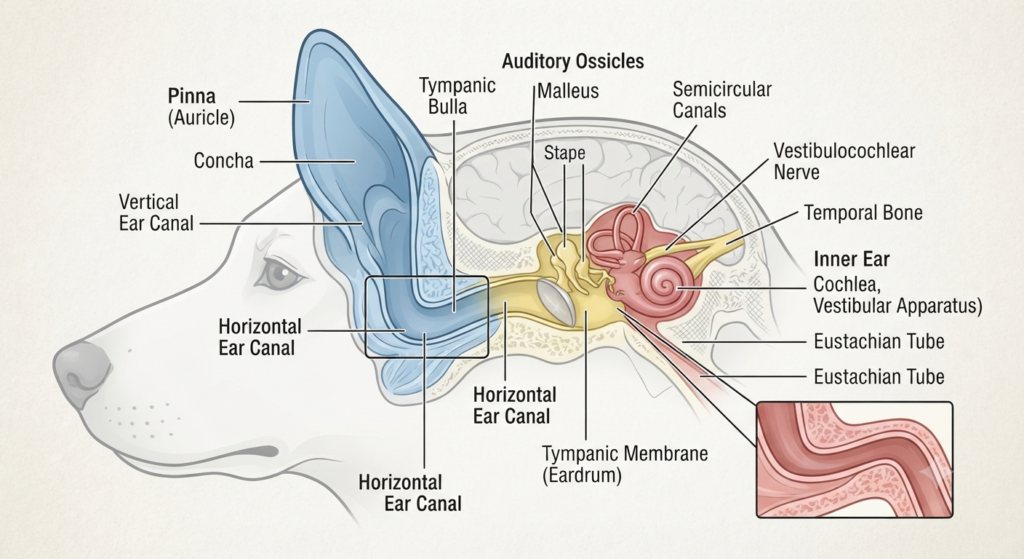
The medical term is otitis externa, which just means the outer ear canal is inflamed, usually because bacteria or yeast have gotten out of hand. Here’s the thing most people don’t realize: a dog’s ear canal isn’t straight like ours. It’s shaped more like an L, bending sharply before it reaches the eardrum. That bend traps moisture, wax, and debris way more than a human ear ever would, which is a big reason why this is such a common problem in dogs specifically.
There are really three levels this can reach. Otitis externa is the outer canal and by far the one you’ll deal with most. Otitis media creeps into the middle ear, usually after an outer infection sits untreated for too long. And otitis interna hits the inner ear, which is the serious one. It can throw off your dog’s balance and needs a vet right away, not a wait-and-see approach.
Why This Keeps Happening
Ear infections don’t usually just show up out of nowhere. Something tips the balance first and lets bacteria or yeast take over. A few of the usual suspects:
- Allergies are probably the biggest one. Food allergies, pollen, dust, mold, you name it. If your dog seems to get infection after infection no matter what you do, allergies are very likely the actual root cause rather than bad luck.
- Moisture is another big one. Dogs who swim a lot, or get bathed often without being dried properly afterward, end up with damp ears that are basically an open invitation for yeast.
- Then there’s ear shape. Floppy-eared breeds like Cocker Spaniels, Labradors, and Basset Hounds don’t get much airflow down in there. Poodles and Schnauzers have the opposite problem, thick hair growing right in the canal that traps debris and moisture.
Wax buildup gives bacteria something to feed on. Ear mites, especially in puppies, irritate the lining and often lead to a secondary infection on top of the mites themselves. Grass seeds or bits of dirt can get lodged in there too, particularly with dogs who spend a lot of time outside. And sometimes it’s hormonal, thyroid issues in particular tend to show up as skin and ear problems before anything else.
Signs You’ll Actually Notice
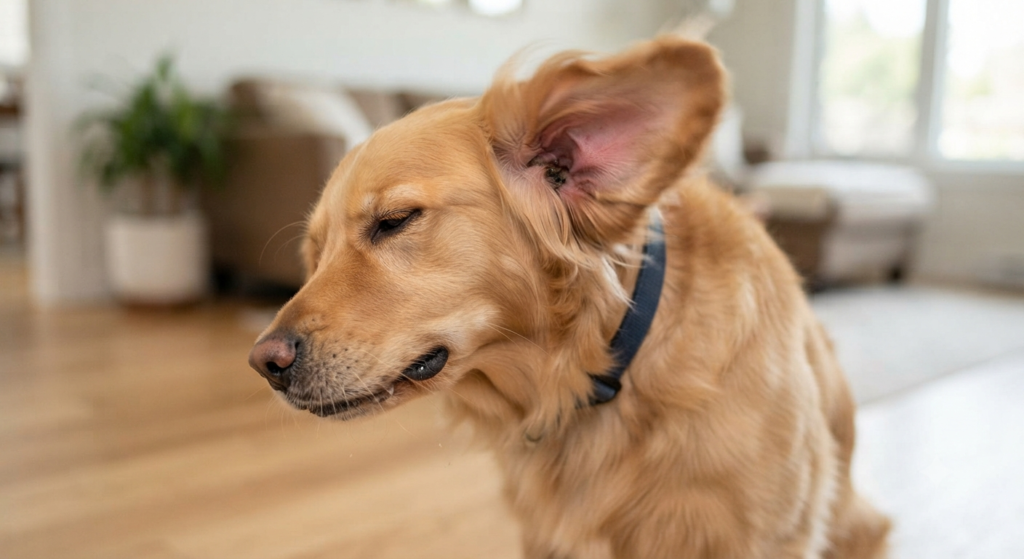
You don’t need a vet degree to catch this early. Watch for your dog shaking their head more than usual, or tilting it to one side. Scratching at the ear or rubbing their whole face against the couch. Redness or puffiness when you peek inside. A smell that’s musty or almost yeasty. Discharge that’s dark, yellowish, or in worse cases, bloody. Whining or pulling back when you touch near the ear. In more advanced cases, you might even notice them losing balance or their eyes moving oddly.
Head Shaking
This is usually the first thing people notice. Not the occasional shake after a nap, more like repeated, almost frustrated shaking, sometimes with the head tilted slightly to one side. Dogs do this trying to relieve pressure or discomfort in the canal. If it’s happening several times an hour, or your dog seems to be doing it specifically after you touch or get near their ear, that’s a pretty strong signal.
Scratching
Similar idea, but with a paw instead of a shake. Some dogs scratch gently, others go at it hard enough to scratch themselves raw around the ear or on the side of the face. If you notice hair loss or scabbing near the ear from scratching, the infection’s probably been going on for a bit already.
The Smell
This one’s hard to miss once it’s there. A musty, almost yeasty smell, sometimes described as similar to old cheese or damp socks. Get close to the ear and take a whiff, healthy ears shouldn’t have much of a smell at all. If yours does, and it’s unpleasant, that’s often yeast at work, though bacterial infections have their own distinct sharper odor too.
Discharge
Take a look inside the ear, gently pull back the flap if your dog will let you. Healthy ear wax is usually a light tan color, not much of it. Infected ears show more, and it’s often a different color entirely, dark brown or black usually points to yeast, while yellow or greenish discharge, especially with a bloody tint, tends to mean bacteria. Either way, if there’s noticeably more discharge than usual or it’s an unusual color, that’s a sign.
Redness and Swelling
Take a look inside the canal itself. An infected ear usually looks angrier than the skin around it, redder, and sometimes you’ll see actual swelling in there. Let it go on long enough and the swelling can get bad enough to narrow the canal opening, which just makes everything harder down the line, cleaning, treatment, all of it.
Pain When Touched
Gently touch around the base of the ear. A dog with an infection will often flinch, pull away, or even yelp, something they wouldn’t normally do. Some dogs get head-shy about this specific area even when you’re just trying to pet them, which is worth paying attention to.
Behavior Changes
Beyond the obvious physical signs, watch for anything that feels off. Less interest in play, more irritability, avoiding being touched near the head, or even just seeming a bit withdrawn. Chronic ear pain wears on dogs the same way any ongoing discomfort would, and it shows up in mood before you might notice anything physical.
Rubbing Against Furniture or the Floor
If your dog’s dragging the side of their head along the carpet, couch, or your leg, they’re trying to scratch an itch they can’t quite reach with a paw. This is a pretty reliable sign something’s bothering them in that ear specifically.
Loss of Balance or Odd Eye Movements
This one’s more serious and means the infection has likely progressed past the outer ear. If your dog seems unsteady, is tilting their head persistently rather than just occasionally, or you notice their eyes flicking back and forth in a way that looks unusual, get to a vet quickly. This points to the infection reaching the inner ear, which affects balance.
A Simple Ear Check You Can Do at Home
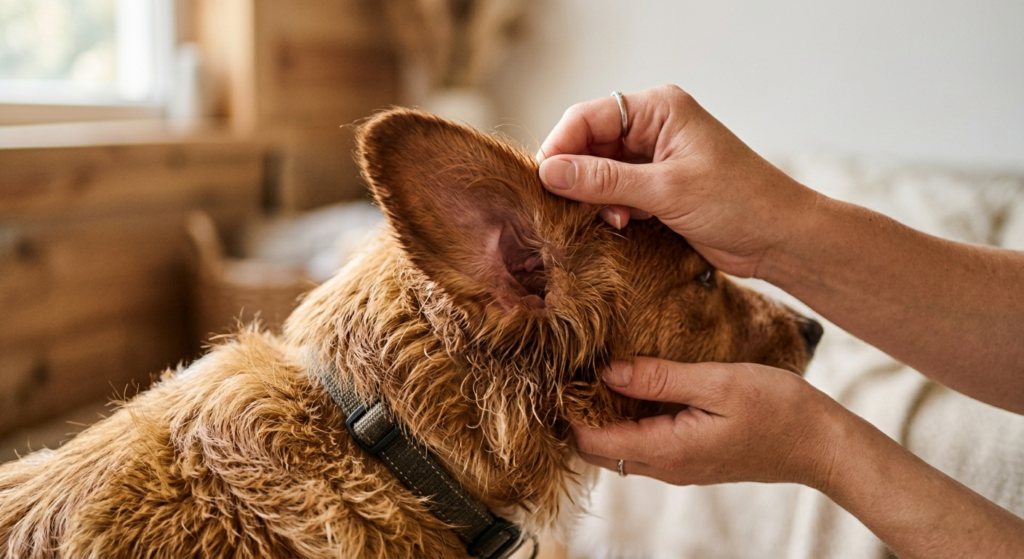
Takes about a minute. Gently lift the ear flap and look inside, checking for redness, discharge, or swelling. Give it a light sniff. Then run your finger softly around the base of the ear and watch your dog’s reaction, flinching or pulling away is a sign something’s tender in there. Do this weekly if your dog’s breed is prone to ear issues, floppy-eared or heavy-coated breeds especially, and you’ll usually catch problems while they’re still mild.
When One Symptom Isn’t Enough to Worry, and When It Is
An occasional head shake or a bit of scratching here and there isn’t automatically an infection, dogs do that normally sometimes. What matters is the combination and the persistence. Several of these signs showing up together, especially smell plus discharge plus scratching, is a much stronger indicator than any single symptom on its own. And once you spot swelling, pain, or balance issues, that’s no longer a “wait and see” situation.
If you’re seeing enough signs to be fairly sure this is an infection, our guide on treating dog ear infections walks through what happens next, from vet diagnosis through recovery.
How Vets Figure Out What’s Wrong
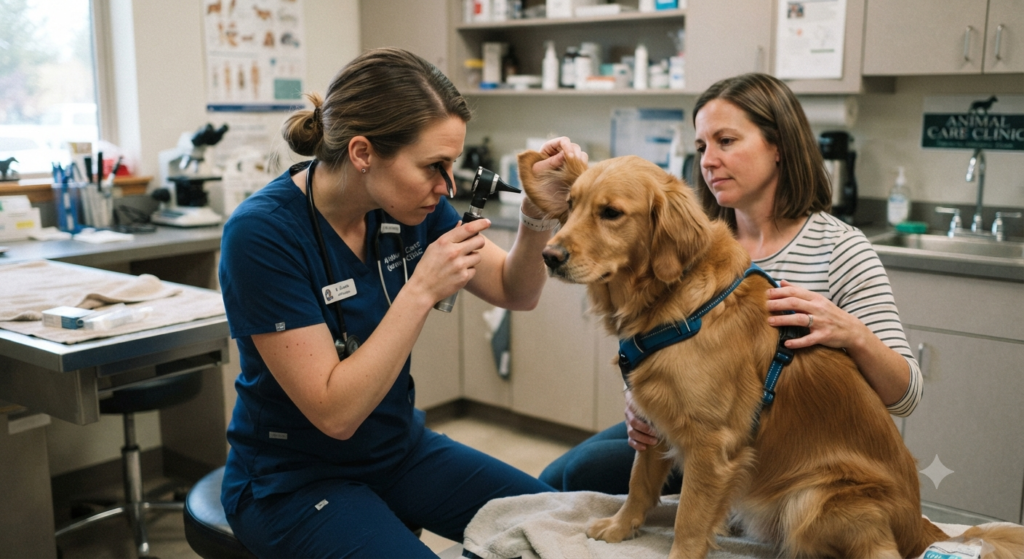
A vet will usually start by looking into the ear with an otoscope, checking for redness, swelling, or anything that looks off with the eardrum. Most of the time they’ll also swab it and look at the sample under a microscope, because knowing whether you’re dealing with bacteria, yeast, or both actually changes the treatment plan. Guess wrong on this and you could be treating the wrong problem for two weeks straight.
For dogs who keep getting infections over and over, a vet might push for allergy testing or bloodwork instead of just treating each flare-up as it comes. Otherwise you’re stuck in a loop of treating symptoms without ever touching the actual cause.
What Treatment Looks Like
First step is always a proper cleaning, getting rid of wax and gunk before any medication goes in, because meds don’t work well on a dirty ear. From there it’s usually medicated drops, antibacterial, antifungal, or sometimes both depending on what the swab showed. Severe cases might need oral medication on top of that, and there’s often something to bring the swelling and pain down too, especially in those first few rough days.
Most straightforward infections clear up in one to two weeks if you stay consistent with treatment. Chronic cases take longer, and sometimes the first medication doesn’t fully do the job, so don’t panic if your vet wants to switch things up partway through.
Want the full day-by-day version, including how to actually get ear drops into a squirming dog without it turning into a wrestling match? Check out our guide on treating dog ear infections. And if you’re looking for gentler options to try alongside vet care, our piece on home remedies for dog ear infections covers what’s actually safe to use at home.
A Quick Word on Yeast Infections
These get their own mention because they’re incredibly common and look and smell a bit different from bacterial infections, often more sweet or musty rather than sharp. Certain breeds and allergy-prone dogs seem to get hit with these more than others. We’ve written a full guide on yeast infections in dog ears if you think this might be what you’re dealing with, since the treatment approach isn’t quite the same as a bacterial infection.
Keeping It From Coming Back
A few habits go a long way here. Dry your dog’s ears properly after baths or swims, don’t just let them air dry and hope for the best. Check their ears once a week or so for anything that looks or smells off. Use a vet-approved cleaning solution regularly, especially if your dog’s breed is prone to this. If your vet says trimming or plucking ear hair would help, it’s worth doing. And try to get on top of allergies early since, as mentioned, they’re behind most of the repeat cases.
One thing worth knowing: don’t overdo the cleaning either. Scrubbing the ears too often can actually irritate the lining and cause the exact problem you’re trying to avoid.
Home Remedies: What Helps and What to Avoid
Home care only makes sense for mild irritation with no pain, swelling or heavy discharge. These are the options vets most often say are reasonable, plus the things to keep out of your dog’s ear.
1. Apple Cider Vinegar Rinse
Equal parts ACV and water, wiped gently around the outer ear with a cotton ball. It’s got natural antibacterial and antifungal properties, so it’s genuinely decent for mild stuff, yeast especially. Just don’t pour it straight into the canal, and if the skin’s broken or raw anywhere, skip it, it’ll sting like crazy and make things worse.
2. Coconut Oil
Warm a bit between your fingers, massage it into the outer ear. It won’t do much against a real bacterial infection, but for dry, flaky skin or mild irritation it’s genuinely soothing. Lauric acid in it has some antimicrobial punch too.
3. Green Tea Rinse
Brew it, let it go completely cold, use as a rinse on the outer ear. It’s mild, more of an anti-inflammatory thing, calms down redness. Honestly this is more of a “catch it super early” option than something for an infection that’s already settled in.
4. Diluted Hydrogen Peroxide
One part peroxide, two parts water, cotton ball, outer ear only. Full strength stuff will irritate healthy skin, and this should never go into the canal itself. Useful for cleaning visible debris, not much else.
5. Witch Hazel
Natural astringent, dries out extra moisture, mild antiseptic too. Good pick if your dog swims a lot or just tends to get damp ears easily. Same rule, outer ear only.
6. Calendula
Gentle, soothing, works well on sensitive skin. You’ll find calendula ear cleansers at most pet stores, or brew your own cooled infusion at home. Probably the gentlest option on this whole list.
7. Just Dry Their Ears Properly
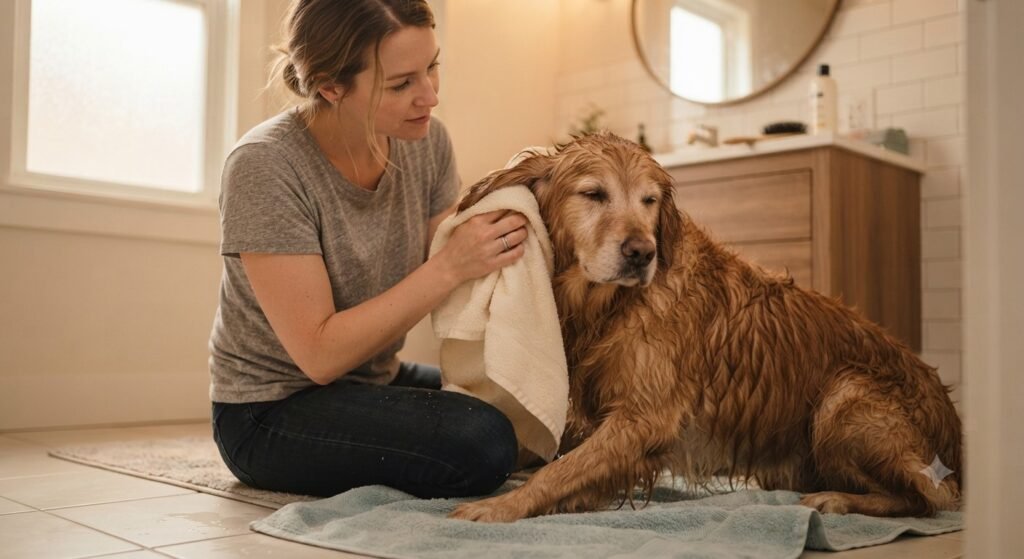
Not really a “remedy” but genuinely does more work than most of the things on this list. After a bath or swim, towel dry thoroughly, then a hairdryer on cool, held at a distance, if your dog will tolerate it. Moisture is basically the number one reason yeast takes over in the first place, so cutting that out solves a lot before it even starts.
8. Look at Their Diet
Food allergies are behind a lot of recurring ear problems. A vet-guided elimination diet can help figure out what ingredient’s actually causing the issue. It’s slow, takes weeks before you see anything, but for dogs stuck in a cycle of repeat infections, this gets at the actual cause instead of just treating the same flare-up over and over.
9. Omega-3s
Fish oil, basically. Supports skin health, brings down inflammation over time. Won’t touch an active infection, but if your dog’s prone to ear issues, it’s a reasonable thing to add long term.
10. Weekly Checks, Basically
Check the ears once a week, wipe the outer ear with a vet-approved cleanser. Not exciting, but it’s the thing that keeps you from needing the other nine remedies in the first place.
Things to Never Put in a Dog’s Ear
When It’s Time to Stop DIY-ing It
Mild cases are fine to manage at home, but if you’re noticing a strong smell, thick or bloody discharge, obvious swelling, pain when you touch the ear, or a head tilt that isn’t going away, it’s time to call the vet. If an infection reaches the middle or inner ear it can start affecting balance and even hearing, so it’s really not something to wait out if it’s clearly getting worse instead of better.
Bottom Line
Ear infections are annoying and honestly a bit stressful to watch your dog deal with, but they’re manageable once you know what’s going on. Catch it early, figure out what’s actually causing it, and stick with the treatment your vet gives you, and most dogs are back to normal within a couple of weeks.
If you want to go deeper on any specific part of this, we’ve broken it all down separately: spotting the early signs, what treatment really involves day to day, natural remedies worth trying, and everything specific to yeast infections.